



Press Release: Scompler AI Co-Worker
No more AI silos: Scompler introduces AI Co-Workers for greater impact, transparency and collaboration
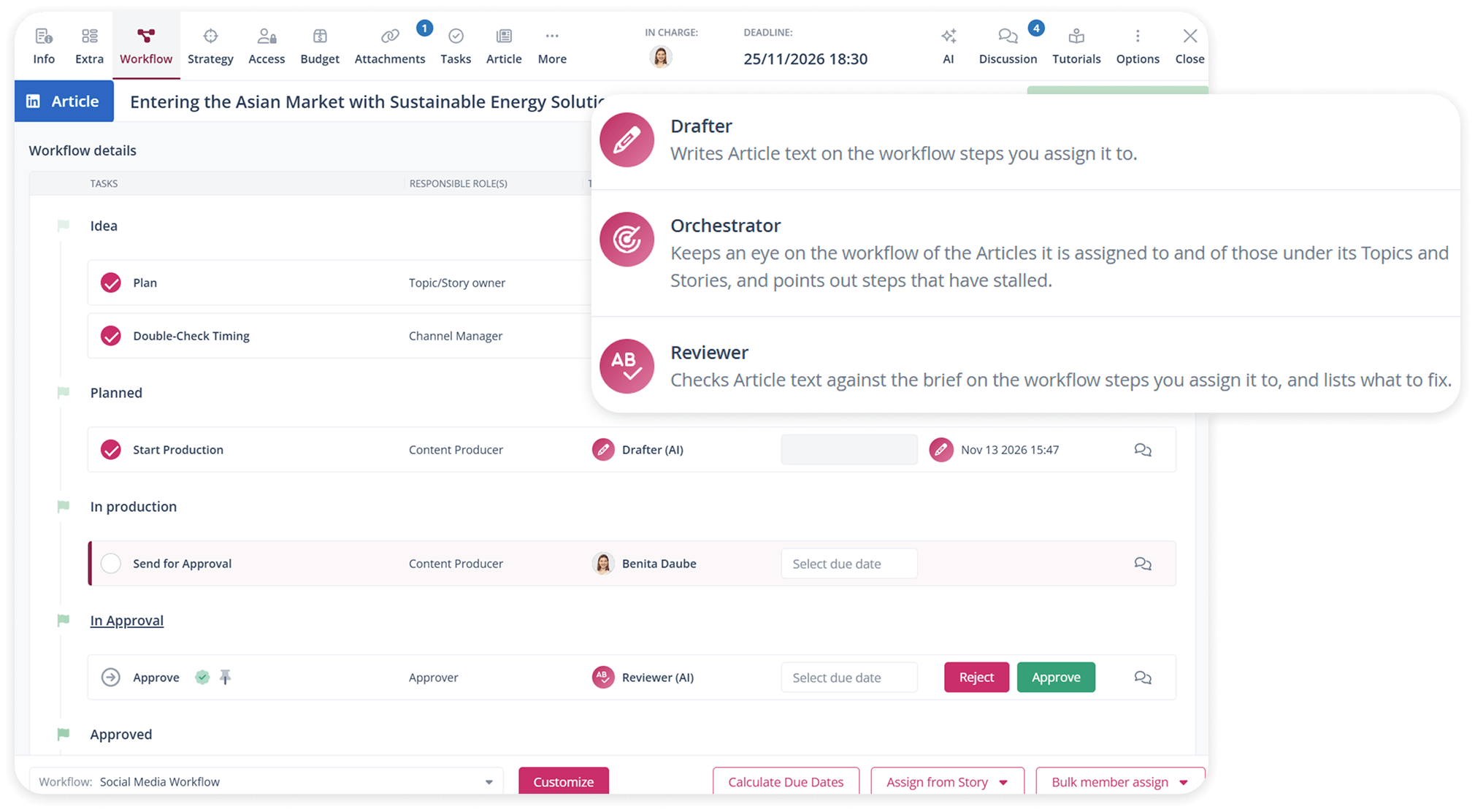
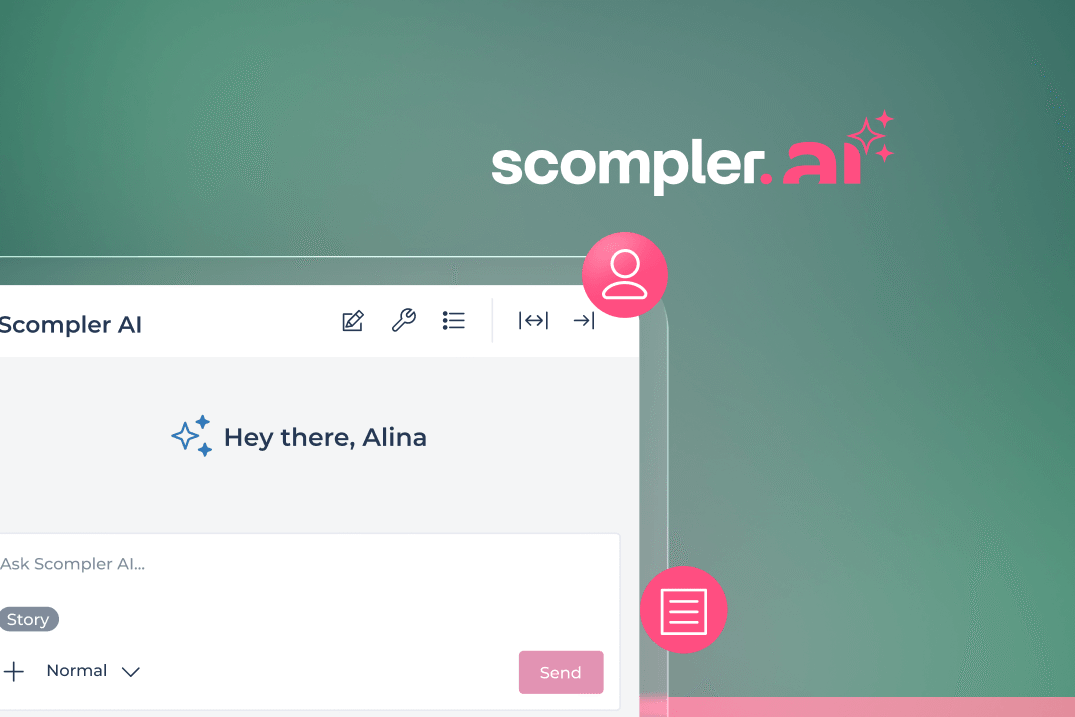
Scompler expands its operating system for strategic communication: three AI agents support drafting, quality control and the monitoring of deadlines and responsibilities. They work transparently across the entire system – and approval stays with humans.
Munich, November 17, 2026 – Scompler is expanding Scompler AI with Co-Workers. Drafter, Reviewer and Orchestrator join communications and marketing teams as agentic project members and, starting today, work alongside them in the operating system for strategic communication. They support drafting, quality control and the monitoring of deadlines and responsibilities, while approval and publication remain the responsibility of the team.
An end to AI silos – agents need clear tasks and transparency, too
Workflow data from more than 500 Scompler customers shows that around 60 percent of the time is spent on production before a text even reaches approval. This is exactly where the Scompler AI Co-Workers come in. They are AI agents that can work independently as members of a project, within the permissions granted to them. Users assign work to them just as they would to a team member: with a role in the workflow or via an @-mention in a discussion about topics, stories or posts.
Unlike AI tools that everyone uses on their own and whose results then have to be transferred, the Co-Workers‘ work is visible to the entire team. Each task runs in its own Scompler AI chat that all project members with access can open. This keeps results traceable – what was read, decided and changed.
Three agents: Drafter, Reviewer and Orchestrator
The Drafter takes care of the writing. It reads the briefing, story, topic, content type with text length and channel rules, as well as published posts of the same type. It files the draft and notes what it is based on. For the Drafter, a LinkedIn post, a press release and a blog article are different texts, not the same text in three lengths. A version for another format can also be derived from an existing article.
The Reviewer checks drafts before they go to approval. It compares the text statement by statement against the briefing, the strategy and the style guidelines. It records its findings in a structured way, including suggested corrections. The Reviewer is a separate agentic user, because the four-eyes principle should apply to AI as well: the Drafter, who prepares, and the Reviewer, who checks, remain separate.
The Orchestrator keeps track of the big picture. Every morning, it checks the topics, stories and posts assigned to it for what would otherwise fall through the cracks: overdue tasks, posts without an owner, steps that are taking significantly longer than planned. It addresses the responsible person directly and suggests what to do. Specific assignments it completes directly.
“The leap from writing assistant to AI colleague is less a question of the AI itself than of what it builds on. A Co-Worker can only work as well as the strategic information and guidelines stored in the system allow. That is why we connect goals, topics and content in one system before the AI starts working on it. This approach delivers exceptional results and gives communications teams the excellent solution they deserve,” says Erik Pauli, Head of Product at Scompler Technologies GmbH
Approval stays with humans
Co-Workers do not publish anything and do not approve anything. Irreversible actions such as deleting content require explicit confirmation. A Co-Worker does not re-suggest rejected changes, and every task can be stopped at any time.
Scompler relies on shared strategic context: goals, narratives, stakeholders and topics are kept in one place, and the Co-Workers work within it.
“AI that runs alongside the strategy instead of being anchored in it also accelerates what doesn’t work. What matters is therefore not how much content is created, but that everyone on the team works with the same strategy, which the system translates into action,” says Björn Bröhl, CEO of Scompler Technologies GmbH
The organizations that work with Scompler include Siemens Energy, E.ON Deutschland, Covestro, DHL Group and Greenpeace.
The Scompler AI Co-Workers are available to all Scompler AI users as soon as a project admin activates them. To further improve strategic information, Scompler AI customers can also use the additional Strategy Architects, which we are also releasing today: the Content Strategy Architect, the Persona Architect and the Content Models Architect complement the Topic Architect. They check the strategic foundation for gaps and suggest changes.
About Scompler:
Scompler is the operating system for strategic communication. Founded in Munich in 2018, Scompler is used today by more than 500 organizations and over 25,000 active users worldwide, from DAX companies and global NGOs to public institutions and mid-sized businesses. Scompler connects goals, narratives, channels and teams in a shared context, so that strategy is translated into coordinated action. Scompler AI is natively embedded and works agentically, always guided by strategy, governance and human judgment.
Scompler press contact:Maximilian MiguletzDirector Strategic Communications[email protected]https://www.scompler.com