








Content strategy: from marketing technique to management discipline

Anyone who sees content marketing as just an online marketing discipline has failed to recognize the potential of content. Sooner or later, every type of marketing will have to meet the ever-increasing demands of increasingly attention-restricted consumers. In order to achieve this across all disciplines, a fundamental change is needed. Not just in the direction of content strategy, but in marketing and communication management as a whole.
Whether it's content shock, media change and advertising rejection, or the increasingly loud, hyperventilating outrage machine in social media and the tabloids: the marketing world is undergoing fundamental change. The result: consumers are turning a deaf ear to marketing campaigns that are not authentic and relevant. Seventy-five of the top one hundred global consumer brands will lose twenty percent of their brand value by 2020 due to declining brand awareness and loyalty, predicts the market research company Gartner. However, this does not only affect global brands. Smaller brands will potentially be hit even harder. This applies to B2B as well as B2C. And the question is: how do you deal with this?
It affects us in our daily work
People working in marketing and communications are not to be envied at the moment: constantly new formats, new platforms, ever-changingtopics, and the ever-increasing pressure to demonstrate a direct ROI everywhere. We rush from one discipline to the next. And the market and internal stakeholders drive us forward. Every topic important, everything has to be implemented immediately. And if something doesn't work, even more pressure will fix it. Instead of stopping and focusing, we easily lose ourselves in actionism, just to somehow meet the KPIs: clicks, traffic, likes, shares, panting, panting. And what does that do to us? How do we deal with it?
The PISSSED model: The desperate search for the easy way out
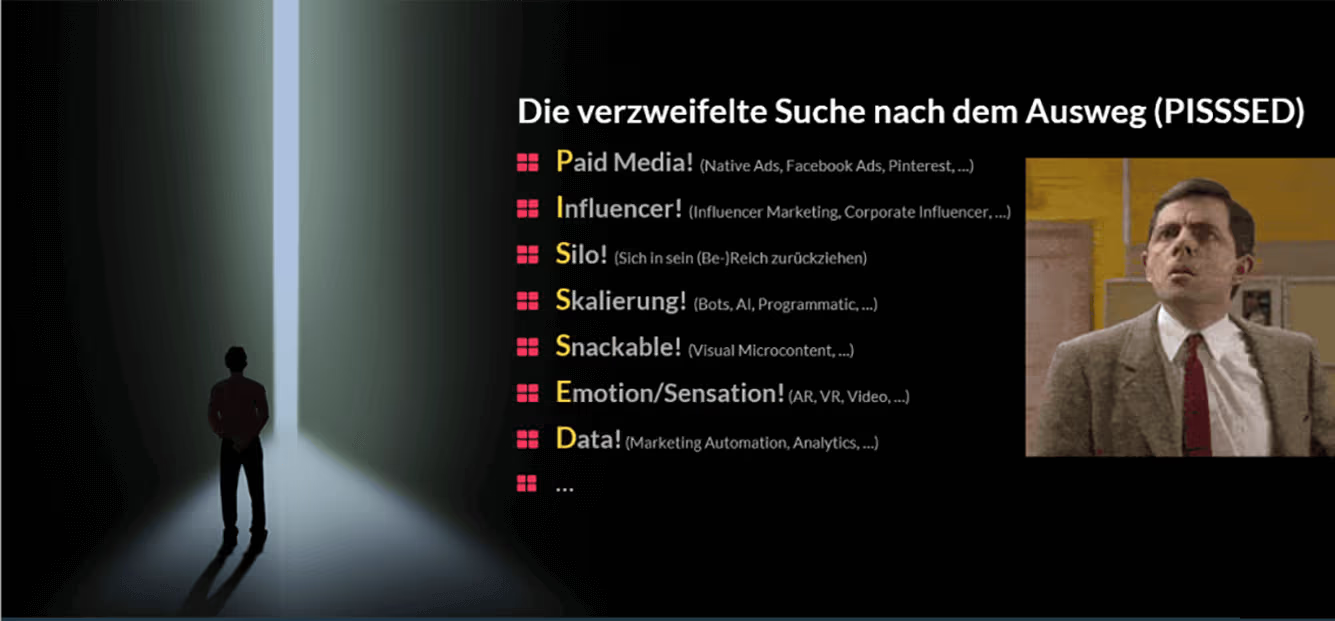
And so, in the search for the right strategy, marketing has blossomed in many a bizarre way: efforts to reach at least a few people in the target group through influencer marketing seem mighty desperate. The same applies to many clumsy attempts at native advertising, when the flattest advertising messages are repackaged in a new guise and everyone thinks: no one will notice. But that's not true. Everyone notices. And they ask themselves: are they on to something?
Others save themselves in their silos and seek stability and an overview in their small (living) realm. And still others seek their salvation in data. They promise to be able to address our customers in a more individual and personalized way, and this promises to increase relevance and thus attract more attention. That would be it!
The cause of failure is the content, not the data
There is no question that data has potential. "By 2020, 90 percent of all companies will use at least one form of (data-based) marketing automation," Gartner found. However, Gartner comes to another, very interesting conclusion: In all the data efforts, the data is not the problem at all, but the content: it is the bottleneck and the main cause of failure, not the data.
Because even if companies have the best customer data in the world, they still don't have enough content to meet customer expectations. And in the end, this also applies to all disciplines, to influencer marketing and native advertising and social media and emails and everything else too. Without King Content, Queen Distribution is worth nothing. So how can "content marketing" be a separate discipline, perhaps even a separate department, i.e. another silo? What if everyone needs content?
Only those who satisfy expectations remain relevant
So if you think one step ahead, you don't just need any old content strategy: it must consistently aim to offer the target group a benefit. According to their individual needs and according to the respective situation. It doesn't matter which channel is used. "Content" is then not only the advisory contribution in the "upper funnel", but also the product information in the "lower funnel". Because at some point, the prospective customer will also need information about this. They are both part of a team. And the team can only win if everyone works together in the best possible way and is networked in the best possible way. Here too: "La Mannschaft". And the game system.
So it's not just a matter of creating lots of new content formats and then distributing them as widely as possible in the respective silo (aka channel). It's about satisfying increasingly specific customer needs individually. Or more precisely: to satisfy them better than the competition does. Then it is a competitive advantage. If a company fails to do this, consumers will turn a deaf ear to it.
Don't think more. Think better.
In practice, however, this is easier said than done. One of the main reasons for this is that everyone has a different view of what "good" content actually is. SEO is different from corporate publishing, social media is different from corporate communications, email marketing is different from e-commerce and so on. And so everyone does what they think is right and everyone works side by side. Customer journeys and touchpoint management hardly stand a chance of being taken into account, except in campaigns. The consequence is increasing actionism, an increasing decoupling of areas, duplication of work, interrupted conversion funnels and therefore rising costs and decreasing effectiveness.
The "newsroom" should fix it
One approach to tackling this problem and, above all, breaking down silos is the corporate newsroom. Ostensibly, this is an open-plan office in which the various disciplines work together, possibly even just a few "representatives" of the channels and disciplines. Advocates of this newsroom rely on physical proximity and short meetings, sometimes several times a day, known as "stand-ups". The most striking elements are a large high table (where the stand-ups are held, which is why it has to be a high table) and large monitors on the wall that provide data in real time. Behind this are a number of new processes and a different organization.
From channel strategy to theme strategy
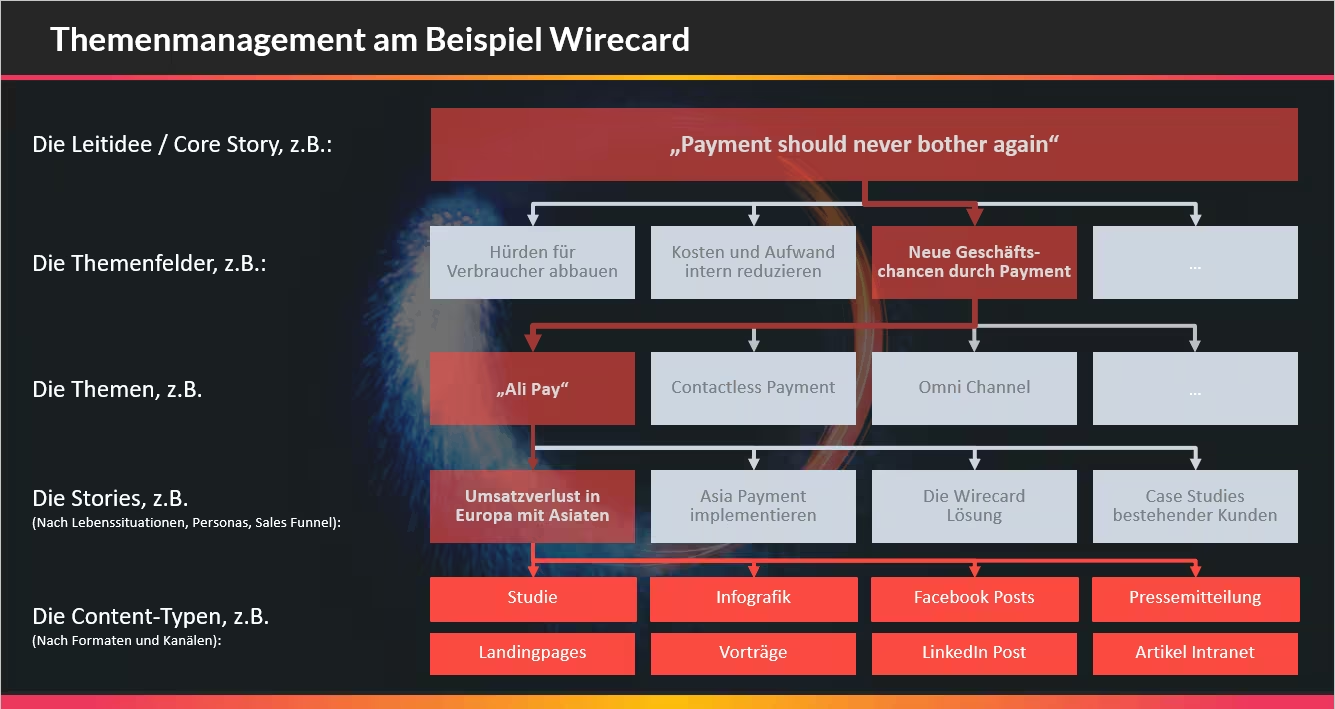
In doing so, you constantly ask yourself how you should approach a topic a subordinate story in the interests of the target audience: Which content formats, which dramaturgy, which channels, which substance, etc. And only when this has been defined for the topic story and across all disciplines do the topics who coordinate this process hand it over to the channel managers, who then finalize and distribute the content for their channel in coordination with everyone else.
This is not possible with Excel
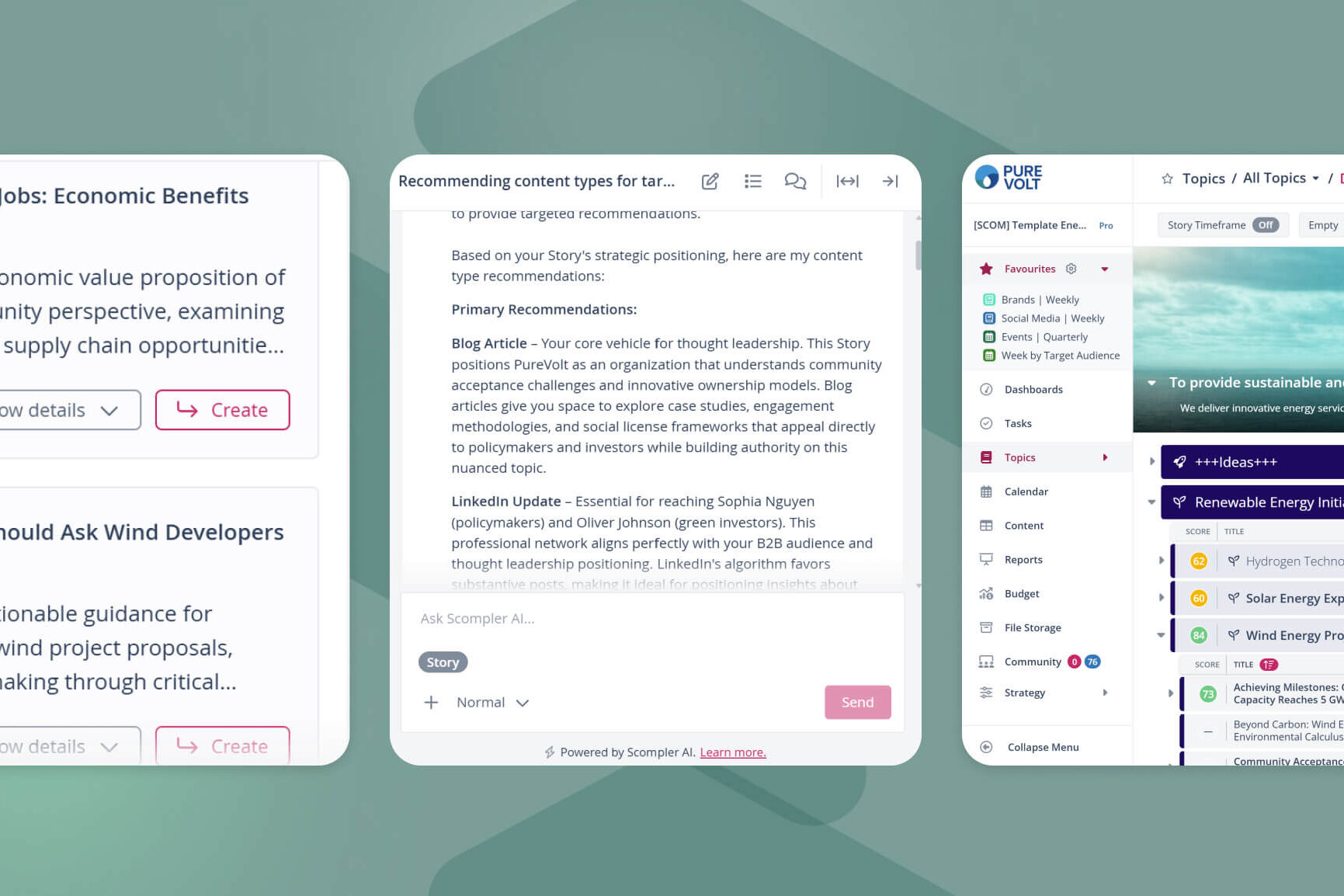
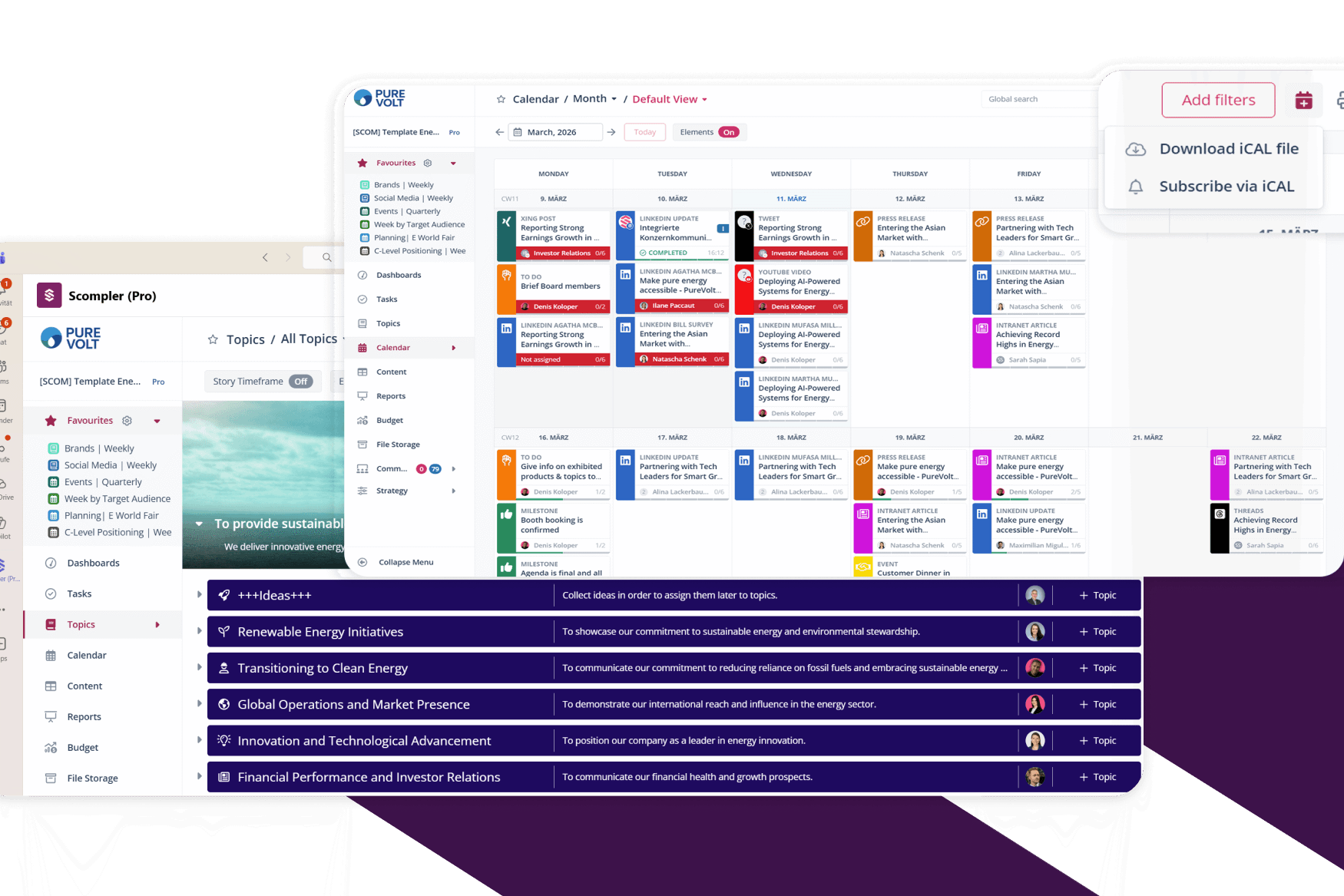
However, this type of organization brings with it another innovation, namely software platforms that virtually map this "physical newsroom", but - even more importantly - organize the processes and create the transparency that a physical newsroom alone cannot achieve.
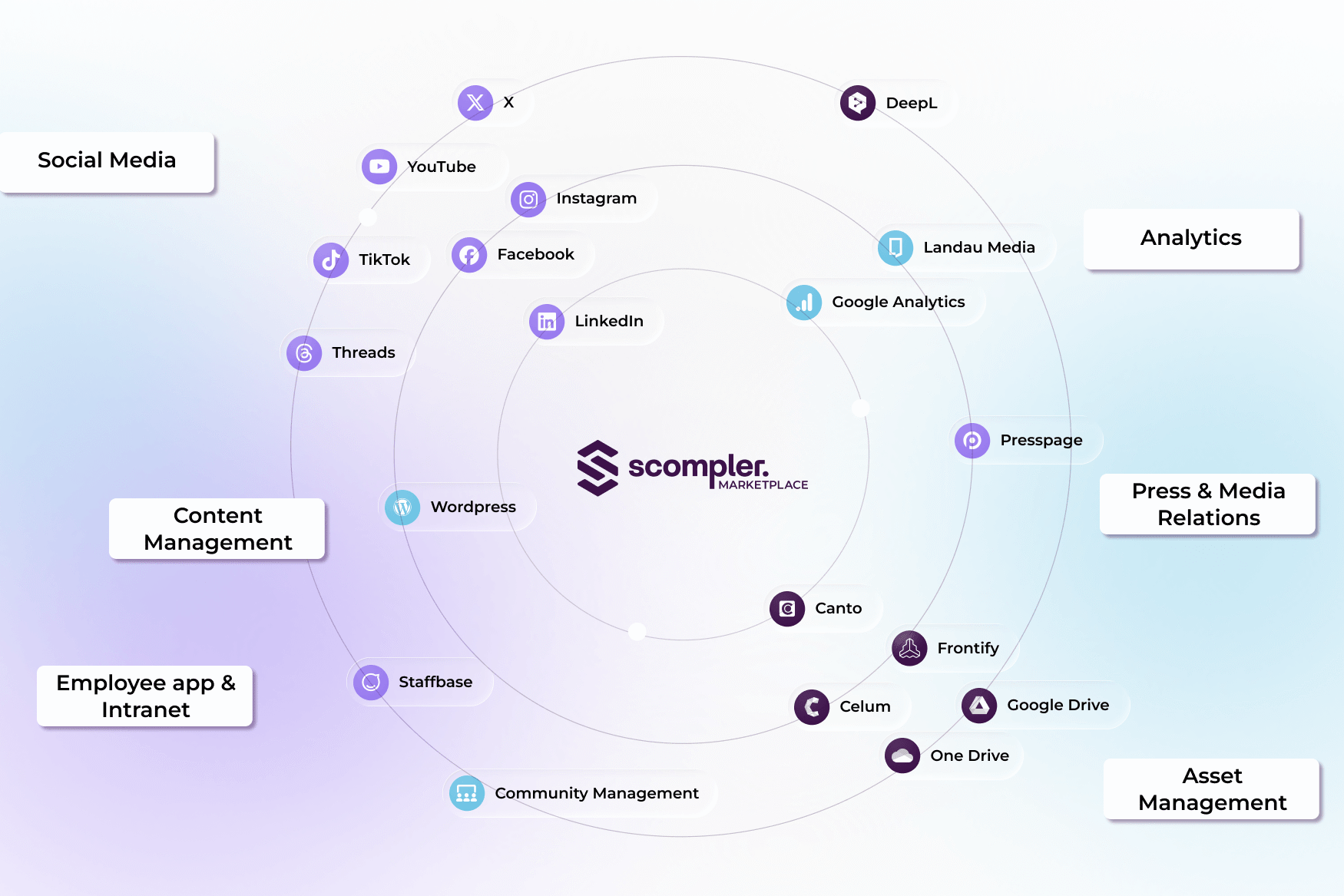
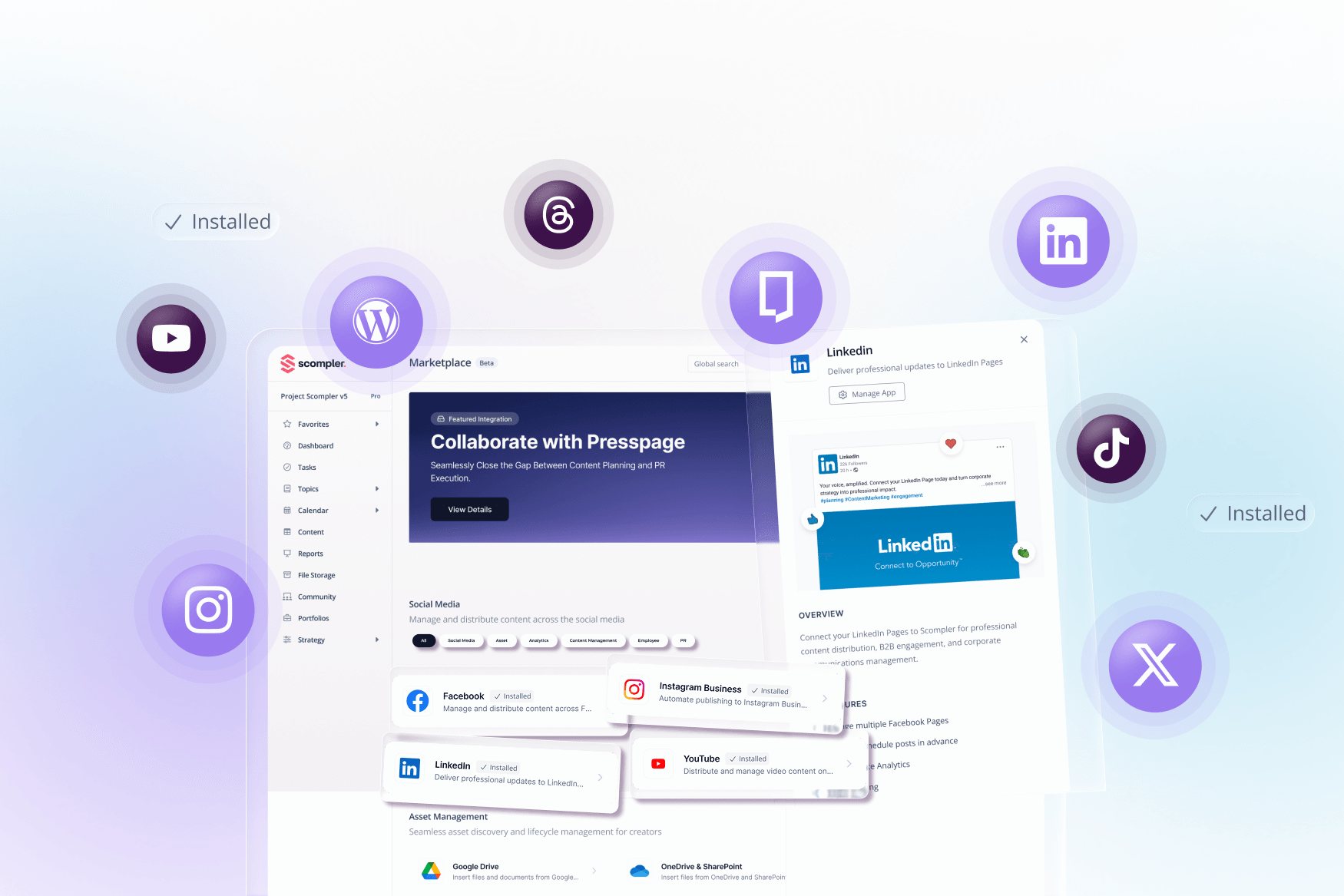
A CMF study in spring 2018 also came to the conclusion that these content marketing platforms play a key role today. However, anyone looking around this tool market is just as likely to get lost as Hansel and Gretel in a dark forest. Terms such as "content" and "content marketing" are used too generically. They are often just silo solutions, such as the provider Content Bird, which is very focused on the needs of SEO. Or Dirico, which comes from social media management. The same applies to MyNewsdesk, whose origins in classic PR are clearly visible, or Hubspot, which is primarily committed to performance marketing. These are all excellent tools. However, there is a risk that they will quickly reach their limits with regard to the task described above. This is not a weakness, on the contrary. It's just that they may not be perfectly suited to the higher-level organization.
A rethink is needed
Above all, a change in thinking is needed, namely from channel-centered to topic-centered work. The shift from a channel strategy to a topic strategy consists primarily of first developing a topic structure based on a central narrative, which is essentially the positioning of the company and has a lot in common with the brand. Then, thematic areas and topics are defined topics the entire year. What is still rough in the annual plan is gradually fleshed out in the quarterly, monthly, and, if necessary, weekly plans, for which overall editorial meetings are held. This ensures that current events are always taken into account without losing sight of the central theme.
The large American platforms such as Percolate, Kapost, Optimizely, and Opal, which were developed specifically for this purpose, are more suitable here. However, they also have the disadvantage that the servers are often only located in the US, which again raises data protection concerns. In this case, it is important to note that some of these companies also offer to install the platforms "on premises," i.e., on internal company servers. In Germany, Scompler, the author's company, is currently particularly successful. Like no other, it integrates topic management and content strategy into daily workflows.
The 7 core factors of a modern content marketing organization
These 7 factors are not sufficient, but certainly necessary conditions to make your organization fit for digital change and the future:
- topics instead of channel strategy: It is not about operating or filling channels, but rather about presenting topics in the best possible way and thus meeting the needs of target groups individually and consistently.
- Topic scoring and topic scoping: Instead of jumping at every opportunity and topics as many topics as possible, companies need to address their topics with varying degrees of intensity topics on their importance. This requires scoring the topics according to a fixed methodology.
- Storyboarding: For important topics , the topic topics be prepared topic many variations for different personas and phases in the conversion funnel.
- Atomized content: Content must first be created in a channel-neutral way and then later prepared for each relevant channel.
- Agile content strategy: Modern companies also develop their content strategy according to the principles of "agile" and "MVP" (minimum viable product). The content strategy must contain just enough information to answer the questions that arise in the content process for the entire team - and nothing more. If new questions arise, they are then included in the strategy.
- Topic manager: The role of topic manager is typical for this type of organization. He (or she) takes charge of organizing and developing topics their stories. The actual content creation and distribution is then handed over to the channel managers. This means that silos are not broken down, but made permeable and coordinated.
- Central content platform: A central content platform on which all communication disciplines manage all content transparently for everyone is of crucial importance. This must initially be a "virtual platform", i.e. software, and possibly also the physical newsroom.