



Practical tips for using AI in strategic communication
Scompler AI Use Cases
AI makes many things faster and some things easier, but it also makes others significantly more confusing and generic. At Scompler, we asked ourselves early on: What makes communication truly effective? The answer lies not in speed alone, but in strategic impact. That’s why we developed Scompler AI-not as an isolated “text generator,” but as a strategic partner that works directly where your goals, personas, and narratives already exist.
Scompler AI Use Cases for Content Strategy and Content Operations
- Create topics and fill gaps in the topic architecture
- Researchcompetition and trends on the web and update our strategy
- Brief the Stories and create the final content
- Review strategy attributes, review personas, and make recommendations
- Create a Personalized Daily Briefing
- Generatetext suggestions for your posts
- PrioritizeFormats and Channels
- Fill outthe content calendar; address risks and gaps
- Ensure a Consistent Brand Voice
- Perform bulk edits, project maintenance, and source verification
Scompler AI Use Cases in Thematic Architecture and Thematic Planning
Use Case #1: topics and fill gaps in the topic architecture
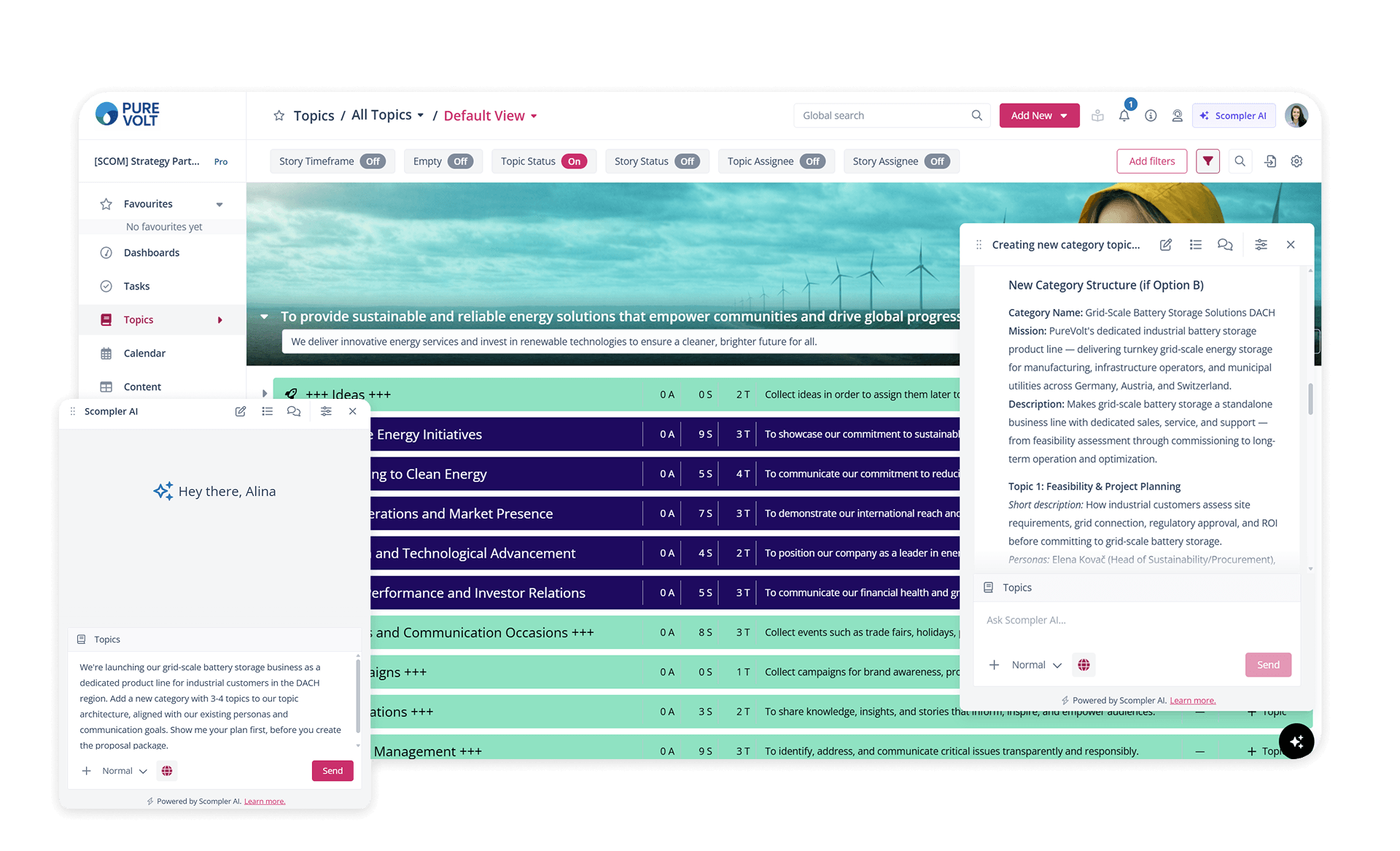
Your challenge: Your topic architecture has evolved over the years-but it’s not quite complete: some topic areas are underrepresented, there are overlaps in content, and important strategic topics employer branding are missing entirely. topic these issues manually, topic topic topic , takes hours. Or you could start from scratch and have to define your topics the ground up.
Your approach: You ask Scompler AI to review your topic architecture for gaps, outdated topics imbalances. The AI provides a structured analysis: missing time periods and target audiences, duplicates, linguistic ambiguities, or completely missing strategic topics. It adds new topic areas only after you approve them.
Your benefit: In just a few minutes, you’ll receive an honest assessment of your current situation or help with a complete overhaul, including a detailed changeset with brief descriptions, relevant personas, and content models. Nothing is created without you: You decide what to adopt, adapt, or reject.
Prompts for Topic Creation and Topic Architecture Review
- We are launching the following product campaign for our industrial customers in the DACH region. To do this, add a new category to our topic architecture with 3–4 topics tailored to our existing personas and communication goals. Please submit your plan to me first before you create the proposal package.
- Review my topic architecture for gaps in thematic consistency and identify any content duplication, outdated topics missing linked personas in my communication strategy. Please present your plan to me first before you put together the proposal package.
How-To: topics and Creating topics with Scompler AI
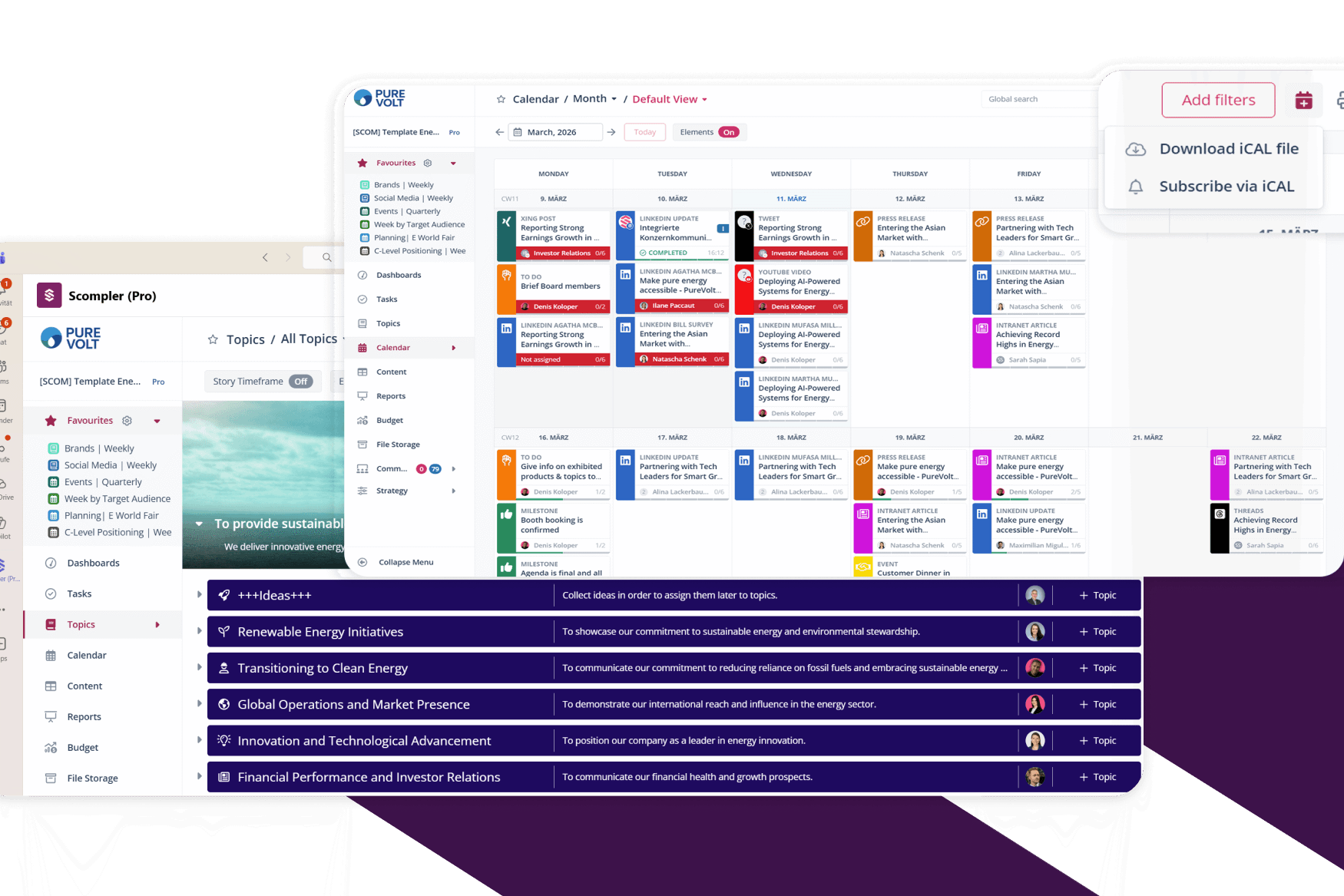
Alina will show you key use cases live in Scompler
Use Case #2: Researching Competitors and Trends on the Web and Updating Strategy
Your challenge: You want to know which topics competitors are covering, where the gaps in the market are, and what’s being discussed in the industry. So far, that’s meant using other tools to do your research and then comparing the results to your own framework-either manually or using screenshots.
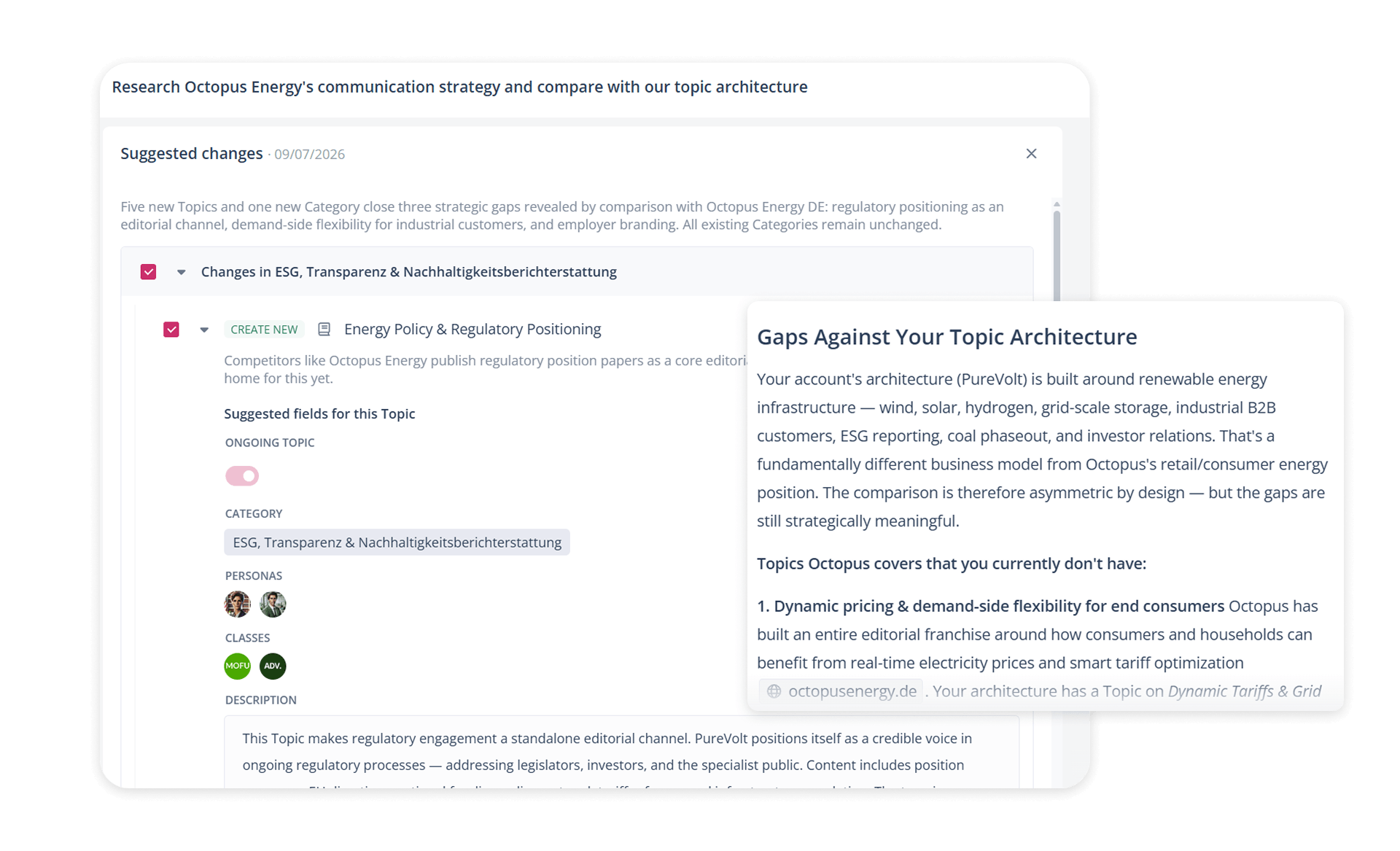
Your approach: You ask Scompler AI directly in the chat what a competitor is currently communicating. The AI searches the web, provides a structured overview with sources, and compares it to your topic architecture-including suggestions on how you can differentiate yourself and which relevant topics are topics unaddressed.
Your added value: Competitive and trend research right within your topic architecture, without switching tools or performing manual comparisons. Gap analysis, competitive analysis, and topic suggestions-all within a seamless workflow.
Prompt for comparing your content with your competitors' topics
- Research Octopus Energy’s current communication topics and content strategy, starting at https://octopusenergy.de. Compare them with our topic architecture: Which topics do they cover that we don’t have? List your sources.
Use Case #3: From topic the briefed story to the final content
Your challenge: A new topic has been identified, but there’s still a lot of manual work to be done between the initial outline and content that’s ready for publication: developing the story, tailoring it to the right persona, writing the briefing, choosing the format, and finally drafting the copy.
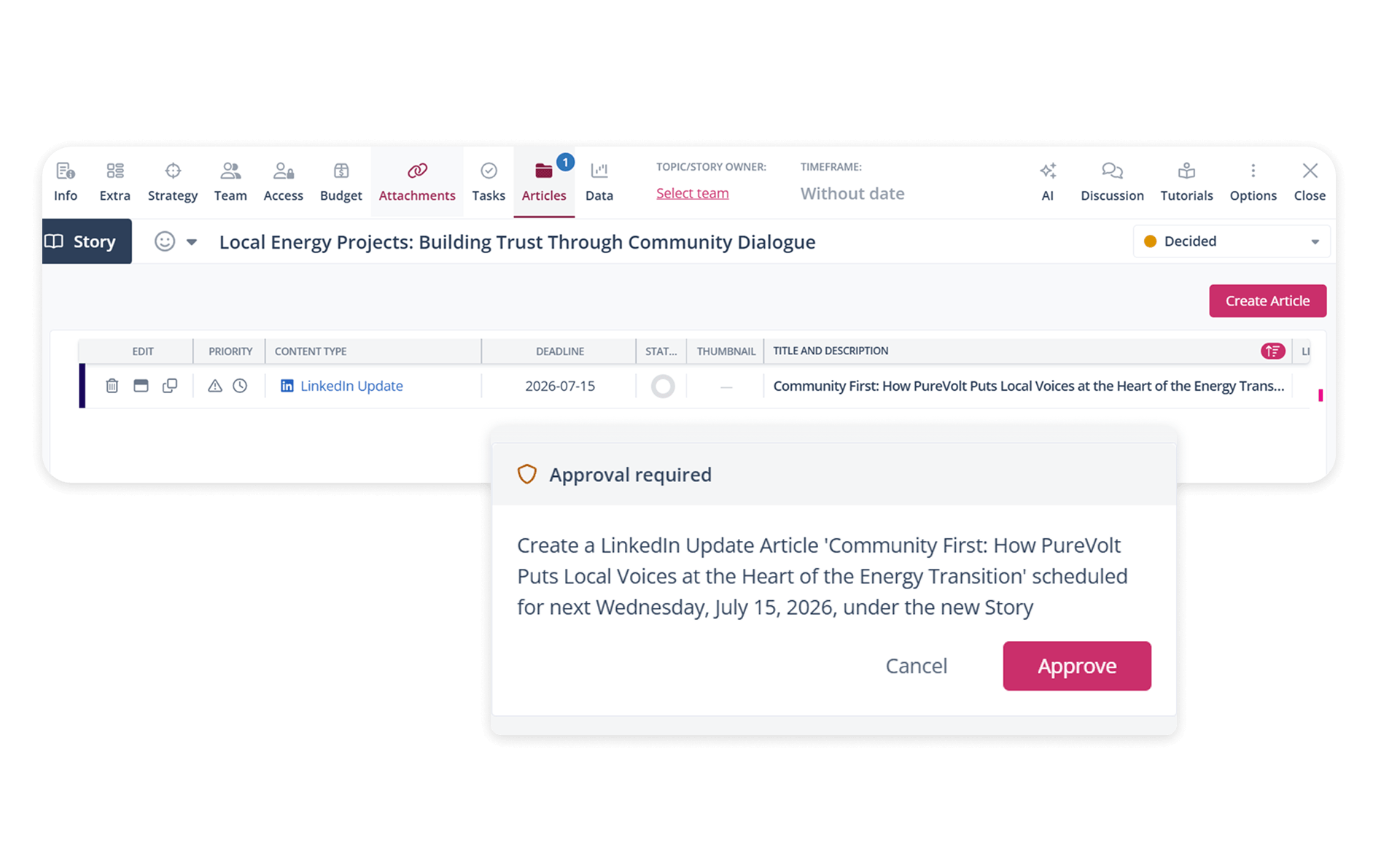
Your approach: Scompler AI understands the context of your topics . It selects your specific topic, suggests story scopes, assigns the appropriate persona, and briefly explains its choice. From there, it creates a brief story and an initial post, such as a LinkedIn post.
Your added value: From your strategic topic to the final copy in a seamless process. You’ll receive a complete story, including a fully written LinkedIn post in your corporate style, strategically aligned with your topic and persona. You decide which version to adopt, adapt, or discard.
Prompt for Story and Content Creation
- In one of the new topics, please create a story for the persona that best fits it, along with a LinkedIn post as the first post for next week. Choose the topic and persona yourself from the project and briefly explain your choice.
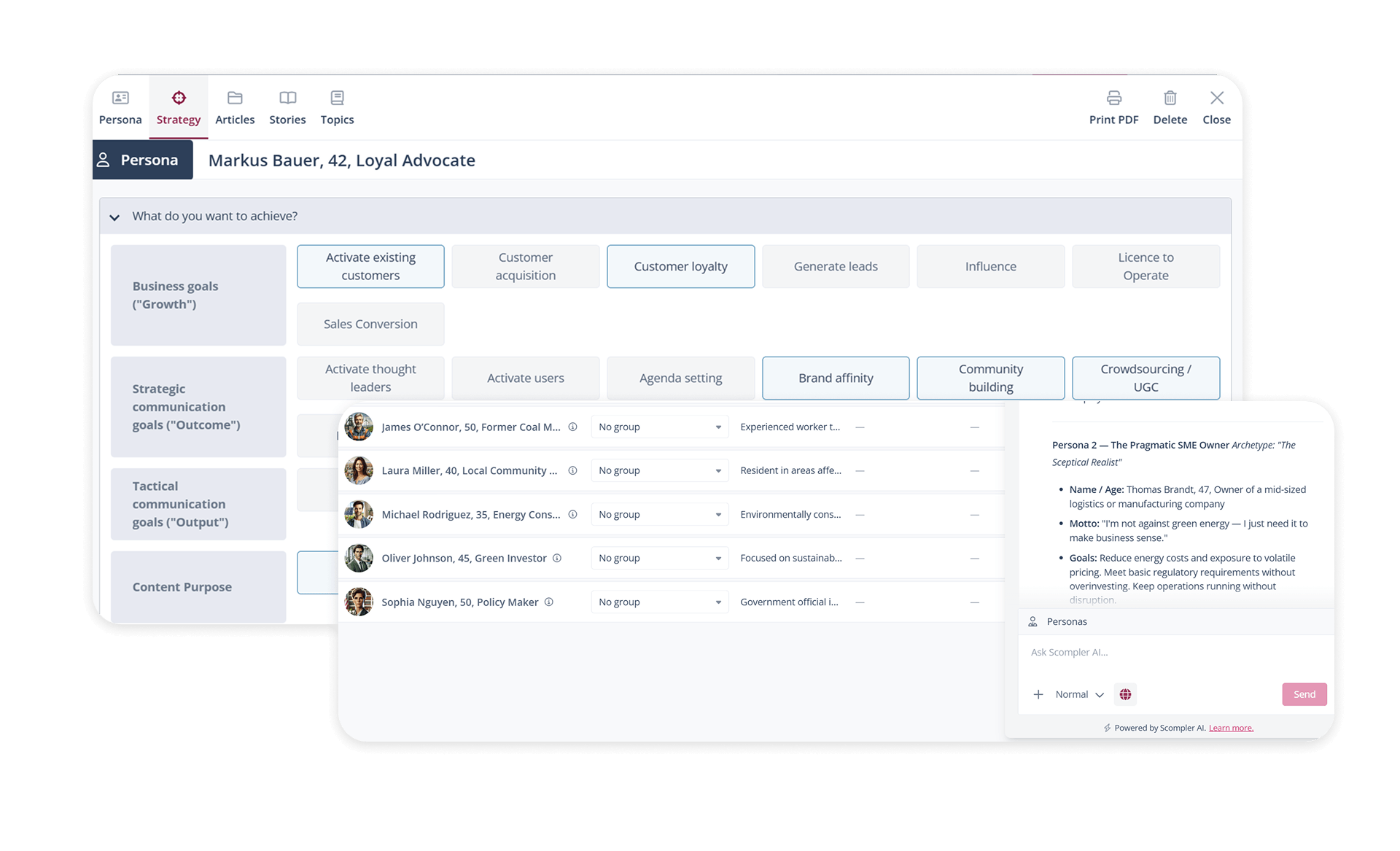
Use Case #4: Review Strategy Attributes, Review Personas, and Create New Ones
Your challenge: You're unsure whether your personas are a good fit, or you want to check whether the strategic attributes you've defined-such as goals, messages, and markets-adequately cover your communication strategy.
Your approach: Scompler AI evaluates your personas and strategy attributes against your goals, makes appropriate suggestions, and completely revamps them: personas with archetypes, goals, challenges, and psychographic profiles, as well as any missing strategy parameters.
Your benefit: You’ll gain clear insight into gaps in your personas and strategy, plus concrete, strategically designed profiles and attributes-all in just a few minutes. You decide which suggestions to adopt, adapt, or discard.
Practical Use Cases: How to Build and Implement Your Strategy with End-to-End AI
Scompler AI Use Cases in Content Operations
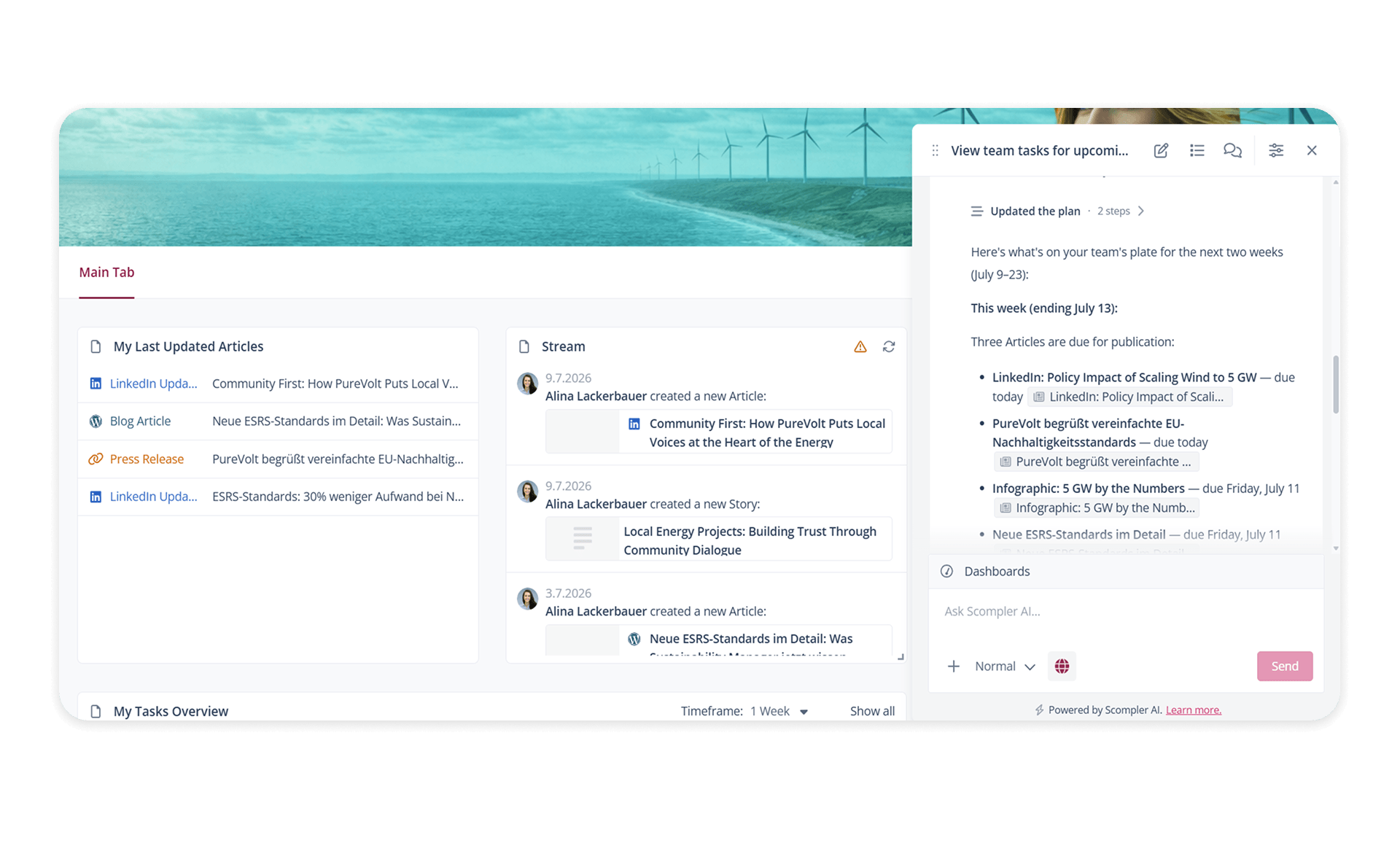
Use Case #5: Create a Daily Briefing
Your challenge: Starting the workday often means getting a handle on things first: What’s due today and this week? Which approvals are pending, and which tasks have been assigned to me? All this information exists within your project-but it’s scattered across calendars, to-do lists, and notifications.
Your approach: You ask Scompler AI directly in the dashboard what’s on the agenda for this week-either just for you or for your entire team. The AI analyzes deadlines, tasks, and the status of your content, then condenses everything into a prioritized briefing: upcoming deadlines, overdue content, and pending tasks-organized by urgency and supplemented with recommendations on what you should tackle next.
Your benefit: Instead of clicking through multiple screens in the morning, you’ll receive a single, AI-generated briefing in a matter of seconds. Fewer context switches, a more efficient start to your day, and the assurance that nothing important will slip through the cracks.
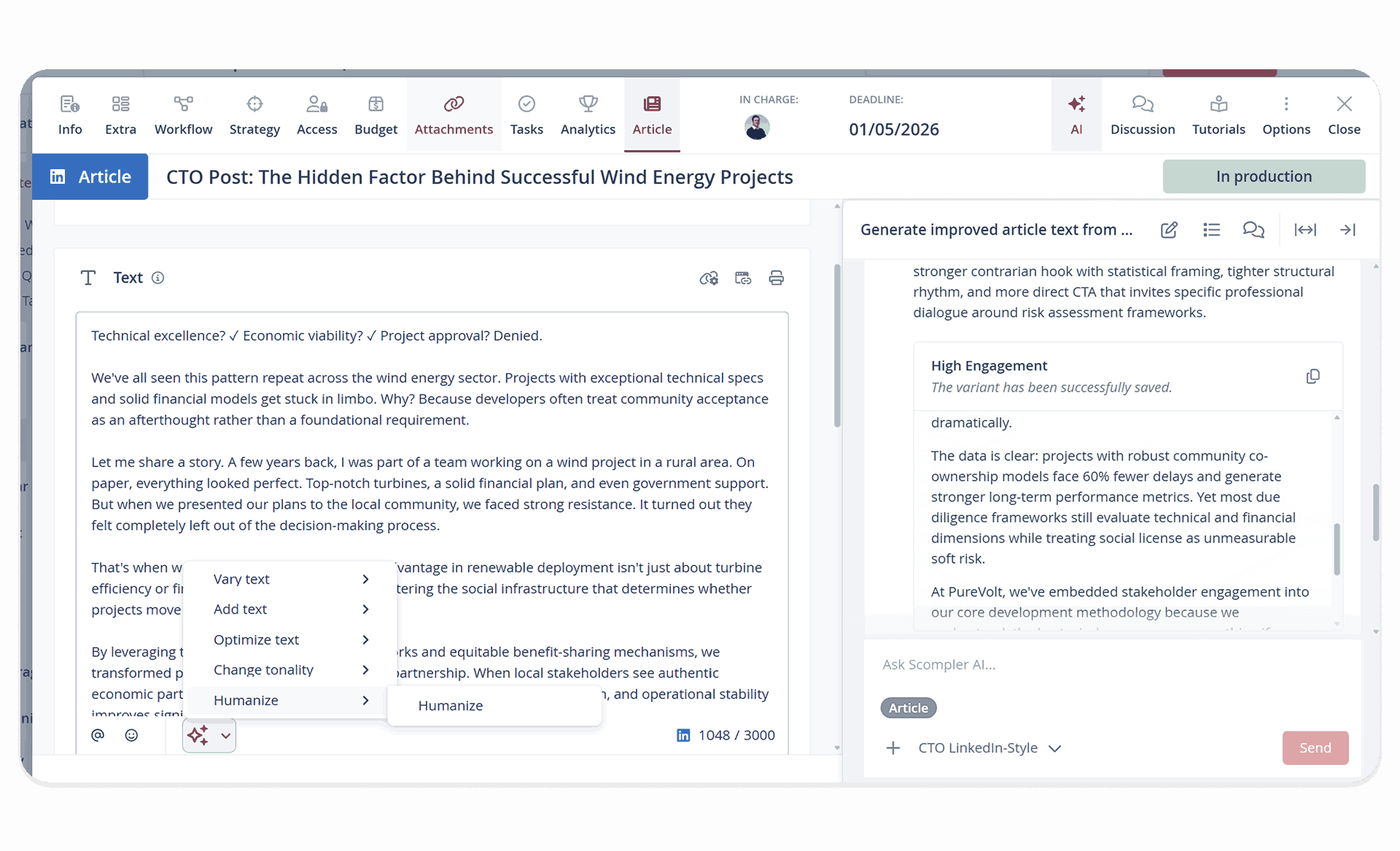
Use Case #6: Generate text suggestions based on your data
Your challenge: Generic AI tools often only deliver a standard style that rarely fits perfectly because they lack context and data. They also have no access to similar content on topic, top-performing posts from recent years, or event-related content.
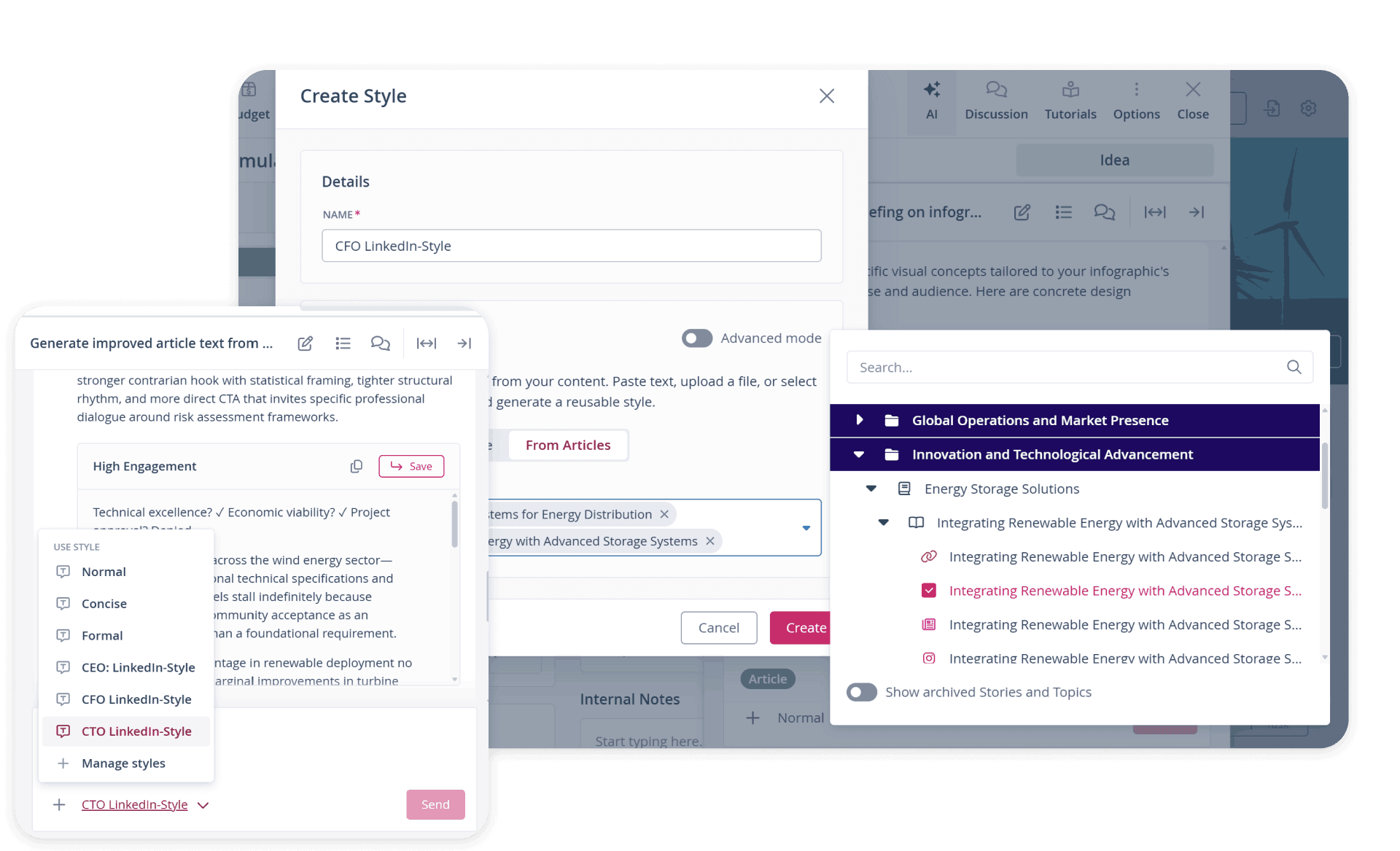
Your approach: Scompler AI directly accesses all your stored project data-from strategy and persona profiles to the narratives of your wind project. Based on this understanding, Scompler AI generates versions such as "Balanced," "High Engagement," or "Audience Match," and draws lessons from other project content. In the text field, you can apply Scompler AI even further-for example, to humanize the text, translate it, or add CTAs.
Your added value: Your AI knows your communication projects. You immediately receive variants that are technically in-depth or maximize interaction-always tailored to your strategic attributes and project data.
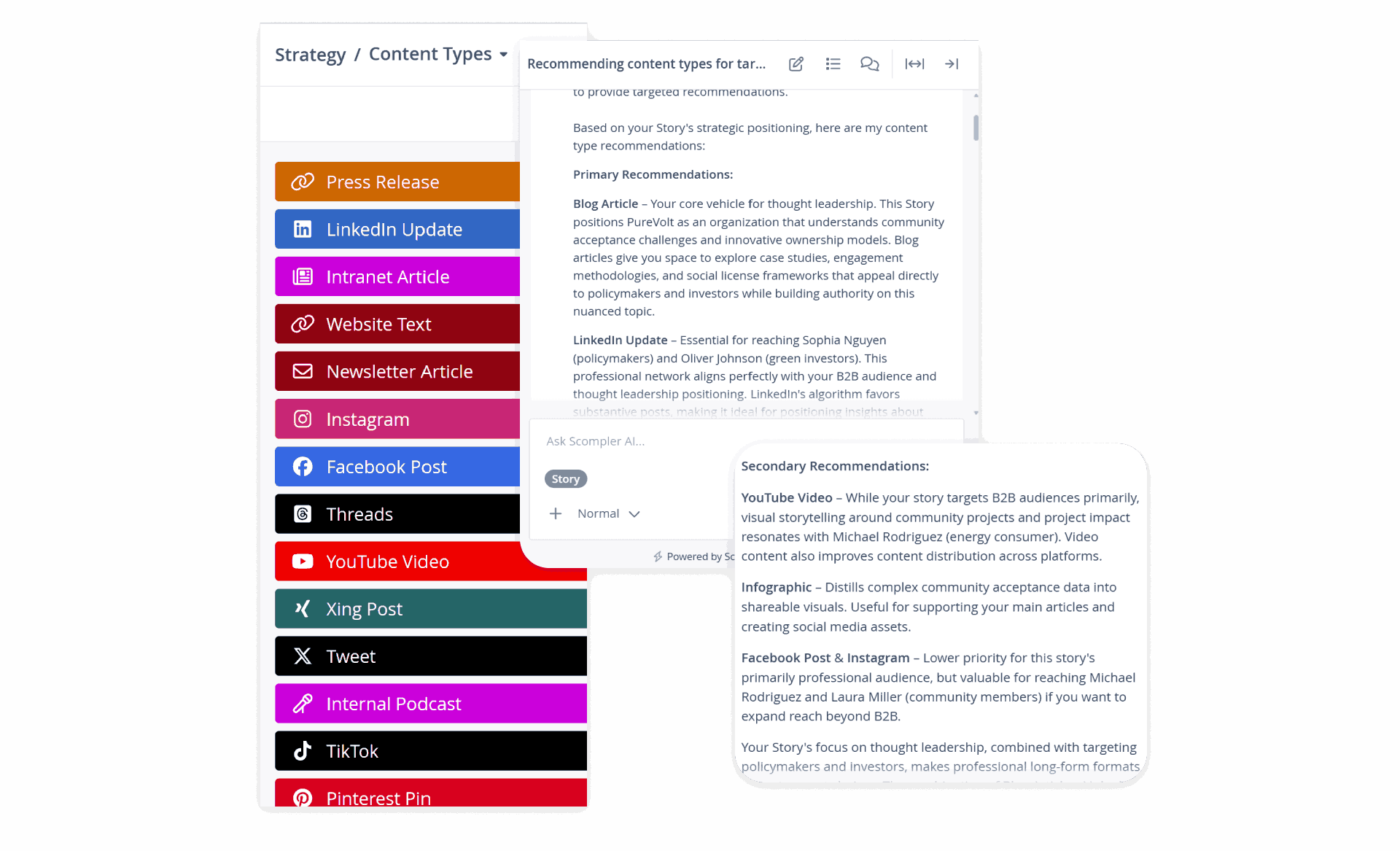
Use Case #7: Prioritizing Formats and Channels
Your challenge: Is a LinkedIn post and a short video statement from the CEO sufficient? Or do we need detailed formats to reach our target groups with the story "Community acceptance and social license for wind farms"? Choosing the right content types is often a matter of gut feeling, habit, or resource assessment.
Your approach: Scompler AI analyzes your topic story and suggests a mix that it divides into primary and secondary content types: a white paper for the trade press, a short video statement for social media, and an interactive report. The AI creates the briefings for these with a single click.
Your added value: You save hours of planning time and receive AI-powered recommendations for your story. Your editorial plan fills up with formats that are proven to contribute to your goals.
Practical Prompts for Scompler AI
- Project Health: Check the content in our project for missing metadata: deadlines, personas, channels, and content types. List the affected items and suggest next steps.
- Bulk Edits: Move the story “[Story Title]” and all associated posts back two weeks. Make sure that no post falls on a weekend; if it does, suggest the next business day.
- Source Check: Review the LinkedIn post “[Post Title]” before publishing: Which statements are not supported by sources or project data? Where possible, find supporting evidence online and flag anything that cannot be verified.
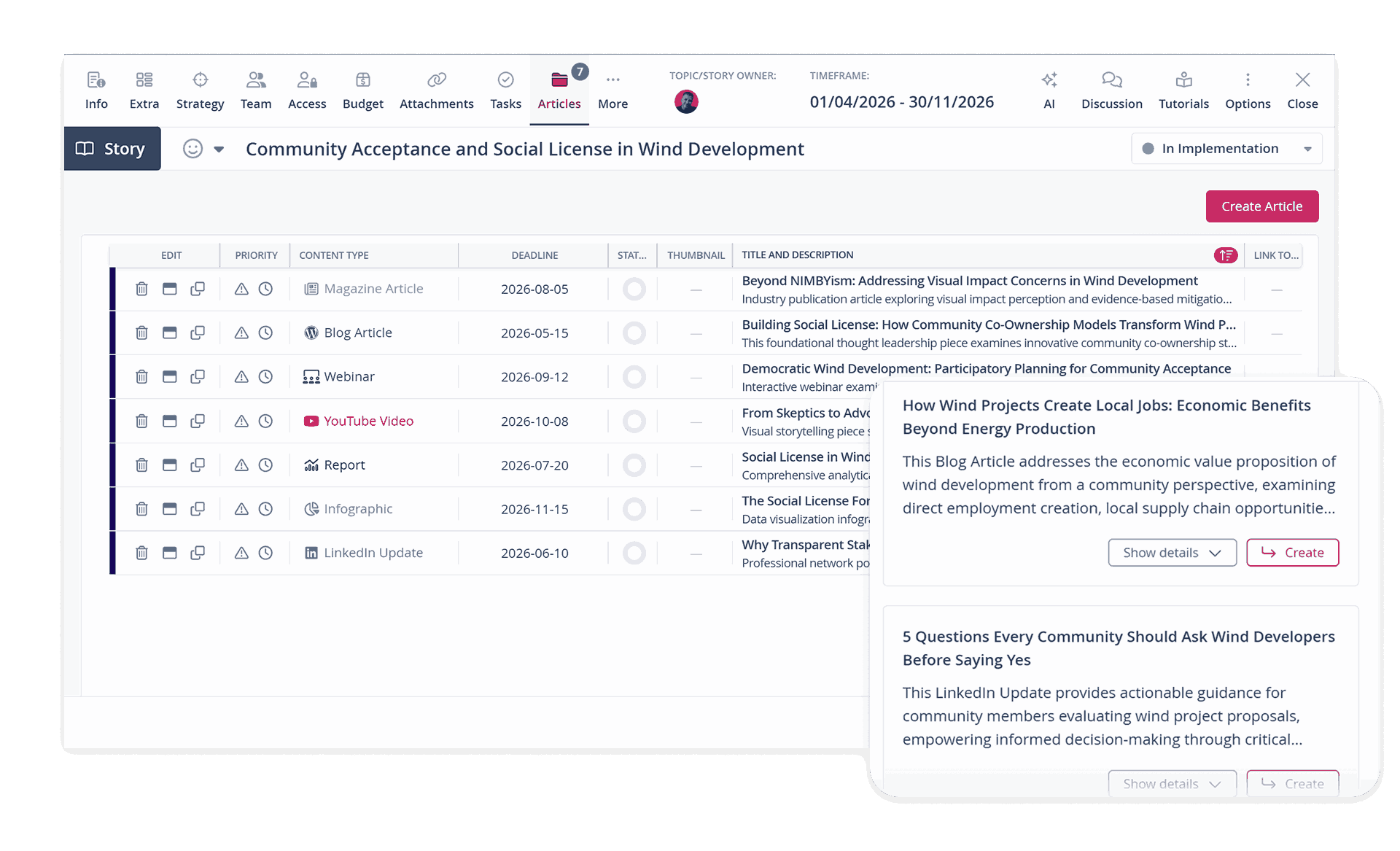
Use Case #8: Fill Your Calendar and Fill in Gaps with Just a Few Clicks
Your challenge: Manual system maintenance as part of content planning takes up a lot of time. You have to create each post, figure out the timing, identify gaps in the calendar, come up with titles, and write briefs.
Your approach: With just one click, Scompler AI creates the complete story structure, including articles, optimized headlines, chronological order, and briefings. Scompler AI also identifies gaps in your calendar planning, missing deadlines and responsibilities, and alerts you to risky publication periods.
Your added value: What used to take hours of manual work is now handled by AI in seconds. And Scompler AI alerts you to risks in your planning that you would otherwise overlook.
Use Case #9: Consistent Brand Voice-with language guidelines and C-level tones at the click of a button
Your challenge: C-level communication must appear authentic while also matching the brand voice. At the same time, every company and every mouthpiece has its own language rules-specific buzzwords or strict character limits for LinkedIn posts. This ghostwriting, including checking all corporate guidelines, is manually time-consuming and prone to errors.
Your approach: Scompler AI knows the language of your C-level executives as well as your stored language rules and format specifications, which you can individually enter, upload, or cross-link yourself. It automatically adapts the tone of your executives for the respective channel and proactively corrects terms in accordance with your corporate identity.
Your added value: You deliver brand-compliant C-level content. The tedious proofreading of formalities and tonalities is almost completely eliminated. AI guarantees consistency and builds trust among stakeholders-without endless feedback loops.