
Integrated communication - strategic, topic-centered and across silos

One company - one voice? That was a long way off
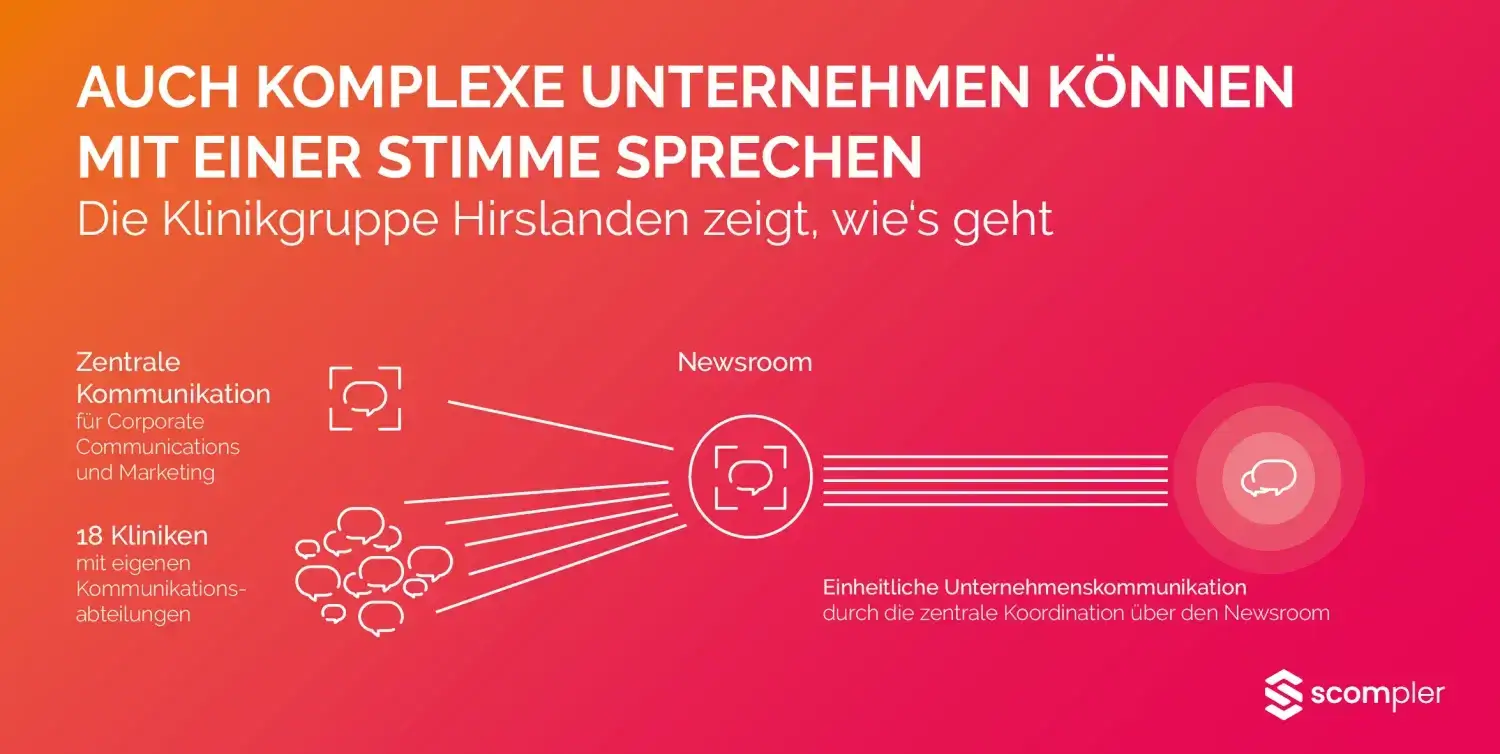
Our conversation with Frank Nehlig and Cindy Hameed, who are primarily responsible for overseeing the introduction of the newsroom and Scompler, offers extremely exciting insights: on the one hand, into extremely successful change management and, on the other, into the challenges faced by a complex company when restructuring its communications. The need for significantly better coordination and greater transparency within and between corporate communications and marketing at Hirslanden has become increasingly apparent since 2016. There was growing dissatisfaction with the fact that the communication measures of the individual clinics and the head office were hardly coordinated: people knew little about each other's ongoing activities and upcoming projects, were unable to provide information in a timely manner, learn from each other, or exchange ideas. And communication planning was also becoming almost impossible to manage. The classic problem: far too many decentralized Excel files with no links between them," says Frank Nehlig. The company simply wasn't speaking with one voice. So it was high time to fundamentally change the way communication worked.
Inspiration from the market environment
When Frank Nehlig joined Hirslanden in 2016, he brought with him the idea of establishing a newsroom for 18 clinics and such a broad range of topics in order to come a step closer to the goal of coordinated and integrated communication. Further inspiration came from specialist events at which a number of companies spoke about their newsroom approaches - including Mobiliar, SUVA and PostFinance.
"We wanted more than just a replacement for our Excel spreadsheets"
"In discussions with SUVA, we then learned about Scompler and quickly realized that it met many of our requirements," says Nehlig, describing the start of the active search for the right tool for Hirslanden.
Usability is the be-all and end-all for user acceptance
For Cindy Hameed, the future users were clearly the main focus: "I have already introduced two other tools in the company and know exactly that user-friendliness is the be-all and end-all for acceptance by employees. And Scompler is simply way ahead in this respect."
The intuitive menu navigation and the many options for customizing and hiding features were found to be extremely helpful. Initially, the platform was kept very lean and clear for users, with more strategy attributes being added step by step. "I thought it was great how Scompler could be customized to our needs," says Hameed.
Cindy Hameed sees another point as a huge plus at Scompler:
"The following was not a factor in our decision to choose Scompler, because I didn't know about it at the time. But I am absolutely thrilled with how quickly Scompler implements the adjustments we need for the clinic group in the software. When I receive requests for functional changes from the clinics, I quickly discuss them with Scompler, always feel understood, and we find a solution. And in two to three weeks, i.e., one "sprint" (SCRUM) later, the result is implemented. Great! This helps me so much with user acceptance because everyone feels taken seriously and respected."
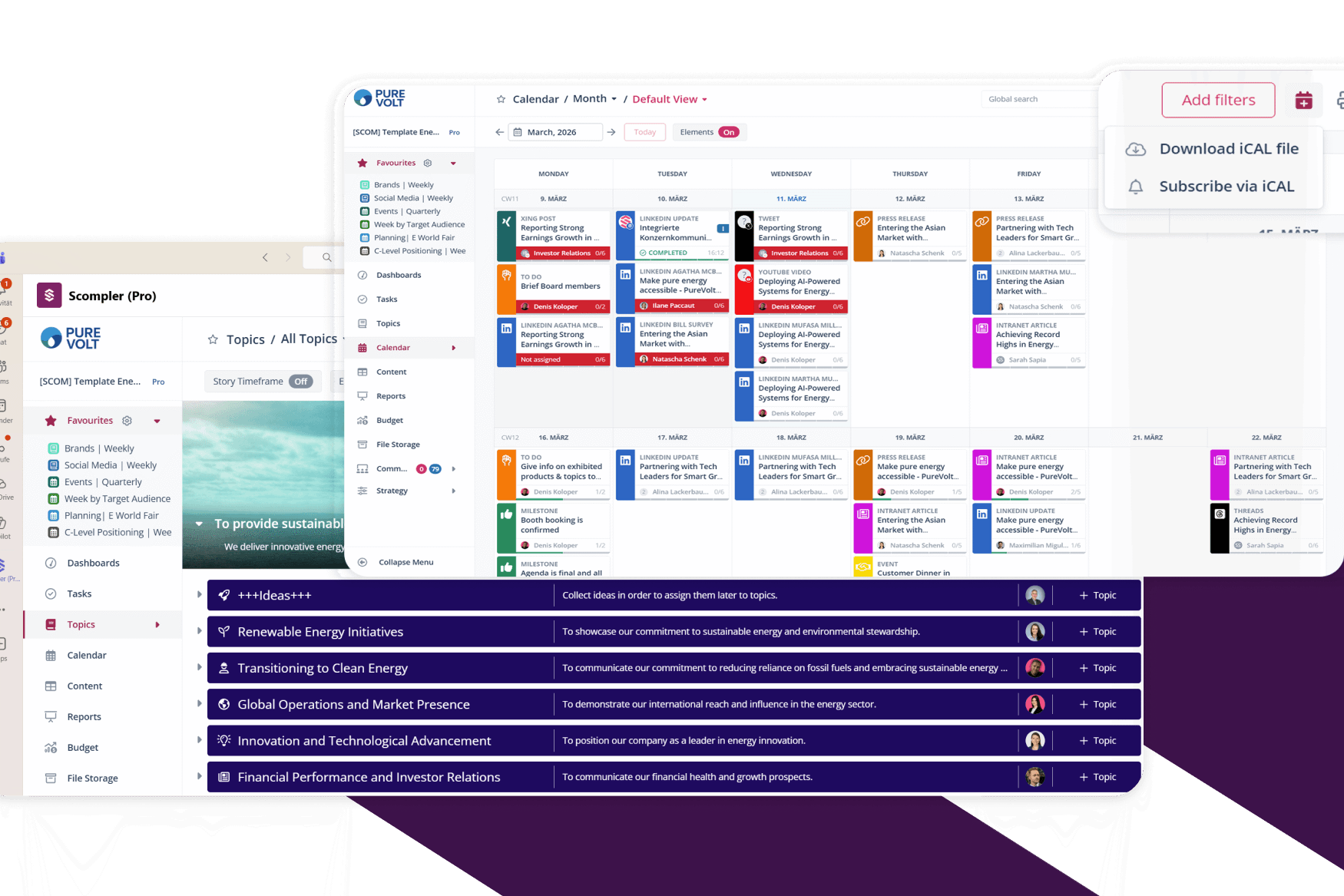
The strategic newsroom approach and topic structure in Scompler are a perfect fit for Hirslanden.
Parallel to, and perhaps precisely because of, the introduction of the newsroom approach and the search for tools, a rethink also began in Hirslanden's marketing department. The previously traditional product managers were now organized in the new "Theme Management" team and the head of this team was heavily involved in the development of the newsroom concept.
Nehlig and Hameed agree: "Yes, we wanted to communicate even more strategically. And Scompler provides the best support for that."
Interim results approximately 10 months after the introduction of the newsroom and Scompler
Hirslanden is already benefiting in many ways. Rosanna di Bello, Team Leader Marketing Communication & Campaigns, summarizes: "We used to work with countless Excel spreadsheets and had to actively gather information from the clinics. That required a lot of coordination. Now we discuss upcoming measures in weekly editorial meetings, using Scompler as a group-wide planning tool. The corporate newsroom and Scompler help us implement the 'content first' approach and thus coordinate measures much better across the group."
Frank Nehlig is also pleased with the benefits of the new way of working: "We have a much clearer overview of what we have already done and why. And we can now see for ourselves and also use the reports to show the Group management how we have progressed."
The path to change leads through many doors - and you need the right key for each one
The two change management experts knew that switching from channel-oriented to topic-oriented work, establishing the newsroom, and introducing Scompler would be a tough nut to crack. They approached the change with patience and caution, ensuring that everyone involved remained engaged and motivated throughout the process.
The change process that has been so successful at Hirslanden can be divided into four phases:
A small project team designs the new newsroom strategically and plans the first organizational steps. At the same time, this newsroom is also being physically created and set up.
Part of the entire team is selected as a pilot group. At Hirslanden, the pilot group consists of 6 of 18 clinics and part of the corporate office. The pilot group receives thorough training in Scompler and the new processes and structures, as well as individual support if needed.
Once the pilot group felt that everything was running smoothly, the newsroom and Scompler were rolled out across the entire company. Cindy Hameed: "This marked the start of the process all over again, but now on a much larger scale: training, individual support, continuous joint optimization, software adjustments."
Now we will move on to the next phase. Nehlig: "So far, we have been asking the team members in the clinics: 'What do you actually do? Now we are starting to ask: 'Why are you doing this? And how do you do it?', paving the way for a much more strategic approach to communication."
Would you like to optimize internal collaboration as well as coordination and approval processes in your team? Click here for our detailed customer story with the Hirslanden Private Hospital Group.