






"The strategy forms the basis for social media management."
Interview with Svenja Teichmann
Svenja Teichmann // Social media & content expert
At crowdmedia, Svenja Teichmann advises companies in the B2B and B2C sectors on issues relating to digital strategies with a focus on social media and content marketing. As a speaker, moderator, and trainer, she shares her knowledge and practical experience on these topics.
Svenja Teichmann is the founder and managing director of our partner crowdmedia. crowdmedia is one of our partners with whom we implement social media strategies. We asked her what challenges strategic social media management poses and why she relies on Scompler.
Svenja, why is strategic social media management becoming increasingly important?
Strategic social media management is becoming increasingly important in order for a company/brand/service to be heard and seen in the flood of content on social media. Nowadays, everyone with a digital device, such as a smartphone, has the opportunity to publish content in the form of photos, text or video content via social media apps 24/7. The result: an almost infinite number of posts are published every minute on Facebook, Instagram and the like. It is therefore no longer enough to simply publish "good content" to get through to the masses. These must always be geared towards the set goals and identified target groups and offer added value for the latter.
It should always be about thinking from the strategic basis, in terms of goals and target groups and the core of the message you want to convey, and not directly from the channel. The question should therefore never be "What do we post on Facebook?", but rather "What content has added value for us, our goals and our target group and on which channels should we play it out in which formats for specific channels?"
Publishing a post is by no means the end of the story. Distribution via ads, community management and interactions are just as much a part of this as the planning, creation and posting of social media contributions. Not to forget: a holistic strategic approach always includes measuring success and deriving learnings in order to move on to the next creative idea generation and editorial planning.
What hurdles need to be overcome in order to achieve success?
In any case, it is a challenge not to lose sight of the objectives and goals and to always remain innovative, in the sense of always trying out new formats and trends.
The biggest challenge is probably the short attention span of users: they scroll through their feeds and stories and our challenge as marketers is to place content here that stands out visually to such an extent that it generates curiosity and becomes a thumb-stopper. This is the only way we can be seen at all and generate interactions, clicks or conversions.
What role do the aforementioned thumb stoppers play in this?
Content plays a central role, if not the central role, in social media management. At its core, it is always about preparing the message you want to spread in targeted, added-value content. This should meet the following requirements:
- Content should match both the company's goals and the user's interests,
- at best clarify questions or problems posed by users,
- they entertain and/or inform and
- trigger emotions in them in order to be remembered in the long term.
Marketing needs content - social media is "just" a channel. In our view, operating social media without the strategic approach of content marketing is not expedient and does not do justice to the channel and the potential of social media.
How does strategy come into play in this discipline?
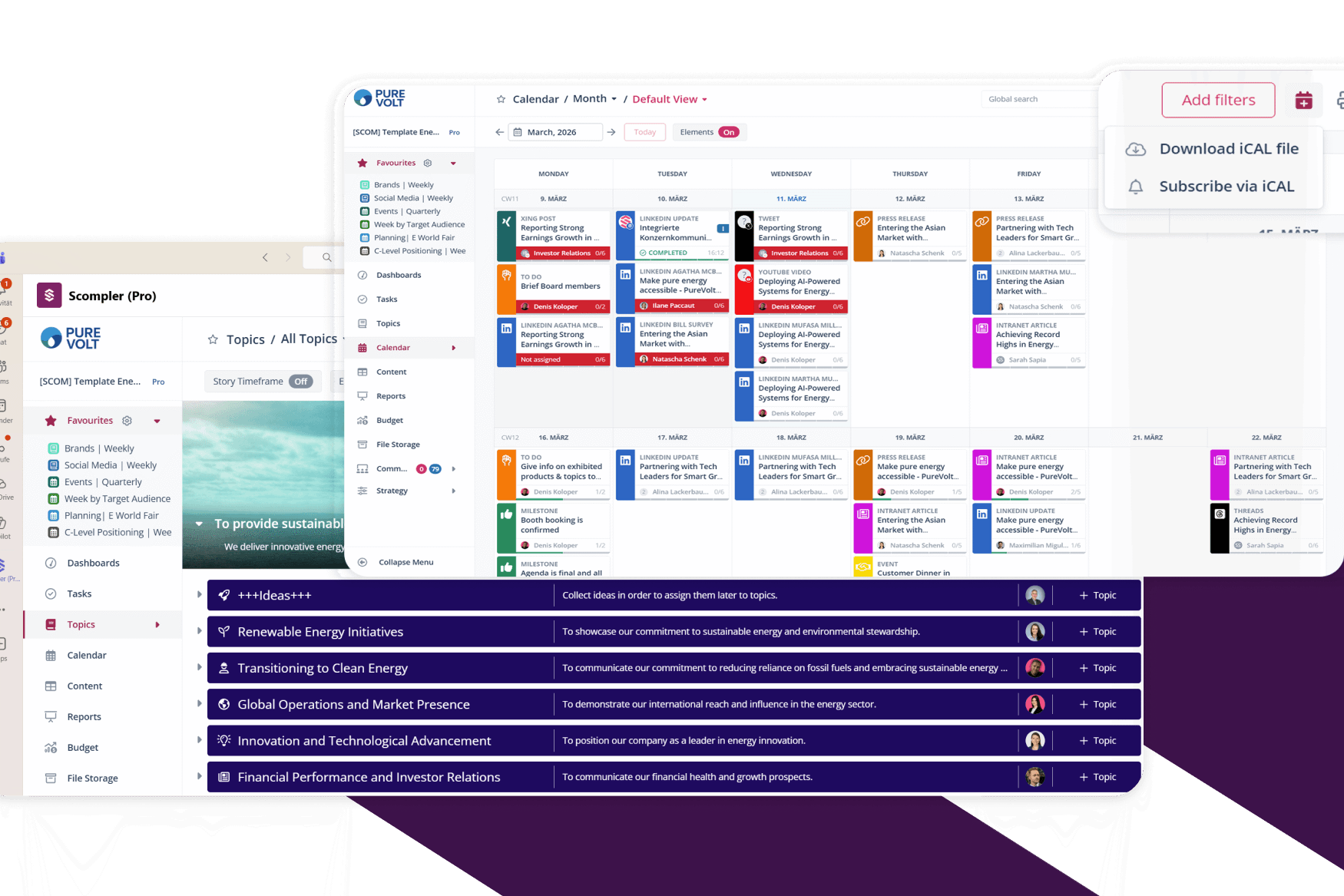
See also the answer to question 1. The strategy forms the basis of social media management. In order to measure the success of posts, you first have to define your goals: what does success actually mean for us? These goals must be operationalized in measurable KPIs (e.g., the "number of impressions" metric for the goal of reach). In addition, you should identify your target group (e.g., using the persona approach) and find out what questions, needs, interests, and demands they have regarding the products or services you offer, which channels they use, where they already have touchpoints with you, etc. You should also ask yourself what the core message is that you want to convey when creating content for social media—what is the "WHY?" Once you have defined this, you can quickly identify topics relevant to your target group topics added value, which can be prepared in the form of channel-specific content and distributed via social media platforms.
And crowdmedia then helps with distribution?
At crowdmedia, we have 3 different roles or combinations of them with our clients.
- We are strategists & concept developers: We develop or revise social media strategies and then develop content & channel concepts based on them
- We are implementers: we work with or for our clients on social media channels, which means we develop campaigns and always-on content and also produce it
- We are sparring partners: We look (together) at the goals again and again, derive recommendations for action from the KPIs and consistently develop the social media activities further
What role does Scompler play for you in this?
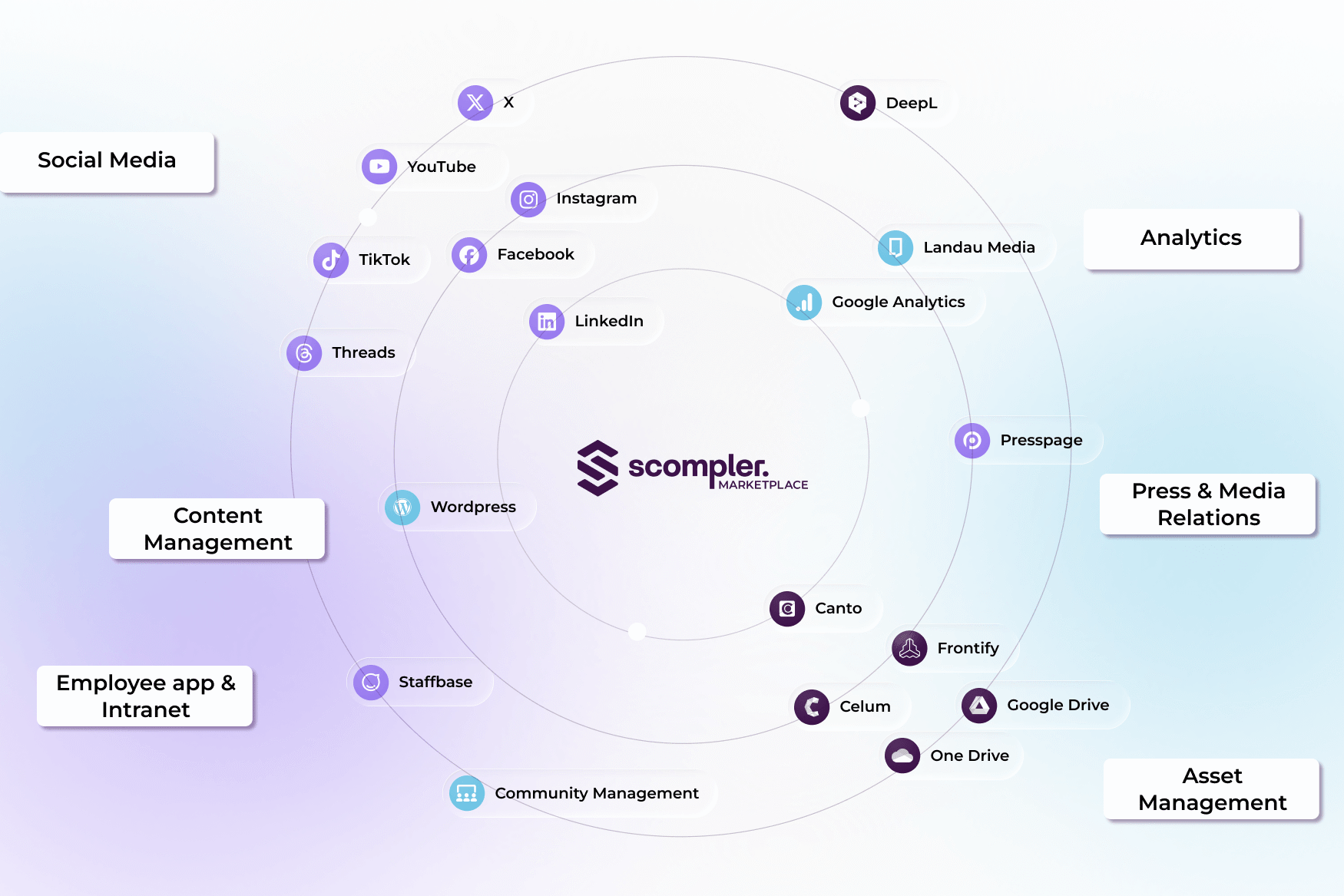
There are many tools available for professional social media management. But when it comes to disseminating a strategic content marketing approach across (social media) channels, Scompler is the leading tool that helps companies pursue this approach consistently. At the same time, we notice that marketing managers are increasingly busy with day-to-day business, so they need a procedure or tool that makes it easier for them to consistently pursue their strategy. We do this with the use of Scompler.
Where does the topicality of the subject come from?
Budgets and resources are not growing proportionally to the possibilities (channels, content formats, etc.). Therefore, it will become increasingly important for content to achieve its goals. In addition to topic for measuring success, which are also becoming increasingly important, it is essential to link the results to the goals. When we aretopics , i.e., branding, image, etc., the connection between strategy (what and whom we want to reach) and the results from social media content is becoming increasingly important, and this is where Scompler helps enormously in establishing this connection. We are already seeing a growing demand here, which is sure to increase in 2022. It is becoming increasingly clear to companies and marketing managers that they need content that achieves goals, not content that fills channels.
Many thanks to Svenja Teichmann for the interview!
Author

Michael Schmitz
Michael Schmitz is Head of Business Development & Partnerships at Scompler. In this role, he is responsible for expanding strategic partnerships and driving the further development of the business model. With a focus on market-oriented solutions and sustainable growth, he helps companies effectively scale their strategic communications.