






SCOM Social
Communication as a strategic advisor: new roles, new responsibilities
Podcast interview with Maximilian Miguletz
How is the role of communicators changing in times of digitalization, transformation and growing complexity? What strategic importance does communication have today - and what does this mean in concrete terms for those responsible for communication?
Communication professionals increasingly need to act as business enablers in order to sharpen their strategic skills—target group orientation, technological expertise, and entrepreneurial thinking are in demand. Maximilian Miguletz, Director of Strategic Communications at Scompler, makes a convincing case in the latest episode of the BEYOND podcast, a format from SCM – School for Communication and Management, about internal communication, technology, and transformation. He highlights which skills will be crucial in the future, how communication can have a greater impact both internally and externally, and which companies are already practicing integrated, strategically oriented communication.
In conversation with Carmen Jahn from Beyond, Miguletz explains how corporate communications are changing: instead of ad hoc communication on strategically irrelevant topics , we topics an active role in shaping the future and, as communicators, are making a targeted contribution to the implementation of corporate strategy.
The shift toward strategically oriented, integrated communication is changing not only processes and topics, but also the demands placed on the people who shape them.

How is this change altering the role of communicators in the company?
"There are studies that say that these phenomena - information overload, confusion, uncertainty - also cause communicators to leave their job and change industries. I believe that one way out of this is to define your own role differently and to think more ambitiously. The solution is to see yourself as a strategic consultant within the company or within your own construct."
How is this development changing the role of communicators in the company?
"Whether in start-ups, SMEs or corporations - conversations with communicators from a wide range of industries clearly show that although many communicators formulate the strategic role as a goal, the operational noise overshadows it in everyday life. Many communicators feel a strong pull towards operational tasks - even though the desire to position themselves strategically is widespread."
"You have to get out of the hamster wheel. Don't just implement everything that is thrown at you, but think strategically and see yourself as a consultant in the company."
Maximilian Miguletz Director Strategic Communications
What does it mean in concrete terms to think more strategically about your own role?
"If you talk about yourself as a business enabler, you really have to understand the business. This is precisely the hurdle that many communication departments still face: There is a lack of real engagement with the business model and corporate goals - simply because this was often not necessary in the past.
Strategic communication begins with a deep understanding: How does our company work? What are our goals? Do we want to sell, change, convince? If you can't answer these questions clearly, you won't be able to develop a sound communication strategy - either internally or externally."
Competencies that communicators need today
Communicators need these four key skills today:
01
Business understanding
Communicators need to understand the corporate strategy and be able to clearly identify interrelationships so that they can develop their communication strategy on this basis.
02
Focusing
What do we communicate—and what don't we? Communicators must examine topics their strategic relevance and prioritize them clearly.
03
Technological expertise
Not only be familiar with platforms such as Scompler, but also use them specifically to make communication measurable, plannable, and strategically aligned.
04
Posture
Communicators need clear guidelines and a purpose according to which they act and communicate.
What do you see as the key elements of future-proof internal communication?
"A sustainable approach to internal communication requires that it is no longer seen as a mere implementation entity - but as a strategic partner. The shift towards this role has already begun: Internal communication today contributes measurably to the implementation of corporate strategy, conveys values, builds trust and participates in change processes. It is now crucial that this role is recognized within the company - through clear mandates, genuine freedom and the trust of the management level.
At the same time, communicators themselves are in demand: they must actively accept this role, make it visible and also demand it. It's not just about naming strategic relevance, but proving it with operational effectiveness. Those who plan communication instead of just reacting create orientation - and noticeably advance the company."
"Internal communication must stop being internal content marketing. It's not about clicks, but about trust, clarity and impact."
Maximilian Miguletz Director Strategic Communications
We topic published a white paper on topic entitled "Thematic Focus in Internal Communication." It discusses how internal communication not only understands corporate strategy, but also actively shapes it—and anchors it within the company through a clear thematic architecture. The goal is to focus strategically rather than getting lost in operational details.
The four pillars of efficient internal communication
01
Strategic topic planning
Targeted communication:Which topics to the strategy—and which do not? A clear topic architecture creates focus and relevance.
02
One-voice principle
Define consistent messages and communicate coherently across departments and channels.
03
Collaboration
Breaking down silos - coordinating communication processes with internal and external communication and relevant stakeholders and promoting collaboration.
04
Content Operations
Producing and distributing content efficiently: with clear processes, the right technology and the right skills.These four pillars are interrelated - those who plan strategically, work collaboratively and implement them efficiently at the same time create effective communication.
"Topic-centricity in internal communication"
What role does technology—such as a platform like Scompler—play in this transformation?
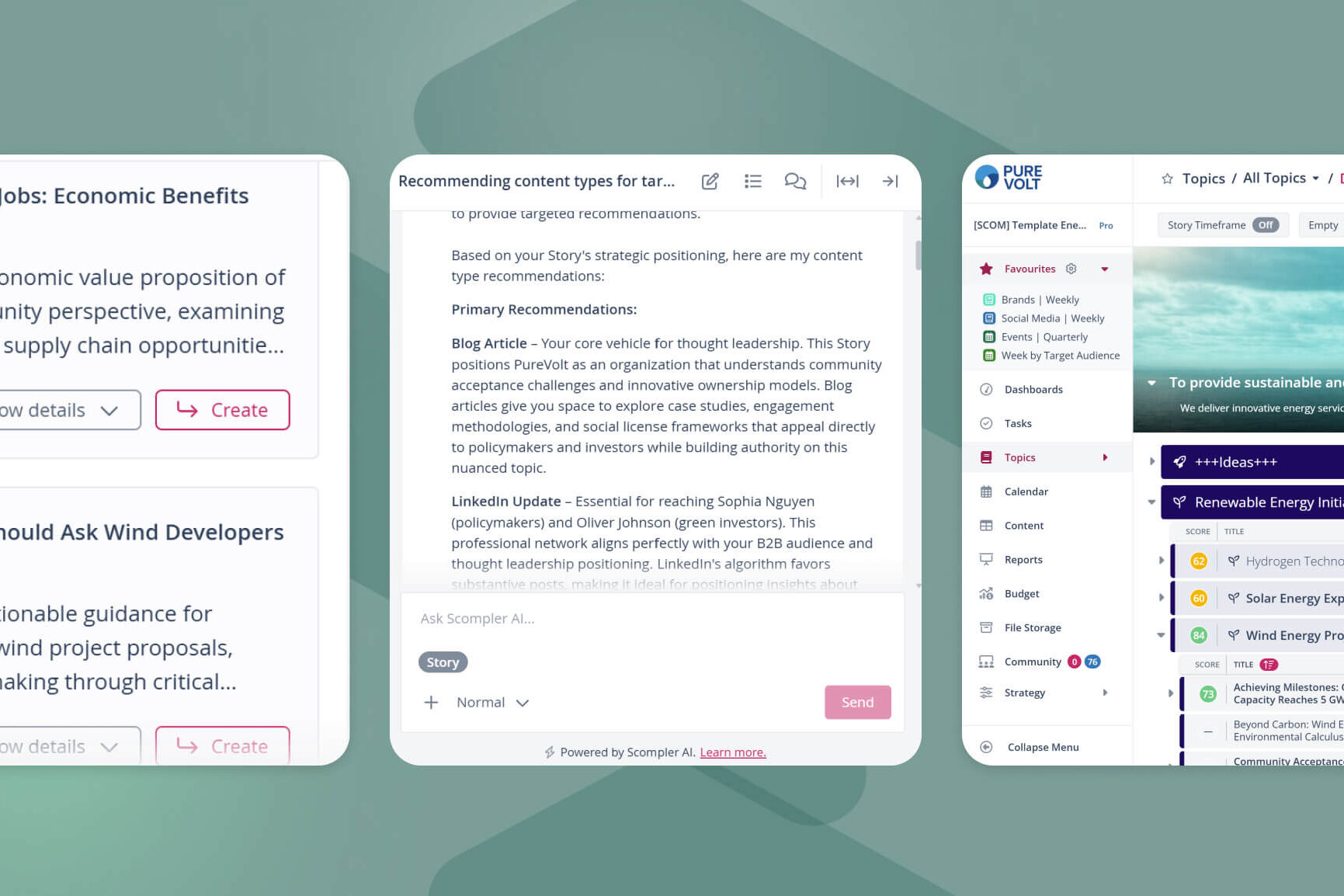
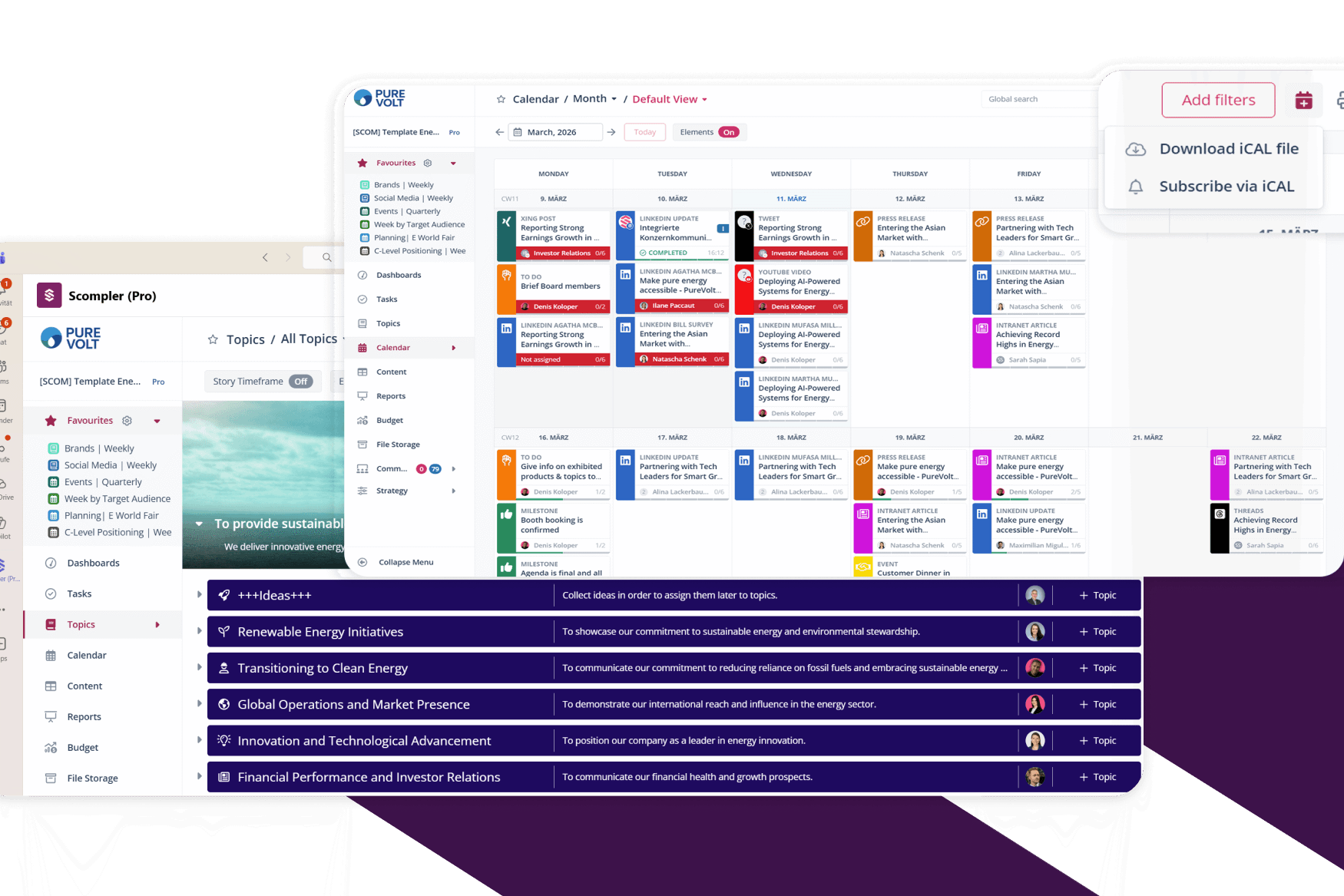
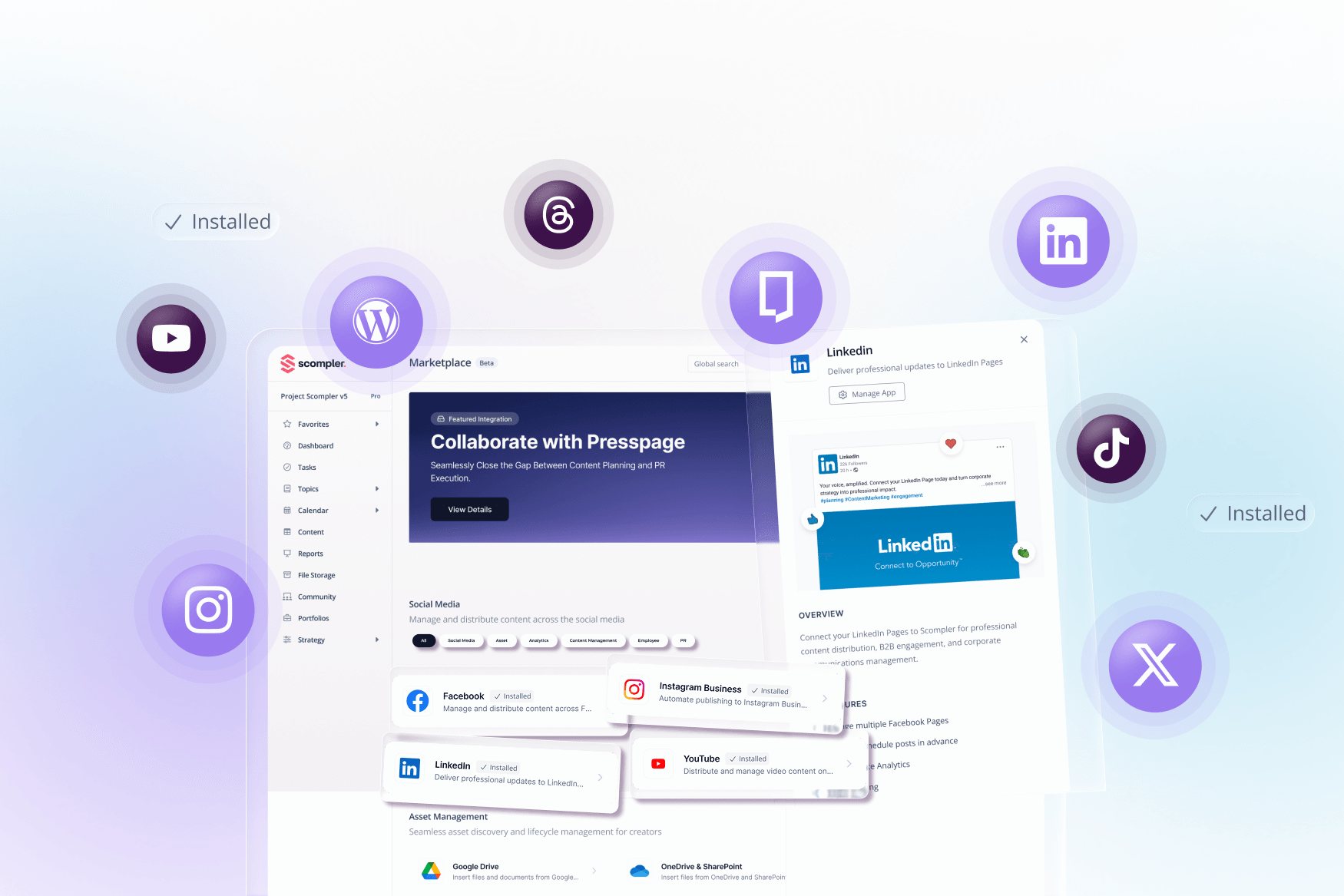
It is negligent not to rely on technological possibilities to improve and change what you do. Technology is the greatest lever for this. Nevertheless, one should not think that technology will do everything for you and that everything will then run itself. Technology is not an end in itself, but should help with a specific process. Scompler is the platform for strategic communication management. A platform like Scompler is perfect for deriving a strategy from the corporate strategy, making it understandable in communication, and preparing it for everyday use. In Scompler, the strategy is not lost, but always with you, in the topic conference and in every single communication measure.
A good example is the DHL Group. Around 140 employees from the areas of employee communications, media relations, and social media work with Scompler there—across four continents, in different disciplines, but topics on common topics . This creates transparency, synergies, and efficiency in communications work.
Exciting insights can also be found in our joint webinar with DHL "DHL Group as a driver for integrated communication"
"DHL Group as a driver for integrated communication"
What we are still talking about:
In conversation with Maximilian Miguletz, it gets personal and honest: What challenges do communicators really face in their day-to-day work? What helps to break out of the operational hamster wheel? And why does good communication sometimes just bring peace and quiet?
Plus: communication fails, AI in everyday working life - and the courage to say no sometimes.