







Whitepaper
Breaking down communication silos: Collaboration as the key to value creation
Internal communication, social media, press relations - and everyone does what they want? Communications departments often work in isolated silos, each focused on their own KPIs. But to achieve the full impact of a communication strategy, teams need to rethink the way they work.
In many communications departments, the picture is still similar: everyone is fighting for their personal KPIs - whether it's clippings in PR, likes and engagement for social media managers, leads in marketing or views on the intranet. To achieve exactly that, everyone produces content that the other teams often know nothing about. If the company then operates internationally, a uniform communication strategy seems even further away.
Collaboration turns communication into a contribution to value creation
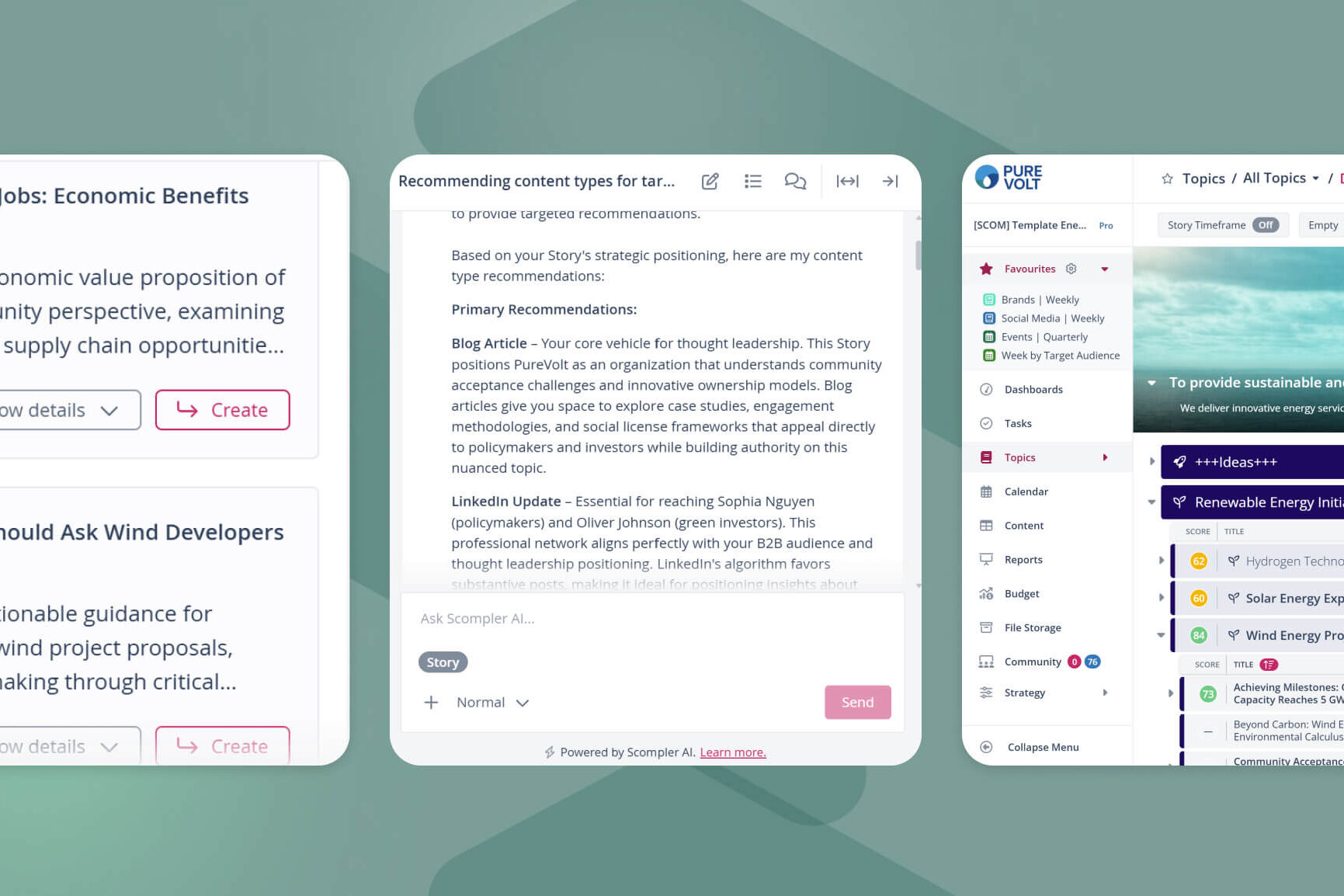
For our communication to contribute to the added value of a company, it must be transparent, integrated and cross-silo. All too often, individual departments feel left alone - internal communications when they are surprised by a change in leadership via a LinkedIn post, or the social media team when the team-building photos from the intranet post can't even be found in the content chaos.
Breaking down communication silos and promoting collaboration: it sounds so simple and yet it often only works slowly. Mostly because the right mindset is missing. In order to interlink internal and external communication, social media, press relations and marketing in times of newsrooms, AI-generated content and more and more corporate influencer strategies, not just one lever is enough. A uniform understanding of the brand and a common formulation of communication goals must form the foundation for developing a content strategy and making it visible - across all teams, channels and formats.

Reflect on how your own department works
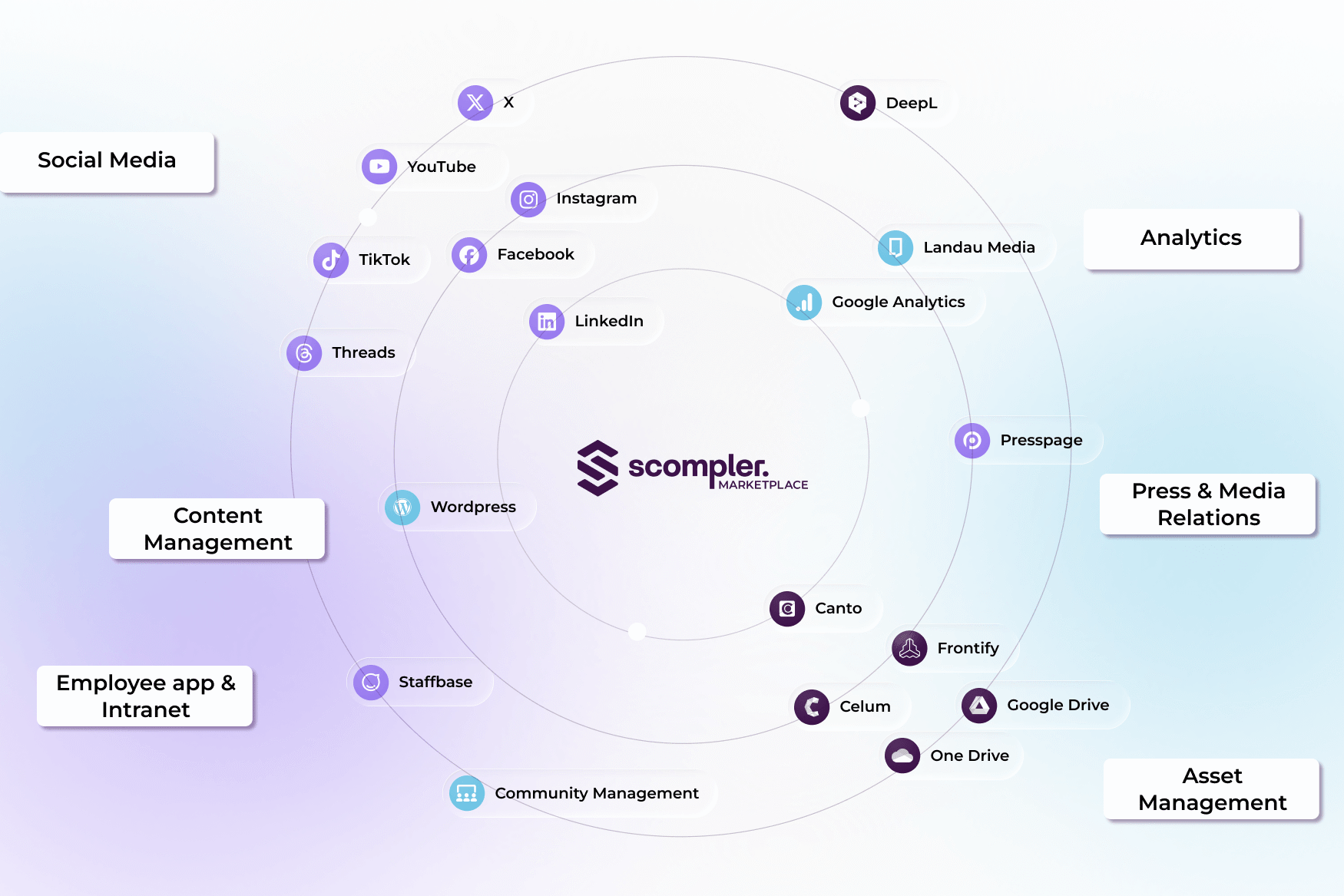
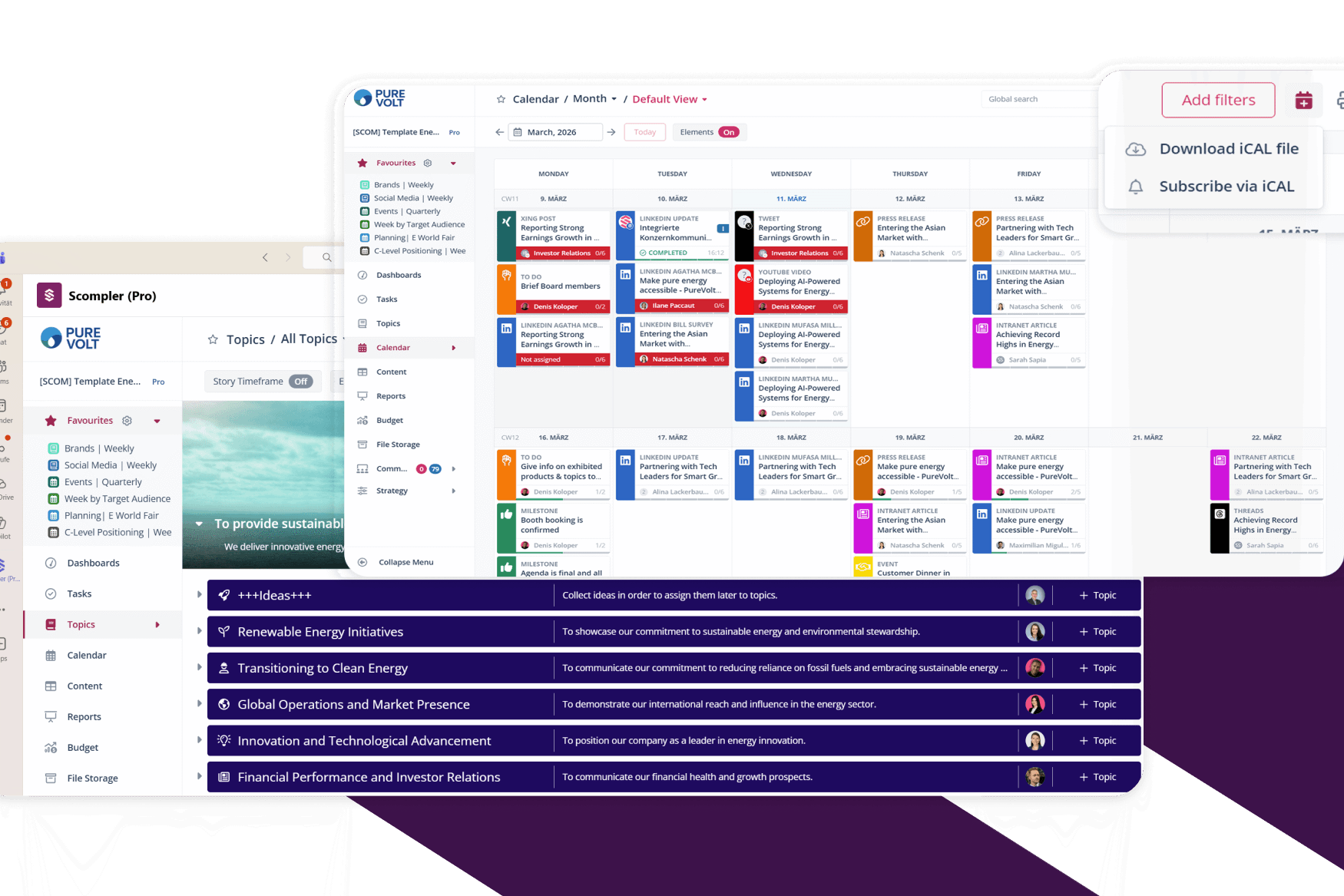
This is where technology and methodology come into play. Yes, it requires a technological platform where teams can plan, develop, deliver, and analyze all content together. But it also requires the right mindset. The methodology of the "Dolphin Principle" developed by Scompler helps communications departments reflect on their working methods through six mindsets, each of which visualizes different goals – from completing communications work to achieving communications impact to contributing communications value. The focus is on a holistic approach that promotes collaboration between teams in order to design content in a meaningful way and create company-wide synergies.
Integrated storytelling instead of short-term trends
At the heart of a collaborative mindset are the dolphins, which symbolize cooperation across departmental boundaries. They want to develop a cross-team communication narrative that is disseminated across various channels. They create content that goes beyond short-term trends and information transfer and generate meaningful storytelling that is based on the company's core values and strengthens it in the long term, both internally and externally. As a result, internal communication is no longer seen as a reactive task, but as an integral part of the corporate strategy.
A total of six animal metaphors visualize the development from reactive communication work to strategic and collaborative value creation. Very few define themselves as collaborative dolphins. Instead, in several Scompler surveys conducted in 2023 and 2024, communicators state that they function as hard-working and reactive service providers ("worker bees") or as busy "squirrels" focused solely on their own channel.
Step by step to collaborative content work
Silos cannot be torn down overnight. In customer and consulting meetings, Scompler's communications experts notice every day that many companies want to move toward collaborative communication, but (have to) proceed step by step. This is because other areas also have different needs and processes. However, collaboration—especially between internal and external communications—is possible, even if it requires an initial investment of time and effort. A best-case example is the DHL Group. The group's employee communications team began planning and implementing its content with Scompler according to core topics before the social media team and the international media relations department joined in. Now, three communication disciplines are jointly developing their content on one platform—transparent for all and aligned with common core messages.
This blog post appeared in December 2024 as a trend article in the magazine "Beyond – Focus on Internal Communication" #27.