




The path of a theme
Focus on topic analysis: how data-driven communication works
Data-driven and strategic topic planning is still not an integral part of content work in many communications departments. However, data and analysis help to topics , evaluate them, prioritize them, and frame them.
With scoring and scoping for strategic topic planning
In strategic topic planning, topics are topics so that communication remains focused. But how do we know which topics important? And how do we frame them?
45 percent of respondents in a Scompler webinar with CRTN stated that they see room for improvement in their topic focus. Just as many say that they have gaps in the strategic foundations for successful topic planning. Many communicators also see room for improvement in topic analysis (39 percent) and topic identification (34 percent) in their companies. But in order to establish strategic topics guidelines for successful content, communicators need the necessary insights and data.
"The targeted use of data in the editorial process supports holistic and efficient planning, evaluation, and creative design of editorial topics."
Paul Ledder Founder and Managing Director of CRTN Marketing
The path of a theme
Paul Ledder developed the exploratory topic analysis concept and implements it in his consulting practice. In a joint webinar, he and Michael Schmitz, Head Partner & Solutions at Scompler, presented both the theoretical foundations of data-driven topic planning and the concrete implementation of a topic analysis at a large German insurance company.
The objective: Only the most relevant topics included in the planning, resulting in clear and focused communication. These topics stand up to scoring according to strategic parameters such as stakeholder benefit or scalability. After evaluating the topics , communicators topics define their scope. This allows them to design their communication with key messages, ensure that all measures contribute to the overarching corporate goals, and allocate their resources efficiently.
Topic identification
The starting point is always an idea that arises from monitoring or new products, for example. In order for communications departments to achieve data-driven topic planning, CRTN has identified various steps in its many years of consulting experience.
At the beginning, the editorial team checks the initial research for trends and different topic perspectives and selects key areas of focus. Keyword analyses and social listening can also help to evaluate the strategic potential of topics a user and competitive perspective.
After the topics, the exploratory topic analysis examines at the story level which specific stories and topic spins are possible, what the context is for the target group, and how much potential the topics to contribute to achieving the objectives.
topics scoring
Most companies have a wide range of topics. However, due to limited resources, they cannot address all of them. This makes prioritizing topics important. "Strategy means not only defining what you do, but above all defining what you don't do," recommends Mirko Lange, founder of Scompler.
The relevance of topics is topics using a scoring system. Here, communicators can weight their topics strategic parameters—such as value contribution to the company, visibility, or efficiency—and map them in the strategic content management software Scompler.
Parameters for topics topics
Exemplary parameters for weighting topics
Business: How much does the topic help us achieve our business and sales goals?
Scalability: How often and for how long can the topic be topic ?
Benefits: How well can we meet the need for the topic than others?
Effort: How easy is it to achieve a lot topic little effort in this topic ?
Weighting based on these parameters helps topics identify the most important topics and use resources efficiently. The result: topics with better ratings topics more output than those with poorer ratings.
topics scoping
Based on the topics, the appropriate scope determines the budget and extent to which a topic is topic and played out. The scope can vary widely, ranging from a single press release to a complex quarterly campaign across various channels. Subdividing topics into story packages of different sizes can help to categorize topics to the amount of work involved, budget, schedule, substance, number of channels used, and objectives. This ensures that resources are used optimally, wastage is minimized, and the best possible results are achieved.
"This allows us to define how big a story will be and how variable it can be designed for the channels. This makes it clear how much pressure I exert on the channels—with the corresponding financial measures and the quality of the content."
Michael Schmitz Head Partner & Solutions at Scompler Technologies GmbH
Implementation and content production
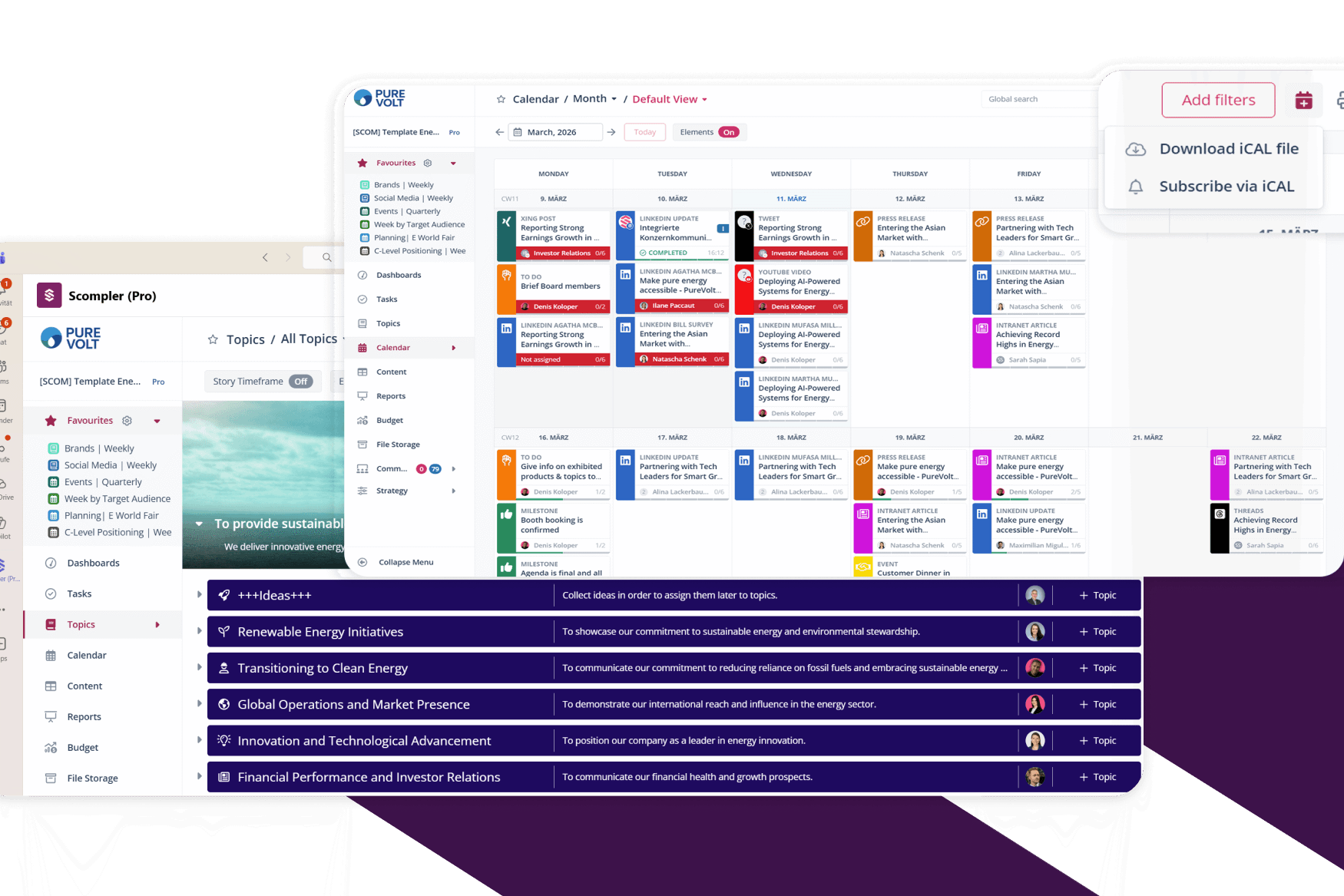
After evaluation, the topics are brought topics life by defining specific stories. In the next step, communicators take the channel perspective and consider which posts should be created for which channel and what their special features are. To enable communicators to take a data-driven approach to the implementation of individual posts, they should continuously integrate data insights and dashboards.
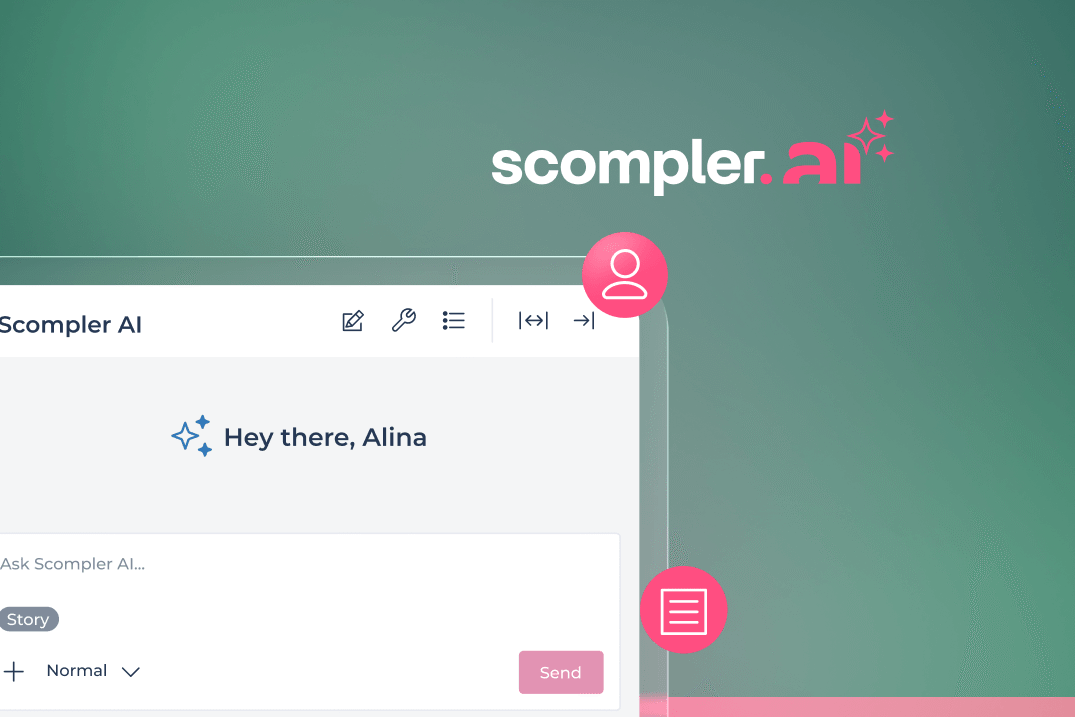
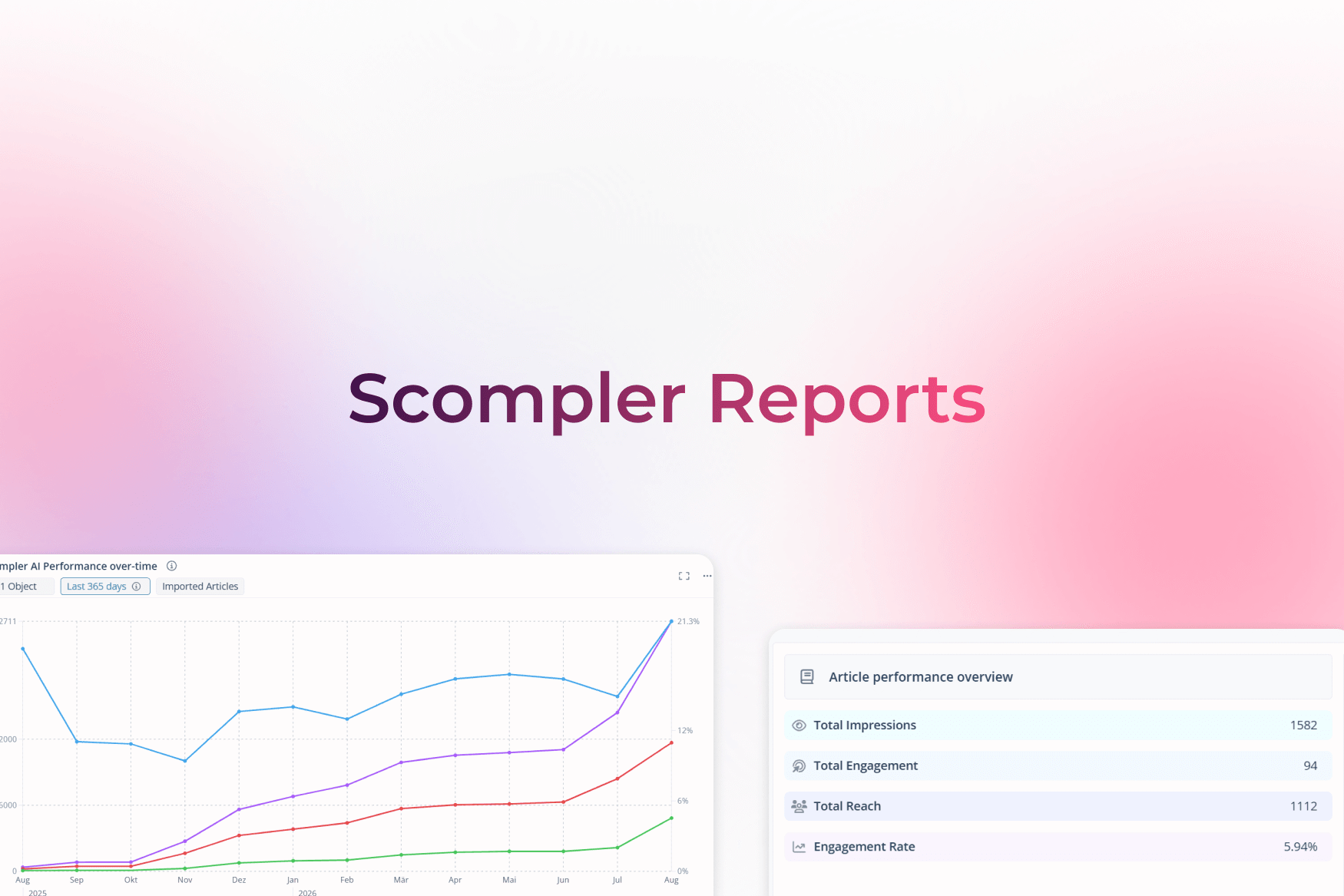
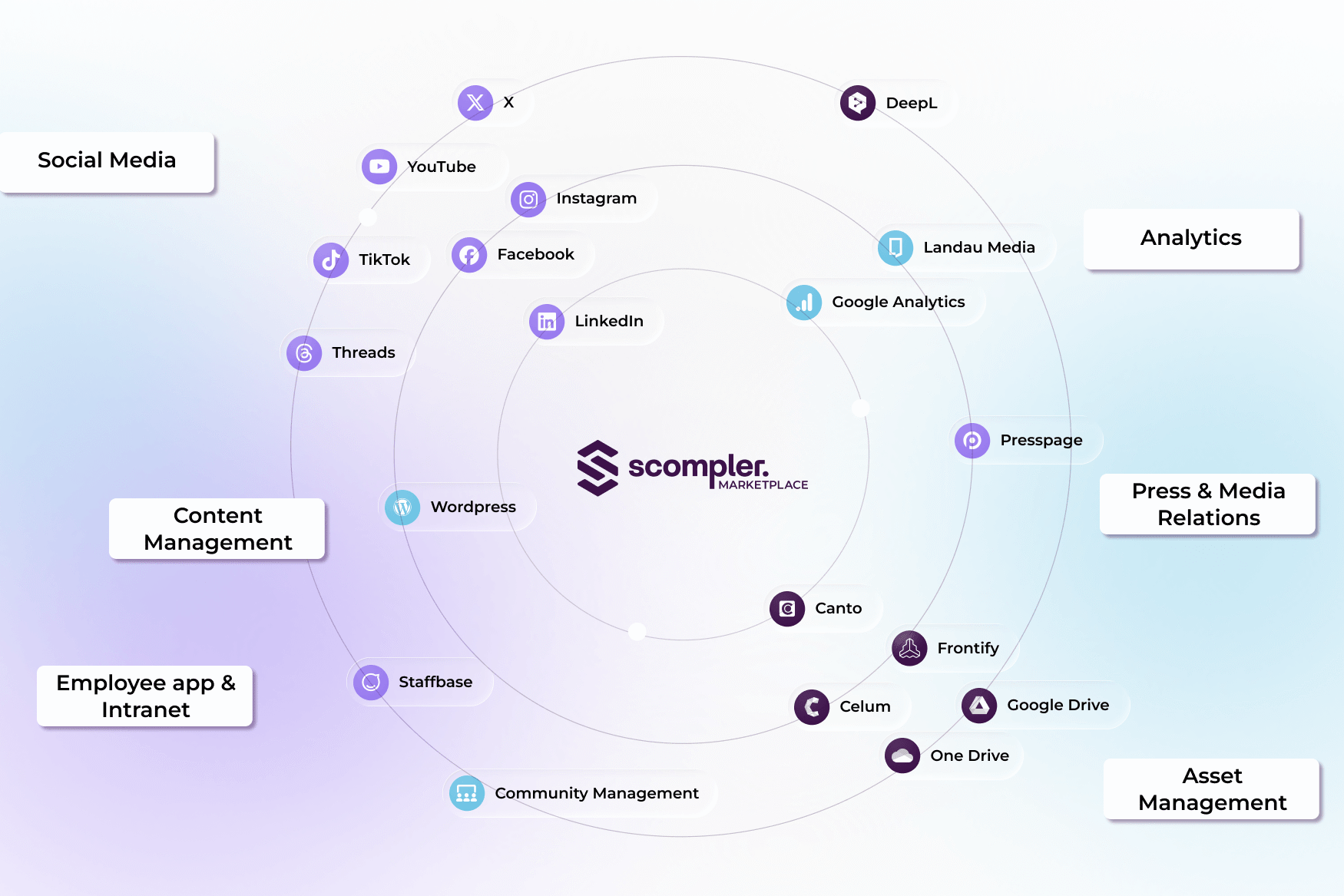
Scompler's content solution allows departments to integrate their keyword analyses, social listening results, and topics parameters, enabling them to take these into account when producing individual pieces of content. Even after publication, Scompler continues to map the analyses of the posts, including via the integrated social media channels or integrations such as Google Analytics or Landau Media.
"We combine various data sources and insights to improve and enrich topic planning in editorial work. This data toolset complements annual and quarterly planning, as well as monthly or weekly conferences."
Paul Ledder Founder and Managing Director of CRTN Marketing

Michael Schmitz
As Head Partner & Solutions, Michael Schmitz advises Scompler's clients on how to successfully operationalize their content strategy.

Paul Ledder
As the founder of CRTN, Paul Ledder makes complex issues understandable - whether it's new processes in communications departments, channel landscapes or target group architecture.