









Developing a communication strategy - effective and successful in 2025
This strategy is an essential part of corporate management and contributes significantly to success. By developing and integrating an effective communication strategy, internal and external communication is optimized, leading to a stronger brand presence and better business results.

What is a communication strategy?
A communication strategy is a detailed plan that defines a company's communication objectives and describes how these are to be achieved. It includes:
Target groups: A clear definition of the target groups to be addressed.
Key messages: The central messages to be conveyed.
Communication channels: The channels through which communication is to take place (e.g. social media, email, press releases).
A well-thought-out communication strategy helps with this:
Ensure consistency and clarity in all communicative measures.
Ensure that messages reach the desired audience effectively.
Strengthen the company's reputation and credibility.
Cultivate internal and external relationships.
Ultimately, to promote business success.
This communication strategy is an essential part of corporate management and contributes significantly to success. By developing and integrating an effective communication strategy, internal and external communication is optimized, leading to a stronger brand presence and better business results.

Importance of a clear communication strategy for companies and organizations
A communication strategy with all its measures forms the basis for every interaction within a company. It defines how information is conveyed in order to achieve certain goals.
Brand image and trust
Effective communication is key to building trust, winning customers, and making businesses successful.
In addition, a clear communication strategy helps to protect a company's reputation and manage crisis situations efficiently. A cleverly thought-out concept makes it possible to distribute content consistently across different channels and thus create a uniform brand image.
Examples and objectives
The communication objectives of companies and organizations can be diverse and depend heavily on their respective business strategies and goals. Communication objectives are:
- Increase brand awareness
- Building and maintaining corporate reputation
- Market launches and product innovations
- Increase customer loyalty and satisfaction
- Internal communication and
- employee engagement
- Crisis communication
- Sustainability and social responsibility
These objectives may vary depending on the size of the company and the industry, but are generally important aspects of successful corporate communications.
KPIs and metrics
Clearly defined KPIs (key performance indicators) and metrics are crucial for measuring the success of a communication strategy. These can vary depending on the concept and objectives. Examples of relevant KPIs include reach, engagement rate, conversion rate, and media coverage. By regularly monitoring these metrics, editorial teams can adapt and optimize their strategy.

Develop a communication strategy in 6 steps
Developing a communication strategy requires careful planning and a systematic approach. Here is a basic guide to developing a communication concept:
Step 1: Target group analysis and objectives
The first step in developing a communication concept is target group analysis. It is important to understand who the buyer persona is, what their needs and interests are, and which channels are best for reaching them. Based on this, clear objectives can be formulated to serve as guidelines for all communication.
To achieve your goals, it is crucial that you know your buyer persona in order to understand their needs, wishes and challenges. Only then can you develop messages that are truly relevant and appealing. Conduct surveys, analyze data and take a close look at the behavior of your target group to gain well-founded insights.
Step 2: Choose the right communication channels
There are many communication channels available for distributing your content-from social media to email marketing to press releases. Each platform has its advantages and disadvantages. The key is to choose the right channels to effectively reach your target audience. A thorough analysis of your buyer persona will help you select the best communication measures and channels for your strategy.
You should pay attention to current trends and developments, especially in the area of social media. The digital landscape is constantly changing and new platforms and tools are added regularly. Depending on your industry and company size, it can make sense to regularly check whether your current measures are still effective or whether there are new ways to reach your target group.
Internal communication should also not be neglected. Measures such as the intranet, employee newsletters or internal social media groups can help to create a strong sense of togetherness and an open corporate culture.
Step 3: Define your messages
topics key messages are at the heart of any communication strategy. They must be clear, concise, and relevant to your target audience. A good message should reflect your company's core message while offering added value to the recipient.
Create convincing messages
Clear and compelling statements are at the heart of successful corporate communications when it comes to reaching target groups. Content should be tangible, relevant, and authentic. It should offer added value and inspire your target group to engage with your company and use your products or services. Communication scientists describe this type of message as "storytelling" because it creates an emotional connection with the recipients.
Use storytelling to bring your brand to life and make it approachable. Use emotional and convincing language to touch and inspire your target groups.
In addition to planning text content, other success factors include integrating visual elements such as images, videos or infographics into your content calendar. Visual content is often more appealing to your target group and can increase the reach and engagement of your posts. Also make sure that your content is communicated consistently on all channels.
Topic planning with Scompler
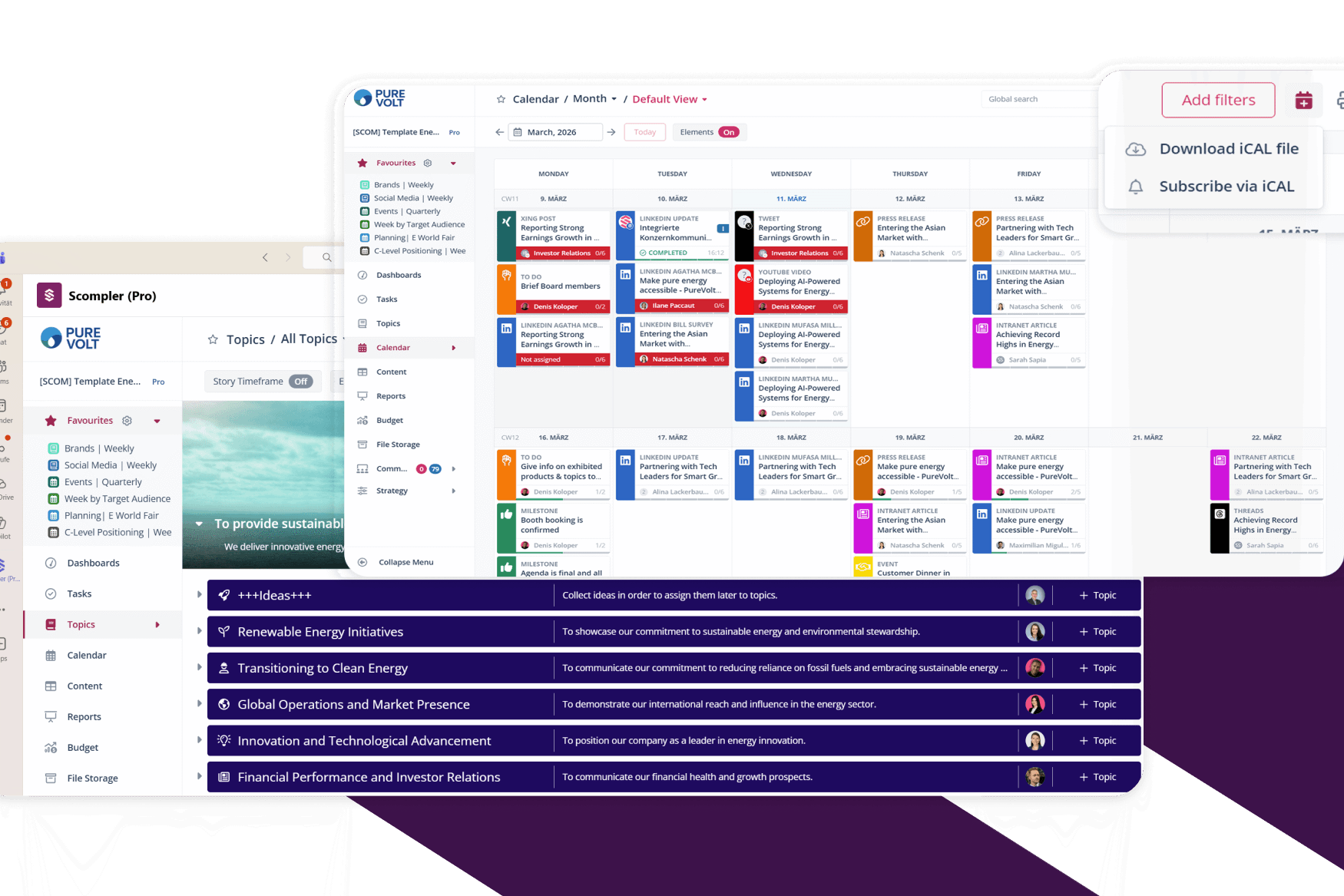
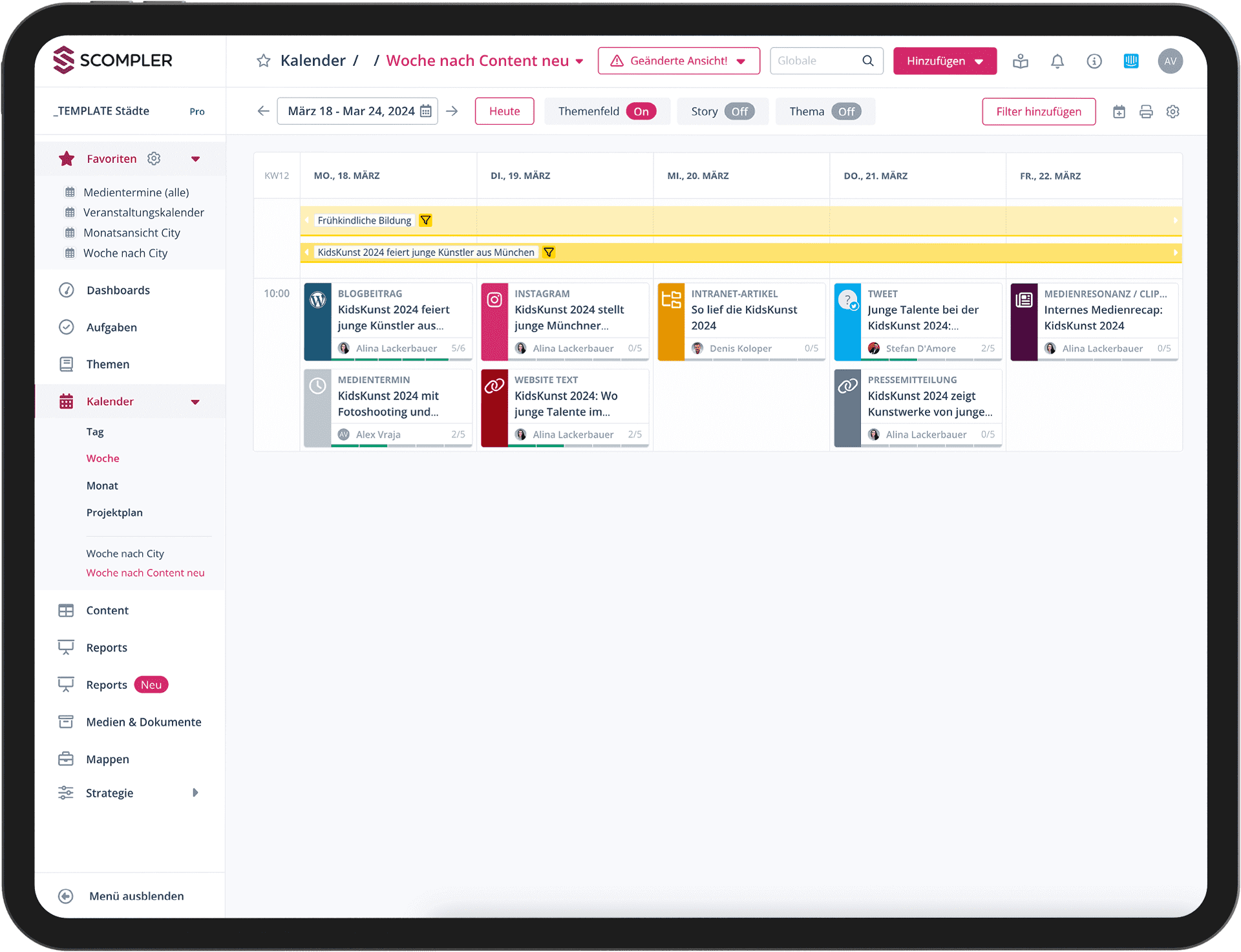
With Scompler, we provide editorial teams with a tool for content, social media, and project planning. A well-structured topic plan gives you an overview and, in conjunction with a content calendar, allows you to track the performance of your content over time. By collecting data on publication times, topics interactions, you can identify patterns and optimize your future content.
Step 4: Develop a consistent brand voice
When developing a communication strategy, it should reflect your brand identity. A consistent brand voice also sets you apart from your competitors as an employer and strengthens your company's positioning. Define your brand values, personality, and messages, and ensure that these are clearly recognizable in all your communication activities.
Defining a consistent brand voice requires a thorough analysis of your target audience and competitors. By understanding the needs, values and preferences of your target audience, you ensure that your brand messages are relevant and appealing. At the same time, it is important to analyze your competitors' concepts in order to position your communication concept in a differentiated and unique way.
A structured and systematic approach positions your brand as a trustworthy and comprehensive source of information.
Step 5: Implement feedback mechanisms
Feedback is an essential tool for optimizing and adapting your communication. Implement feedback mechanisms to measure your target audience's reactions and gain valuable insights into their needs and preferences.
Use this data to evaluate the success of your communication efforts and to refine and continuously improve your strategy.
The implementation of feedback mechanisms requires careful planning and execution. Feedback loops should be set up to ensure that the information gained is actually used to optimize the communication strategy.
Step 6: Evaluation and adjustment
A successful communication strategy is an ongoing process. It is crucial to regularly take the time to evaluate your strategy and adjust your goals.
When evaluating your communication strategy, it is essential to consider both quantitative and qualitative aspects. Analyze feedback from your target audience to gain deeper insights into their needs and preferences. This information will allow you to tailor your messages and content more specifically and build a stronger bond with your customers.
In addition to regularly reviewing your communication strategy, you should also keep an eye on industry trends. New technologies and behaviors can change quickly and affect the way you interact with your target audience. By proactively responding to these changes and adapting your strategy accordingly, you can ensure that you remain relevant and effective.
"You can't not communicate."
Paul Watzlawick
This is especially true for businesses. Effective and strategic communication is crucial for the perception of your brand. Mirko Lange (founder of Scompler) goes one step further here. His motto:
"It's not enough not to have a content strategy. You also have to be incapable of implementing it in day-to-day business."
Mirko Lange
Examples of successful communication strategies
Looking at other companies' corporate communications can provide valuable insights and inspiration. For example, Coca-Cola's "Share a Coke" campaign showed how personalized communication can increase customer satisfaction. Another example is Toyota's crisis communication during its recall campaigns, where transparency and rapid response were crucial in restoring customer confidence.
Example: Welthungerhilfe newsroom
The Welthungerhilfe newsroom represents an important milestone in global corporate communications, as it enables efficient and coordinated collaboration with editors around the world.
Centralized information management and uniform coordination of communication activities ensure that all news and publications are disseminated consistently and promptly. This not only improves Welthungerhilfe's transparency and credibility, but also strengthens its position as a reliable and competent source of information in the fight against global hunger. You can find more information about the newsroom here.
Example: Fridays for Future
Fridays for Future uses the Scompler app to plan and implement its communication strategy. Scompler supports the organization in disseminating its topics and consistent manner. Structured planning enables the organization to track reactions to its posts in real time and respond quickly to current events. This ensures that its communication is always relevant and up to date.
FAQs
A SWOT analysis is a strategic planning tool that identifies a company's strengths, weaknesses, opportunities and threats.
The analysis is important for corporate communications because it helps to develop communication strategies that emphasize the company's strengths, minimize its weaknesses, exploit opportunities and address potential risks.
The development of a targeted communication strategy takes place in several steps and begins with a careful target group analysis. Companies should examine the demographic data, behaviors and preferences of their target groups and derive tailored content, channels and measures from this.
The effectiveness of a communication strategy can be measured by monitoring KPIs and metrics. Regular evaluations and adjustments based on the results achieved are crucial for long-term success.
An effective communication strategy requires a thorough target group analysis, the definition of clear objectives, the selection of suitable channels and media, the creation of consistent messages and the regular monitoring and adjustment of the strategy.

Communication concept: The 3 most important success factors
Developing a communication strategy requires careful planning and a systematic approach. Here is a basic guide to developing a communication concept:
- Clarity and consistency of messages: It is crucial that communication is clear, understandable, and consistent. All messages should reflect the company's values and mission in order to avoid misunderstandings and strengthen the trust of the target group.
- Integration and coordination: A successful communication strategy requires integration and coordination between departments and channels. All employees and teams should be well informed and coordinated to ensure consistent communication.
- Flexibility and adaptability: In an ever-changing communications landscape, it is important to remain flexible and adapt your strategy quickly. This means continuously taking feedback into account and optimizing your communications activities to stay relevant.
A corporate newsroom is a central information and communication platform within a company that makes it possible to effectively collect, organize and disseminate all content and news. Editors and communication experts work closely together in the newsroom to ensure consistent and targeted communication.
Companies should always keep an ear to the market in order to be able to react flexibly to changes. Regular market analyses and feedback loops help to continuously optimize the strategy.
Depending on the target group and objective, different channels and measures may be suitable. Examples include social media, email marketing, press releases, blogs and events.
The main challenges include a lack of consistency, negative media coverage and unforeseen crisis situations. A well-prepared crisis communication plan can help to minimize risks.
Consistent communication requires clear guidelines and regular employee training. A uniform communication style and coordinated messages are crucial.
Consistent and authentic brand communication is crucial for building trust and credibility. It strengthens brand identity and promotes long-term customer relationships.
The target group analysis forms the basis for the entire strategy. It helps to understand the needs and preferences of customers and to develop customized communication activities.
New integration of Scompler and Staffbase strengthens integration for consistent messaging
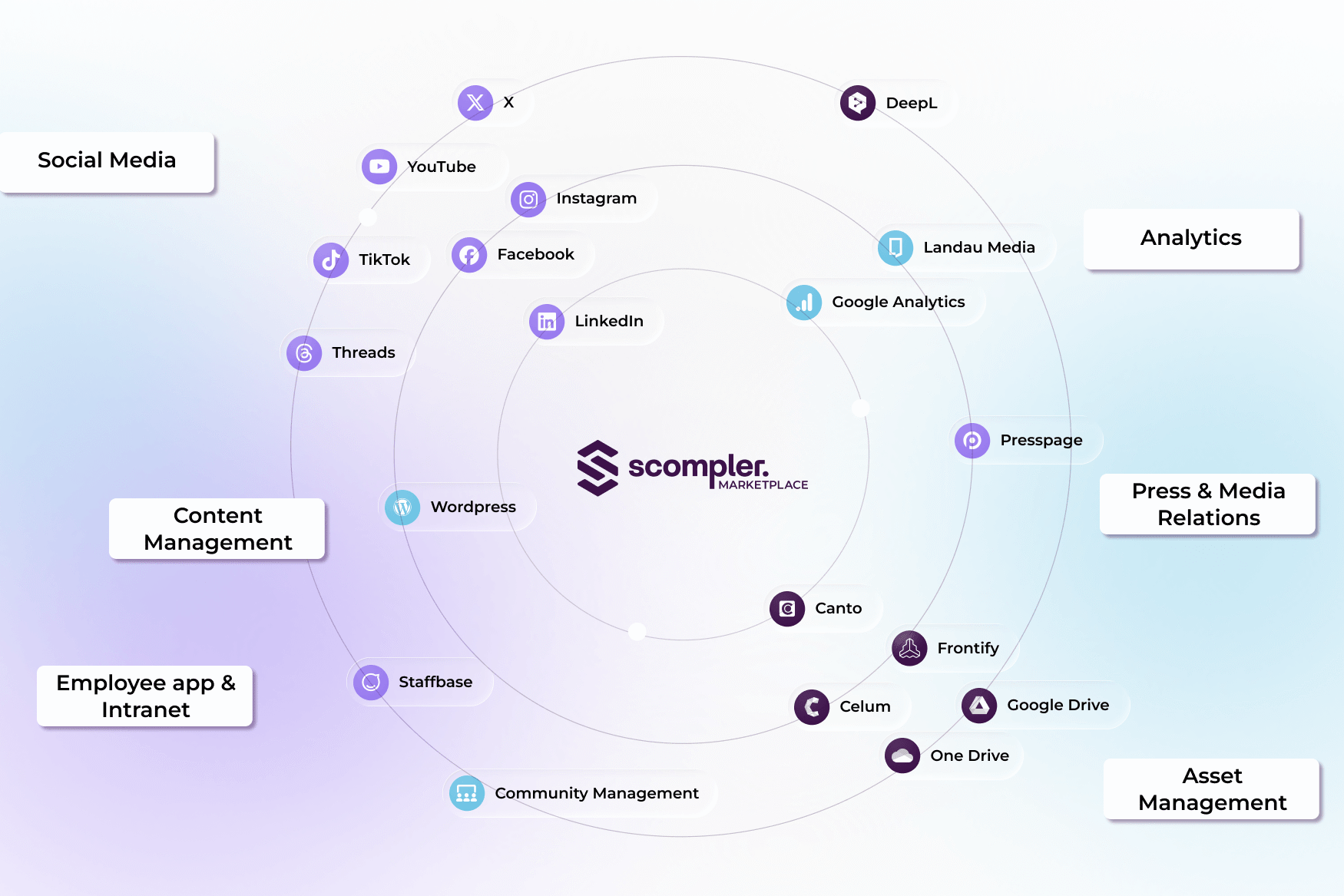
Scompler and Staffbase present an enhanced integration that brings internal and external communications closer together. By more closely linking strategic planning and employee-oriented communication channels, organizations can seamlessly plan, create, publish, and analyze content-all from a single, centralized process. The new features strengthen message consistency, optimize workflows, and make internal communications more measurable and strategic.