



The teamwork turbo
Scompler Hack
Read more
Reading time approx. 5 minutes
Better collaboration through strategic content management
Every intensive project phase—whether it's a launch campaign, event planning, or year-end closing—places high demands on teamwork. Creative ideas must be implemented quickly, feedback processed efficiently, and high-quality content published on time. This requires perfect team coordination. With Scompler, you have a powerful tool that helps you work more efficiently and keep track of everything. Here are a few valuable tips on how to use Scompler smartly to get started together.
Clear roles for clear results
During stressful periods, it is crucial that every team member knows exactly what they have to do. With Scompler, you can define roles and responsibilities with crystal clarity. Tasks can be assigned directly to specific people—including deadlines and priorities. This way, the copywriter knows that they are writing the newsletter campaign, while the designer takes care of the graphics and the social media manager coordinates the publication. Thanks to the Scompler mobile app, all team members can keep track of their tasks on the go and react quickly when something comes up at short notice.
Perfect team coordination for stressful project phases
In intensive project phases, your communication and marketing departments are faced with the challenge of creating numerous materials that often have to be submitted to several departments for review and approval - for example through the dual control principle. This requires precise planning, clear responsibilities and adherence to strict deadlines. A structured workflow is crucial here to avoid errors and delays and to ensure the quality of the results.
Scompler's workflow updates in 2024:
With Scompler, a document draft is automatically forwarded to two people for review—in full compliance with compliance requirements! Only when both have independently reviewed and approved the draft is the material marked as "approved." If either person requests changes, the draft is returned and the process starts over.
Automatic calculation of due dates:
When planning tasks, Scompler's workflow takes all deadlines into account and ensures that it is clearly defined who is responsible for which task. While one person concentrates on writing the newsletter, another creates the appropriate graphics and the social media manager plans the publication—this ensures that everything is done on time and without misunderstandings.
Automatically take weekends and holidays into account:
Scompler calculates due dates and ensures that weekends and holidays are automatically taken into account when planning. For example, if a task is submitted on a Friday, the deadline is automatically moved to the next working day. This keeps content planning stress-free and efficient.
- Simple and efficient feedback loops
Feedback from different departments is always in demand. But how can you ensure that all feedback is incorporated quickly and without chaos?
We have the solution:
Efficient feedback processes:
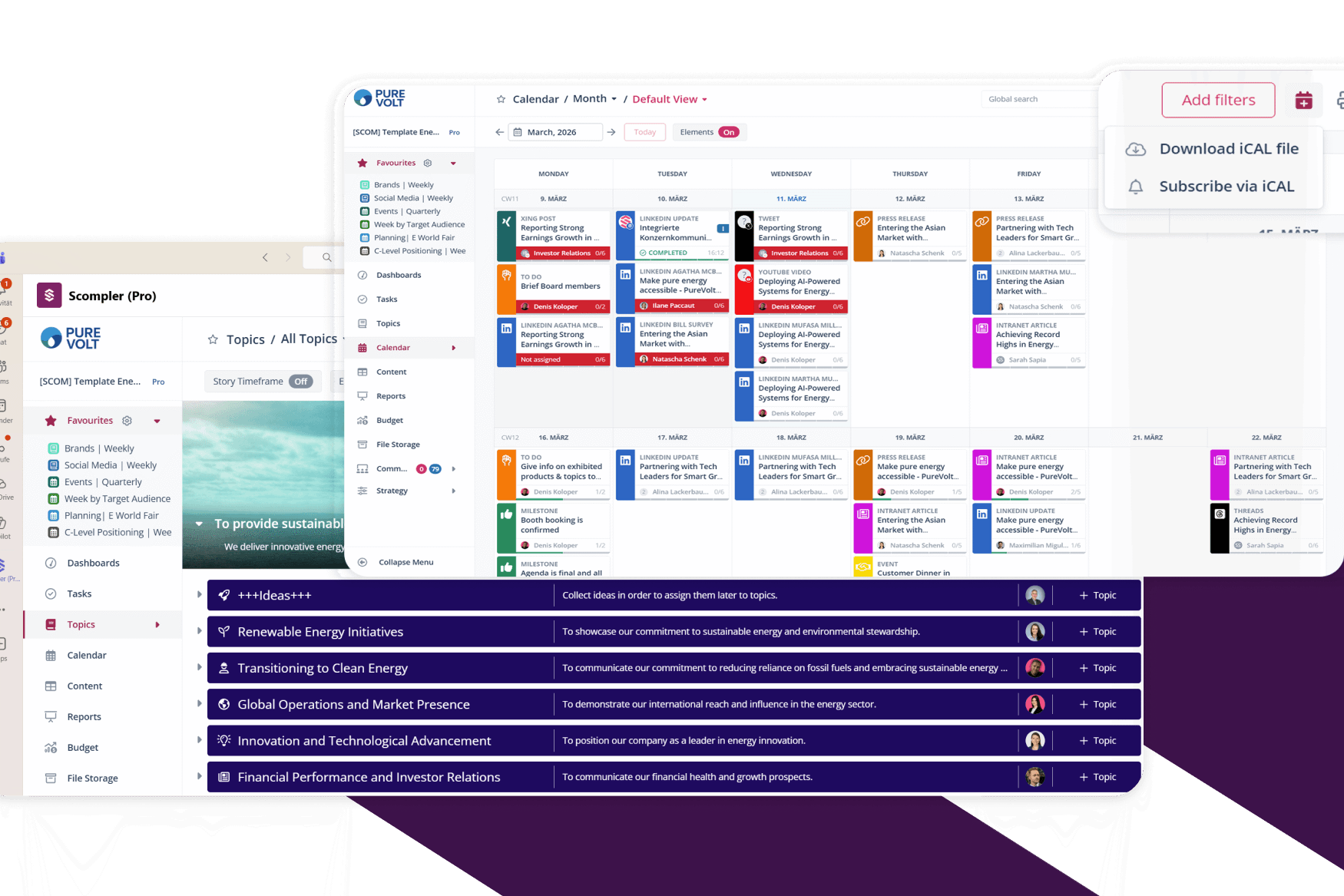
When creating a social media post, landing page, or newsletter, the content often goes through several rounds of feedback before it goes live. Scompler keeps this process efficient: feedback can be left directly on the content element, change requests can be formulated, and quick approvals can be carried out—all in one central system. This saves time and avoids delays.
Notifications and reminders:
Scompler informs all parties involved in good time about upcoming tasks, changes to due dates, or upcoming deadlines. This ensures that no important approval steps are overlooked. Even if the deadline changes, all affected persons automatically receive a reminder.
Last changes in the approval loop:
Small adjustments can be made even if a content element has already been approved or even published - without interrupting the workflow.
- Collaboration as the key to success: The Dolphin Principle by Scompler
Efficient collaboration in communications departments is often a challenge, as different teams operate with different mindsets and operational units often work in silos. This is where the Scompler dolphin principle comes in: dolphins communicate precisely, act in a coordinated manner, and achieve their goals together—an approach that can also be applied to modern teamwork.
With clearly defined processes, a common structure and transparent task allocations, communication departments can overcome silos and work together more efficiently. If everyone in the team knows their role, there is clear communication and everyone works towards a common goal, this not only increases productivity, but also the success of the entire collaboration.
A centralized system for feedback and the distribution of tasks ensures that misunderstandings are reduced and projects are implemented more smoothly. This principle not only promotes efficiency, but also a strong sense of community - a basis for long-term success and creative excellence.
To our knowledge base More about Scomplers' dolphin principleGet started with Scompler now!