



Scompler vs. Notion
The Key Differences for Communications Teams
Many communications teams use Notion as a content calendar, briefing repository, or team wiki. This works well until their needs grow. As soon as topic architecture, cross-channel editorial planning, approval workflows, and direct publishing become necessary, generic workspace tools reach their limits. Scompler is built precisely for this moment: as a specialized operating system for strategic communication that connects topics, content, and channels in a single, centralized system. Notion remains a flexible workspace for documentation and knowledge management, but strategic communication requires more.
The three biggest differences between Scompler and Notion:
1. Strategic Depth
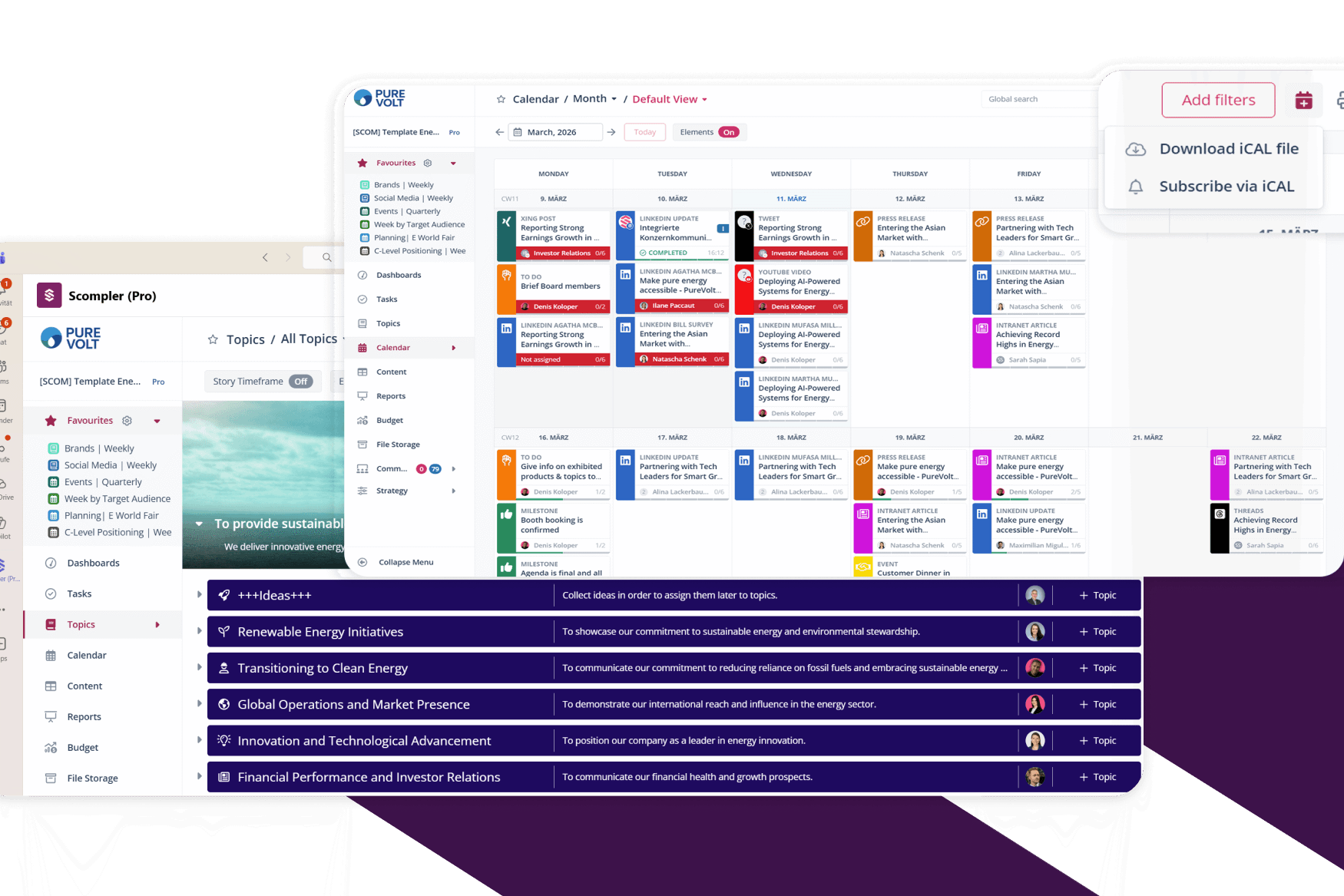
Scompler integrates thematic architecture, personas, communication goals, and editorial planning into a single central system. Notion offers flexible databases and templates for content calendars and social media planning, but does not include a built-in communication strategy.
2. Publishing and Analysis
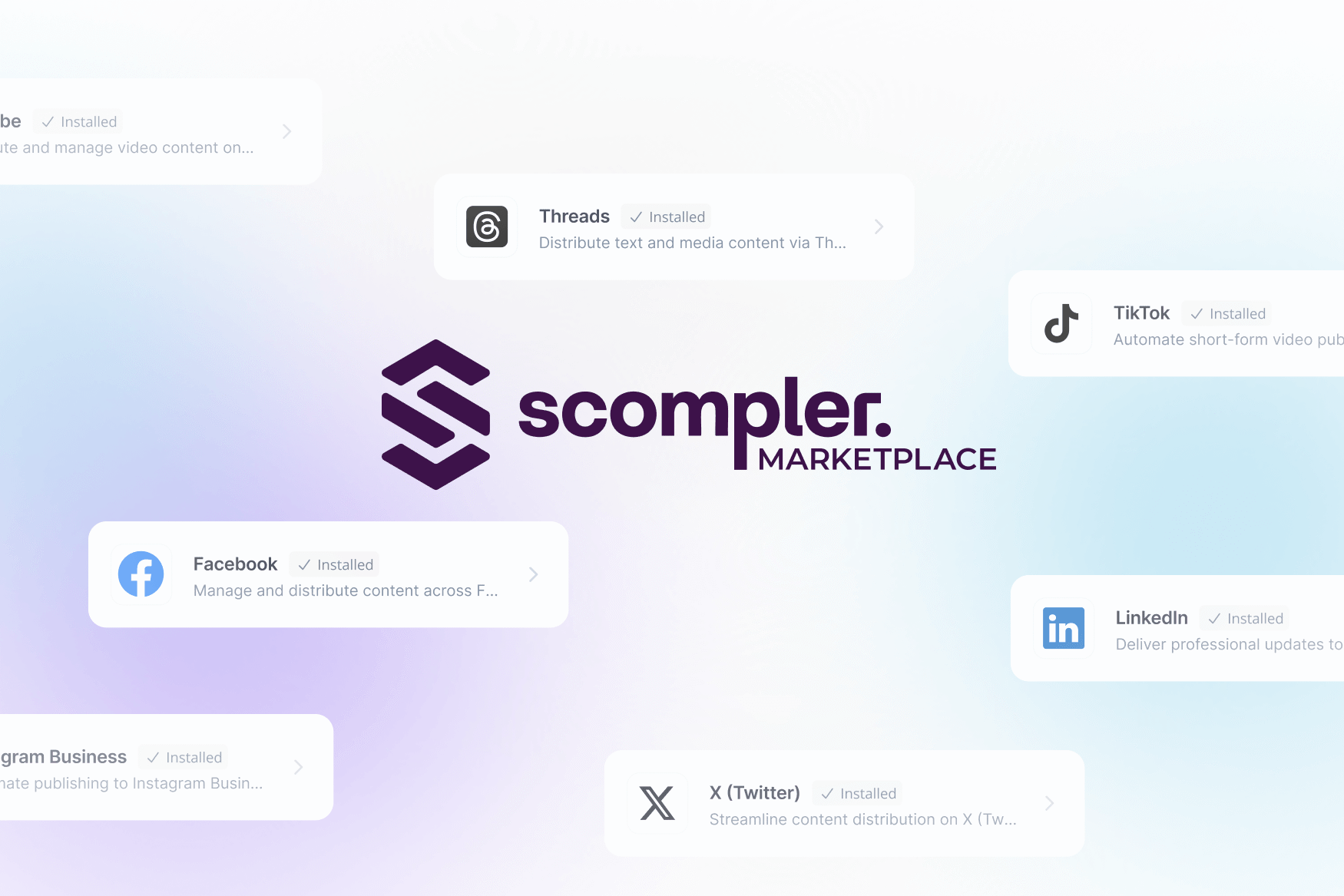
Scompler publishes directly to social media channels, CMS platforms, and PR tools, and provides integrated performance analytics. Notion supports planning through databases and templates, but lacks direct publishing and analytics capabilities.
3. AI with Context
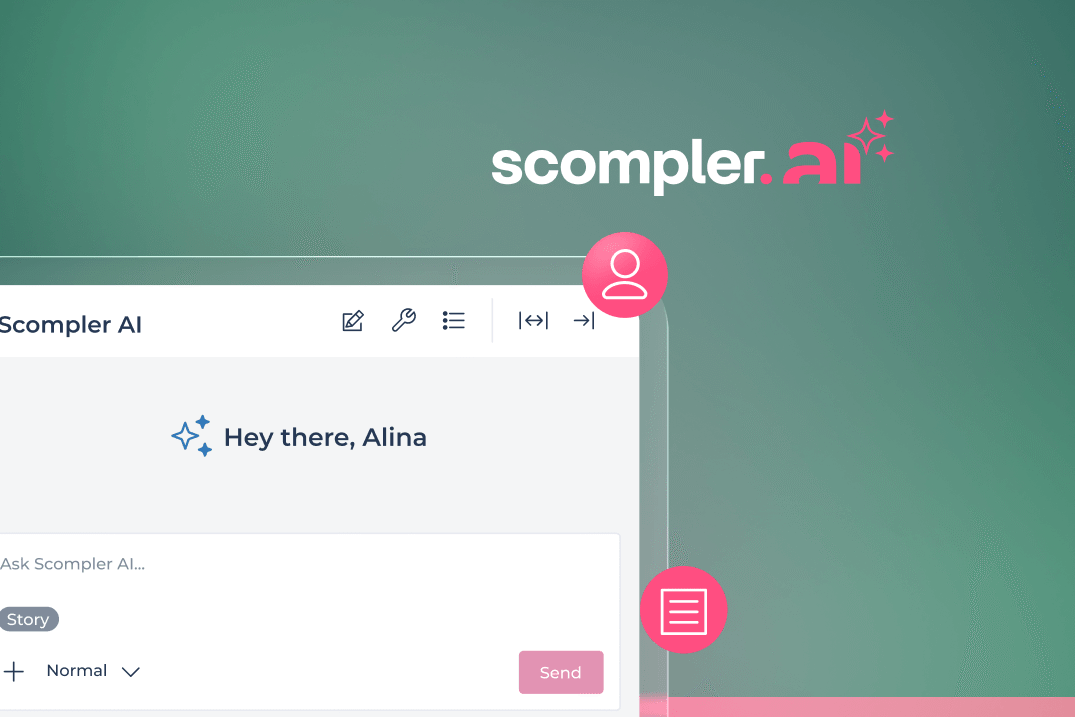
Scompler AI draws on personas, key messages, and tone guidelines to ensure that every piece of content aligns with the defined communication strategy. Notion AI and the new Notion Agents compose text, automate tasks, and integrate with external tools-but without any strategic communication context.
Scompler AI draws on personas, key messages, and tone guidelines to ensure that every piece of content aligns with the defined communication strategy. Notion AI and the new Notion Agents are powerful: they write text, automate tasks, answer questions from the workspace, and connect with tools like Slack or Google Drive-but they lack a strategic communication context.
Communications teams, PR departments, and newsrooms need more than just a flexible workspace. They need a centralized system that integrates topics, personas, and communication goals directly into the planning process. That’s exactly what Scompler’s topic architecture delivers.
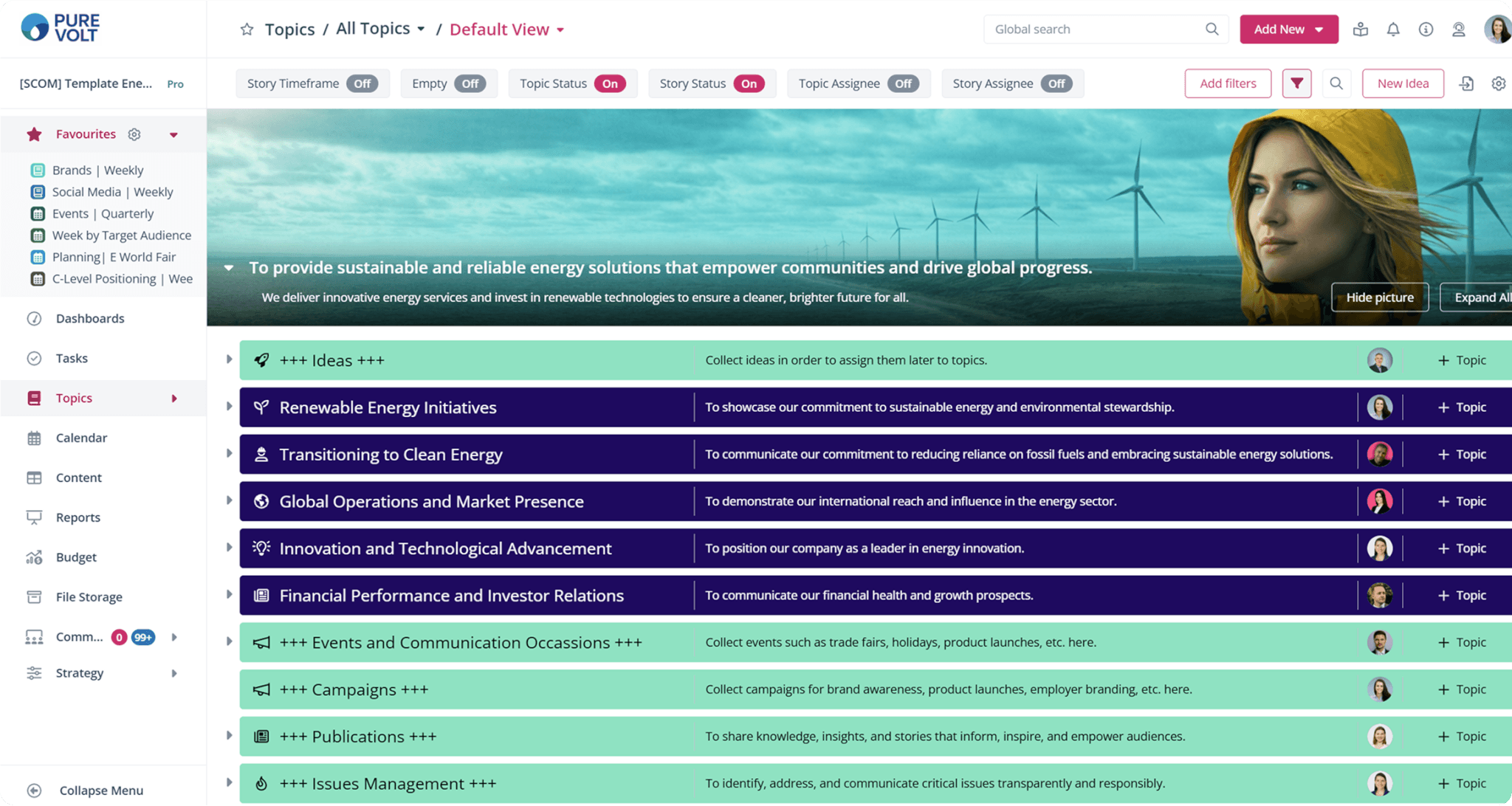
Scompler vs. Notion: Who Uses Which One?
Scompler was developed specifically for communications departments, corporate communications, PR teams, corporate newsrooms, and content marketing teams. The platform serves as the central hub for the entire content lifecycle-from strategy development and editorial planning to content production, publishing, and performance analysis.
Notion, on the other hand, is a project management workspace that can be configured for virtually any type of team and task-from personal task management to product roadmaps to company wikis. Many content teams use Notion as a flexible organization and documentation tool. However, it lacks a direct connection between strategy, editorial planning, approval workflows, and publishing.
| Criterion | Scompler | Notion |
|---|---|---|
| Target group | Communications teams, marketing, PR, newsrooms | Entire organizations, including all teams and individuals |
| Focus | Entire content lifecycle: planning, production, publishing, analysis | Knowledge, Documents, Projects, Databases |
| Strategic level | Thematic architecture, personas, goals, and messages are directly integrated | No logic behind the communication strategy; the strategy is contained in documents |
| Editorial Planning | Calendar and campaign views, linked to production, approvals, and publishing | Various calendar templates depending on teams or channels |
| Workflows & Approvals | Configurable workflows, roles & permissions, transparent version history | Custom workflows using database views and templates; no dedicated approval workflows for content governance |
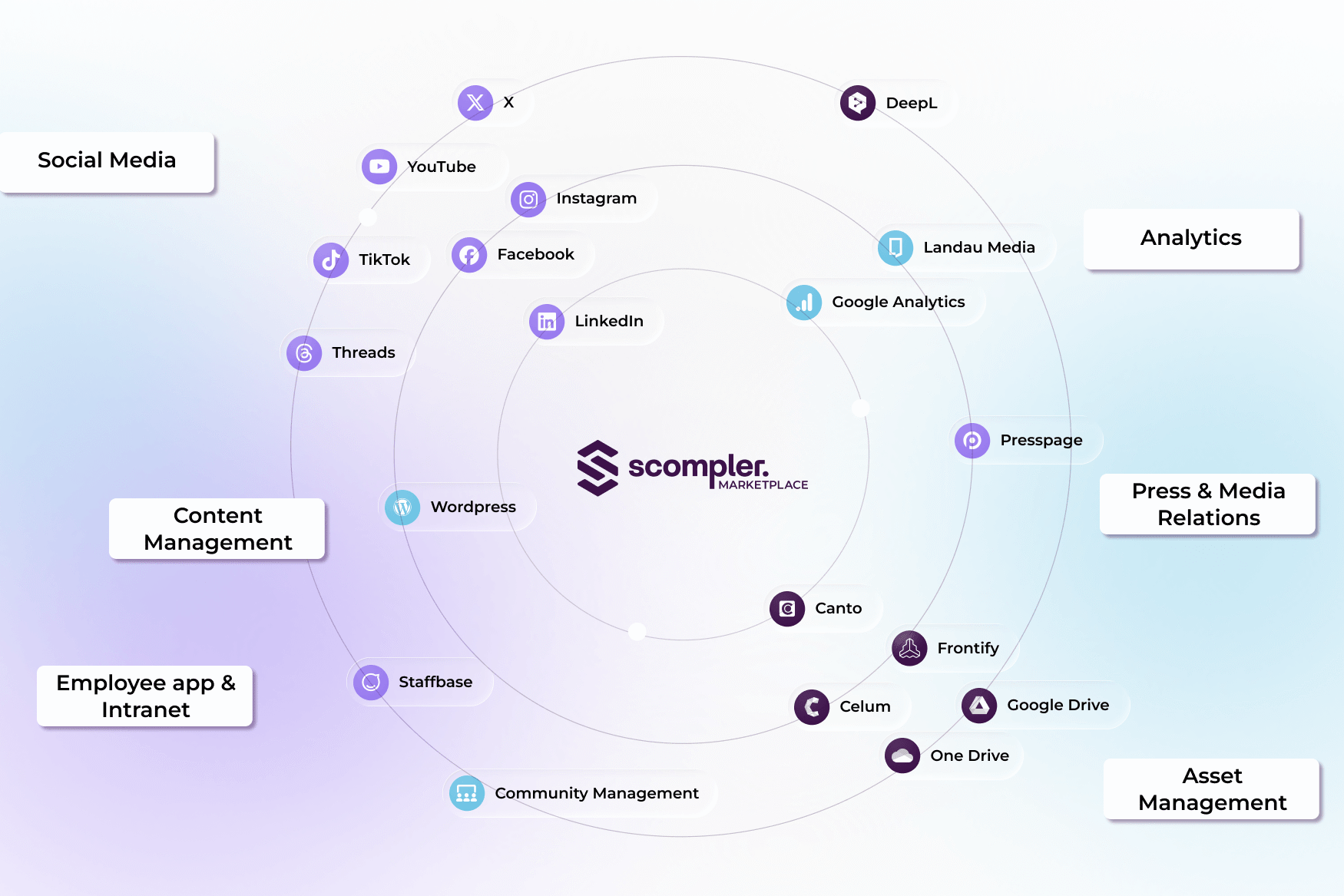
| Publishing | Direct publishing to LinkedIn, Instagram, Facebook, X, TikTok, YouTube, and Threads; CMS and PR integrations via Marketplace | No native publishing |
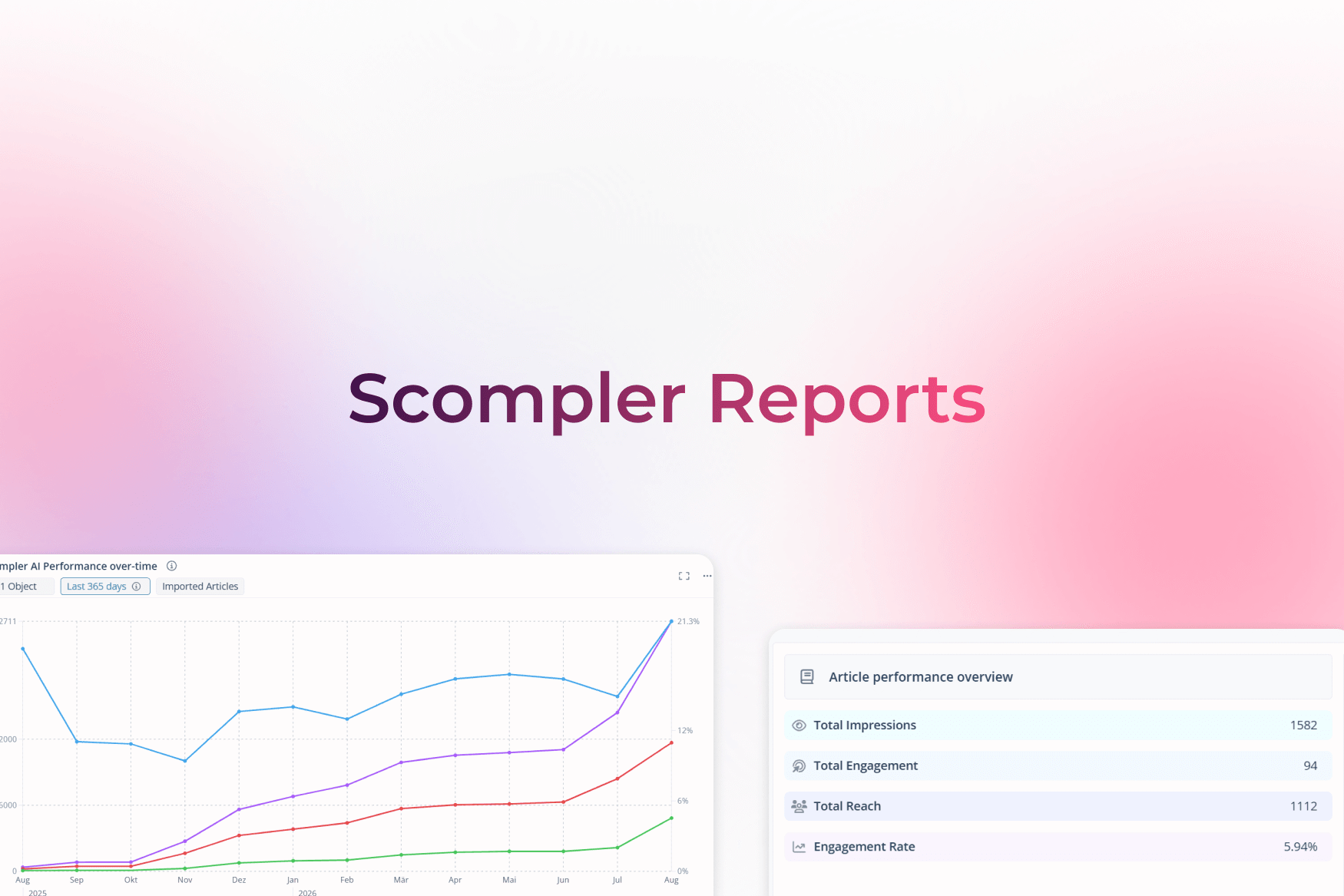
| Analysis & Reporting | Integrated performance analysis, social media KPIs, reporting dashboards | No built-in analysis; manual data maintenance or third-party tools |
| AI | Scompler AI with access to personas, topics, messages, and tone | Notion AI: Drafts, meeting notes, company-wide AI search in databases |
| Integrations | Teams, Outlook, SharePoint, Staffbase, Presspage, DeepL, Social Media, CMS | Slack, GitHub, Google Drive, Jira, HubSpot, Gmail, and many more |
Notion for Content Teams: What Works Well-and Where the Limits Lie
Notion is an attractive tool for small to medium-sized content teams because of its flexibility. With database views, Kanban boards, gallery and calendar views, and a built-in editor, you can organize content calendars, briefing documents, asset libraries, and brand guidelines efficiently and transparently. The template library offers ready-made starting points for editorial calendars, blog planning, or social media tracking.
| Notion Feature | What it's good for | Where Scompler continues |
|---|---|---|
| Notion Databases | Create a content calendar, track articles, manage assets | Topic-based architecture, approval workflows, direct publishing |
| Notion Calendar | Personal Schedule, Meeting Overview | Knowledge, Documents, Projects, Databases |
| Notion Docs | Briefings, style guides, meeting notes | Content Production with Approval Stages and Version History |
| Notion Projects | Project Management for Campaigns | Campaign planning integrated with publishing and analytics |
| Notion AI | Drafts, summaries, meeting transcripts | Scompler AI with access to personas, messaging, and brand strategy |
The larger a communications team becomes and the more complex the topics are, the more confusing a workspace like Notion becomes. This is because there’s no direct link to the communications strategy, no workflows tied directly to the content, and no direct publishing; approval processes can only be managed through manual status fields and notifications. The connection to the actual communication strategy remains tenuous. And without direct publishing, content must be transferred to separate tools after planning.
When is Notion enough? When is Scompler the right choice?
Notion is the right choice if you're looking for a flexible workspace for documentation, knowledge management, simple project planning, and cross-team collaboration. Notion is particularly well-suited for smaller teams that don't need a dedicated editorial process, or for storing content briefs and brand guidelines.
Scompler is the right choice for any team that focuses on strategic communication by topics efficient content operations.
- Strategic Topic Planning: topics, personas, and communication goals form the foundation of every content decision-and are directly integrated into the planning process.
- Transparent approval processes: Responsibilities, deadlines, and approval levels are clearly defined and documented directly within the content.
- Omnichannel publishing: Content is published across multiple channels directly from a central system.
- Integrated Performance Analysis: The impact of content is measured and evaluated at topics and campaign levels.
Scompler AI vs. Notion AI: The Difference for Content Strategy and Content Operations
Notion AI is a powerful, general-purpose AI assistant. It helps users write text, summarize content, transcribe meeting notes, automatically populate database fields, and conduct complex research. With Notion 3.0, AI agents are also available that can independently perform multi-step tasks.
Scompler AI, on the other hand, is a strategically embedded AI that directly accesses the personas, topic architectures, core messages, and tone guidelines stored in Scompler. The AI doesn’t simply generate content; it ensures that every piece of content aligns with the defined communication strategy. This makes a crucial difference for brand consistency and the strategic direction of communication initiatives.
| Scompler AI | Notion AI | |
|---|---|---|
| Context | Across channels and topics: Personas, topic architecture, core messages, tone | Workspace content, linked apps (Slack, Google Drive, GitHub, etc.) |
| Focus | Strategy-Aligned Content Production for Communications Teams | AGeneral Work Support: Writing, Summarizing, Automation |
| Agents | AI-Powered Content Creation Within a Strategic Framework | Custom Agents for task automation, reporting, and Q&A |
| Integration | Directly integrated into the editorial process, linked to approvals and publishing | In the workspace, without a direct connection to a publishing workflow |
Scompler AI understands your organization’s topics, personas, and key messages. It doesn’t generate generic content, but rather content that directly supports your defined communication strategy-ensuring consistent brand communication across all channels.
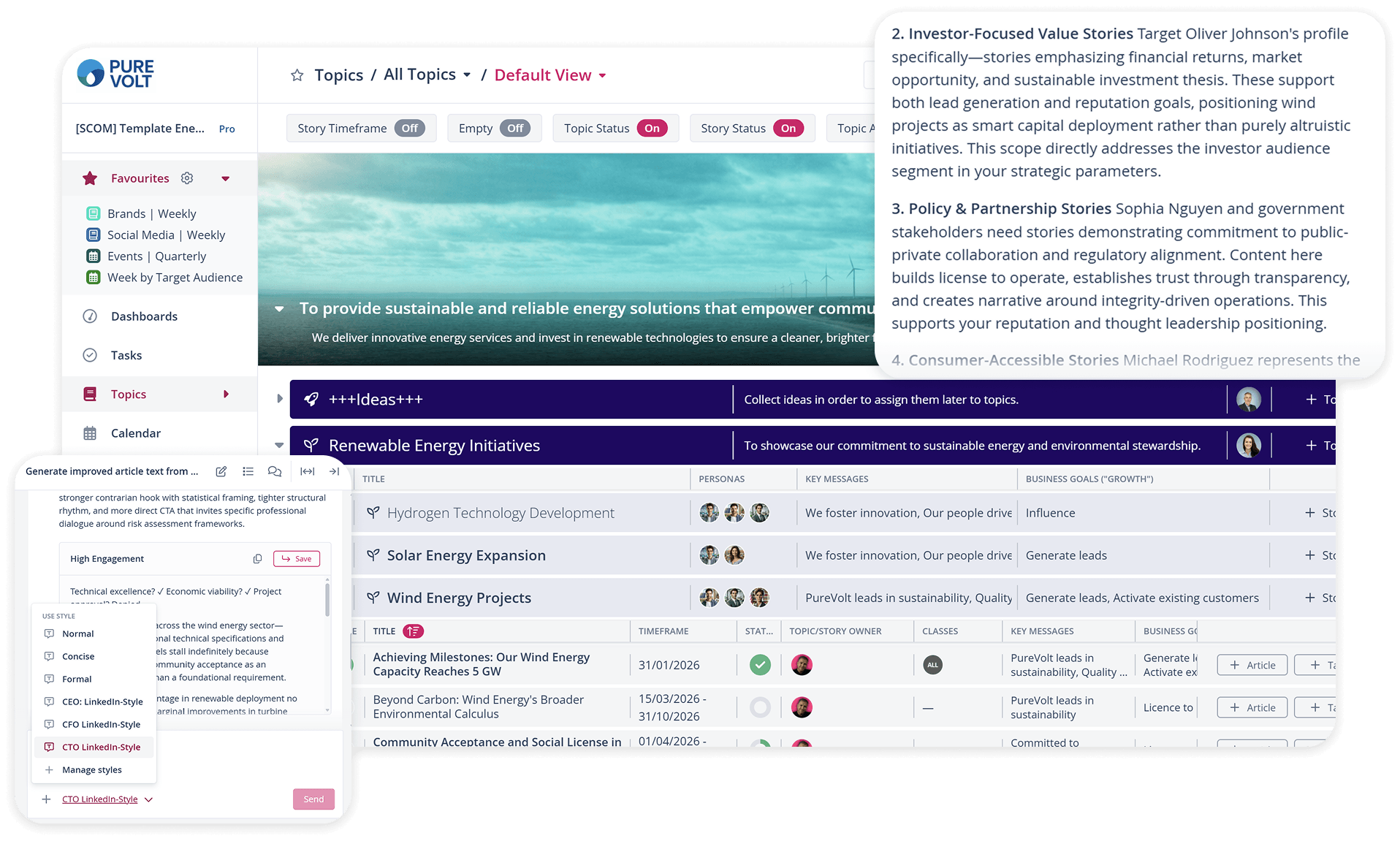
Scompler vs. Notion: Strategic Communication in a Centralized Operating System
Notion is a powerful tool for teams that want to organize knowledge, structure documents, and manage tasks flexibly. Scompler handles the strategic management of your topics, content, and communication-from editorial calendars and approval workflows to direct publishing and performance analysis. For communications departments looking to bring together strategy and operational execution in a single, centralized system, Scompler is the specialized operating system that a generic workspace simply cannot replace.
FAQs: Scompler vs. Notion
Scompler specializes in strategic communication management and content operations, including topic architecture, personas, configurable approval workflows, omnichannel publishing, and integrated performance analysis. Notion is a flexible all-in-one workspace for knowledge, documents, and tasks-but it lacks an embedded communication strategy context and does not support direct publishing.
Yes, with the right templates and database structures, you can set up a functional editorial calendar in Notion. However, this calendar is isolated from approval workflows, publishing, and performance analysis. Scompler combines editorial planning, content production, approvals, direct publishing, and analytics into a single system.
Scompler AI draws on the personas, topics, key messages, and tone guidelines stored in Scompler to generate content that aligns with the defined communication strategy. Notion AI is a generic assistant that writes and summarizes text and automates tasks. Notion Agents can also be used to independently carry out multi-step tasks, though without a strategic communication context.
Scompler is suitable for communications departments, PR teams, corporate newsrooms, content marketing teams, and integrated corporate communications that require strategic topic management, governance , and cross-channel publishing. Notion is suitable for teams of all kinds, including small- to medium-sized content teams and communications departments.
Yes. Scompler offers configurable approval workflows with defined responsibilities, roles, and deadlines. All comments and approval stages are documented directly within the content-for maximum transparency and clear governance.