




How teams work, from planning and content production to measuring impact
Social Media Strategy in Practice
Many social media teams are stuck in the same rut: posts are created reactively, comments are reviewed manually, and performance is measured based on likes and reach. At the end of the month or quarter, no one really knows whether their communications actually made a difference to social media users. Yet that is precisely the question that matters, which is why a comprehensive social media strategy is all the more important.
This article explains how the entire social media cycle—from strategic planning to qualitative impact measurement—works in practice, and what role social media management in Scompler and Scompler Audience Pulse plays in this process.
What sets a social media strategy apart from reactive posting
In many companies, social media management is still viewed primarily from an operational perspective: Who posts what, when, and on which channel? Strategic social media management starts one step earlier: by asking what topics, messages, and goals underlie each post. And it ends one step further: by asking whether the communication has actually moved the audience—or merely reached them.
The difference between reactive social media posts and strategic social media work can be summarized in three points:
- Strategic integration: Every post contributes to an overarching communication goal.
- Editorial coordination: Planning, production, approval, publishing, and analysis are all handled within a single system, rather than in separate tools.
- Qualitative impact measurement: Teams evaluate not only reach and engagement but also draw conclusions for future content based on sentiment analysis.
Scompler maps out this exact cycle—from content strategy to editorial planning in dedicated social media calendars and approval workflows, all the way to sentiment analysis with Audience Pulse.
Step #1: Social Media Strategy – topics Goals as the Foundation
Why social media posts fail to have an impact without a strategic framework
The most common mistake in social media management isn’t a lack of creativity, but a lack of strategic alignment. Posts are created in isolation from the overall communication strategy, channels are managed in parallel without a shared context, and it’s difficult to demonstrate which content contributed to which goals.
Integrating social media strategy and content into the topic architecture
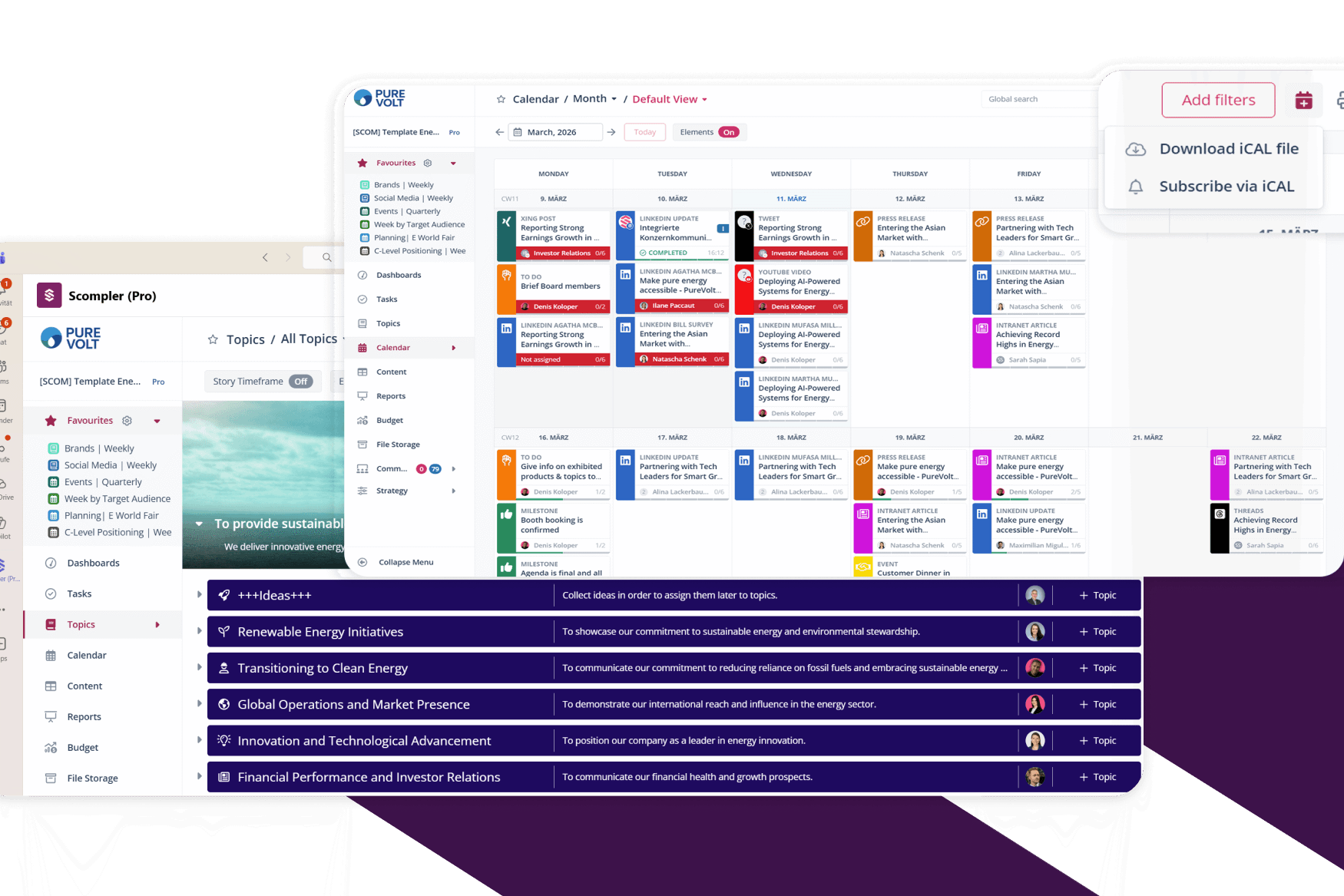
In Scompler, every social media post is managed directly within the topic architecture. A LinkedIn post about the new sustainability strategy is linked to the same overarching story and topic the corresponding blog post, press release, and internal message to employees. Social media no longer operates in a silo but contributes to a shared narrative that is consistently shared across all channels.
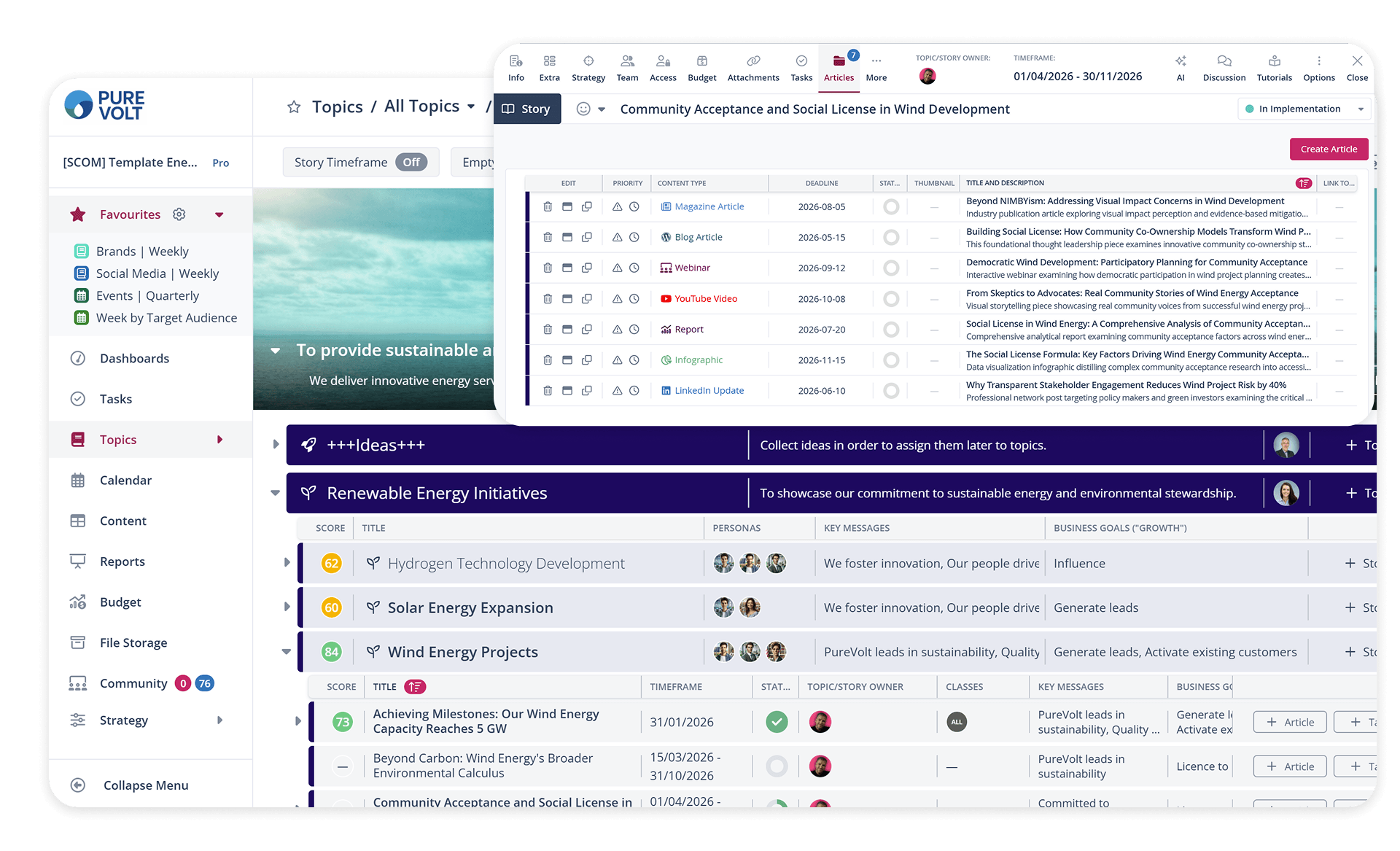
Real-World Social Media Use Case: Employer Branding Campaign in the Energy Sector
- On LinkedIn, the target audience gains deeper insights into the day-to-day life of an engineer—tailored to the persona of the experienced professional.
- Instagram is posting behind-the-scenes content from wind farm and solar projects—for juniors.
- On the careers page, HR and Internal Communications are working on an article that describes the company culture.
- Formats and tones at the channel level are thus strategically aligned and transparent to all stakeholders.
Step #2: Editorial Planning - Clarity on Channels, Teams, and Timelines
Coordination Chaos in Everyday Social Media Life
“When will the LinkedIn post go live—and who’s handling it?” In teams with multiple people in charge, various channels, and regular coordination cycles, coordination alone takes up a disproportionate amount of time. Tasks, timelines, and responsibilities are often scattered across emails, chats, and SharePoint files, with no central overview.
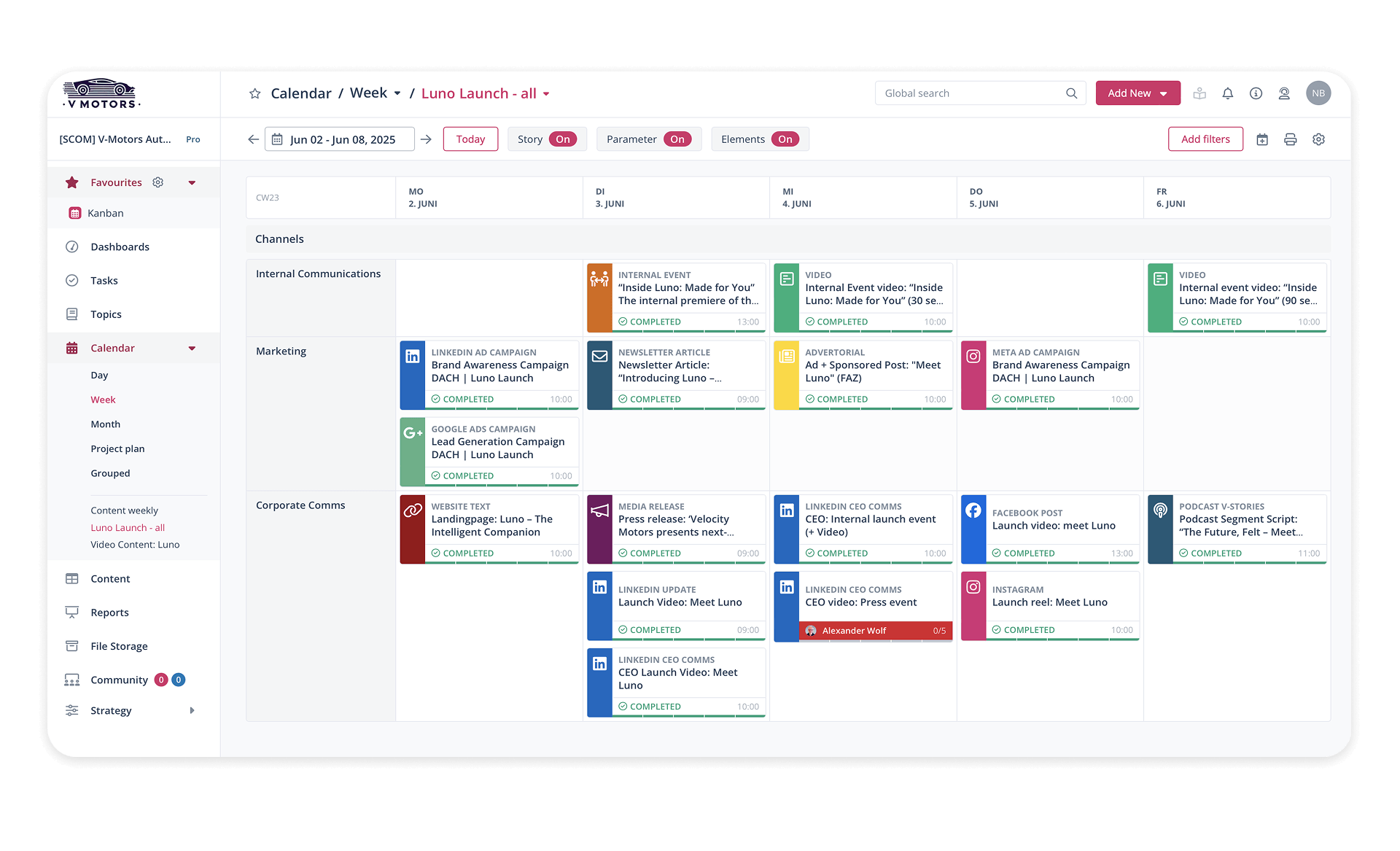
Social Media Editorial Planning with Customizable Calendar Views
Scompler solves this with configurable calendar views: Teams can set up a view exclusively for the social media team, topics by channels, responsibilities, or topics , or view all posts across the entire communication calendar. Timelines, statuses, and the final content are thus all in one place, visible to everyone involved.
Social Media Use Case: Multi-channel Planning Without the Need for Coordination
- A company's social media team, which manages five channels (LinkedIn, Facebook, Instagram, Twitter, YouTube) and has two managers, works using its own calendar view.
- The communications manager can see for themselves how the social media posts fit into the overall plan without having to ask in the chat.
- The administrative burden is decreasing, while personal responsibility is increasing.
#3: Content Production and Publishing – From Concept to Finished Post
Many tools slow down content production
Creating content, approving it internally, and publishing it at the right time—these are three steps that many teams still handle using two or three different tools or chat platforms. This takes time and makes it difficult to keep track of status and versions.
AI-powered content production directly within the communications workflow
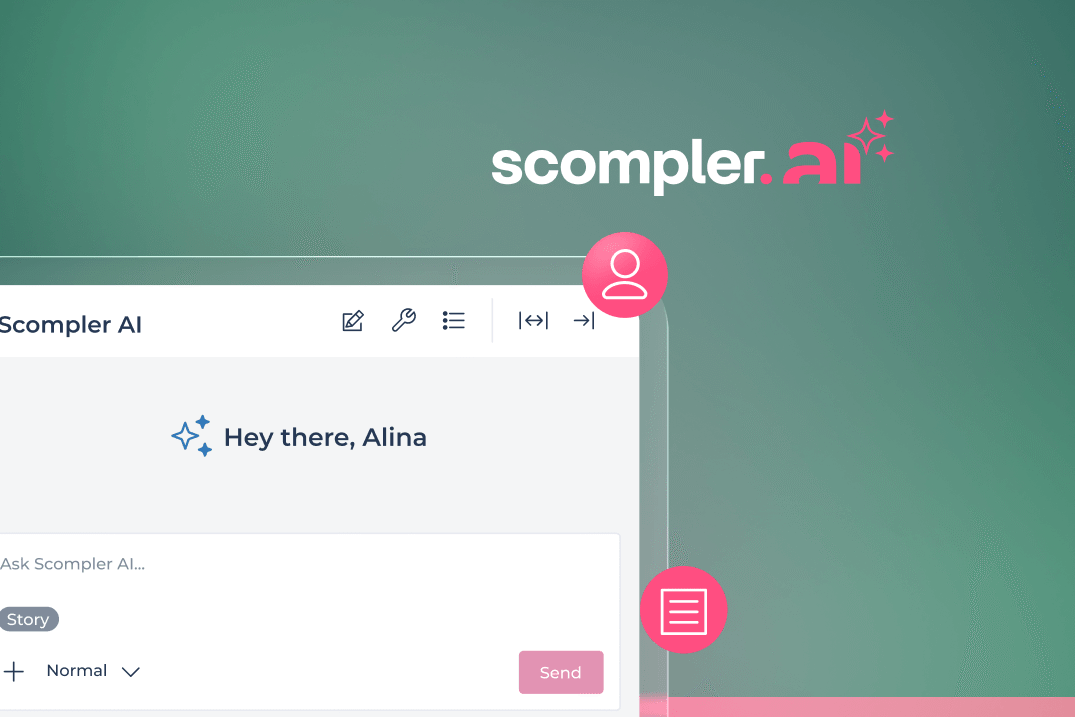
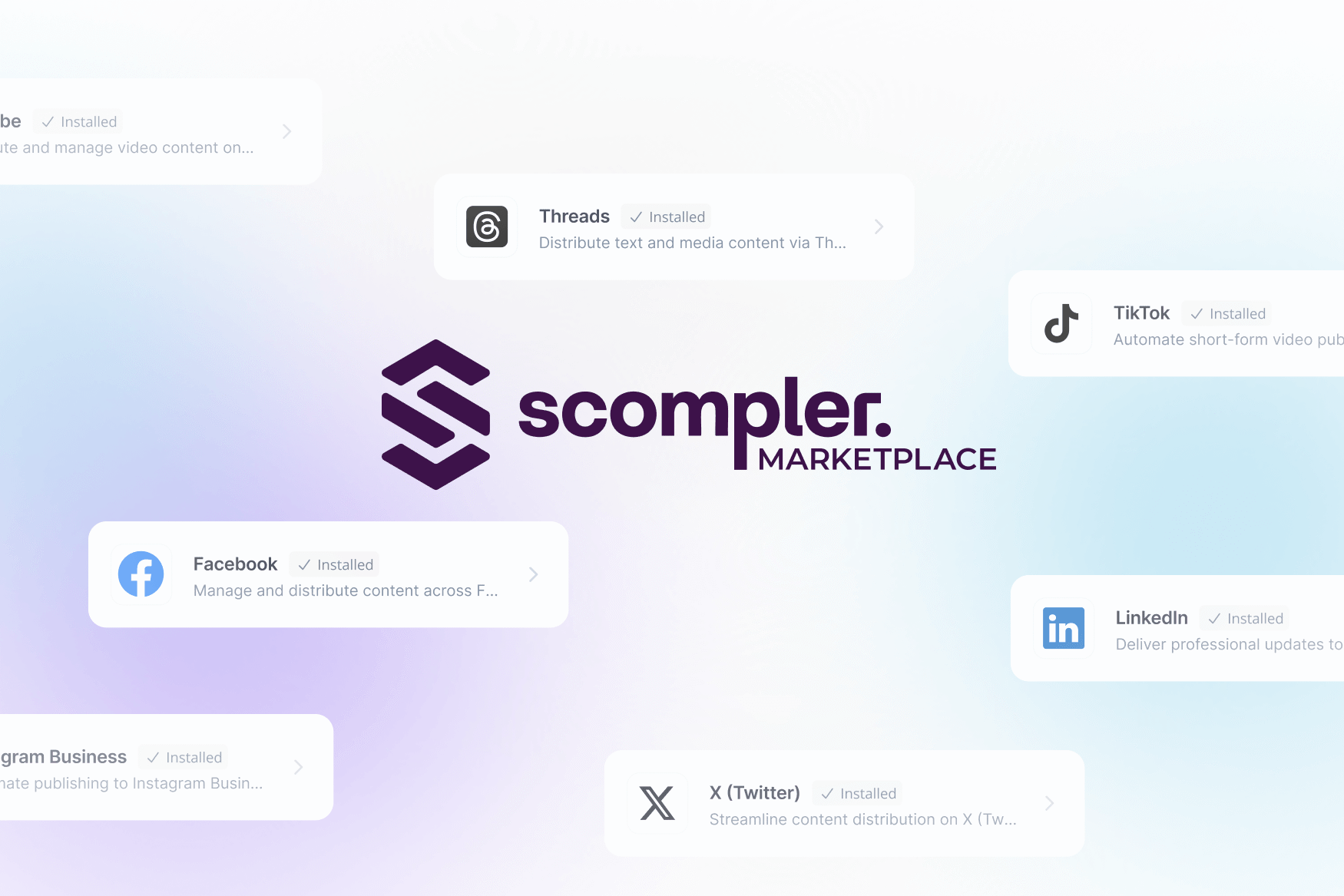
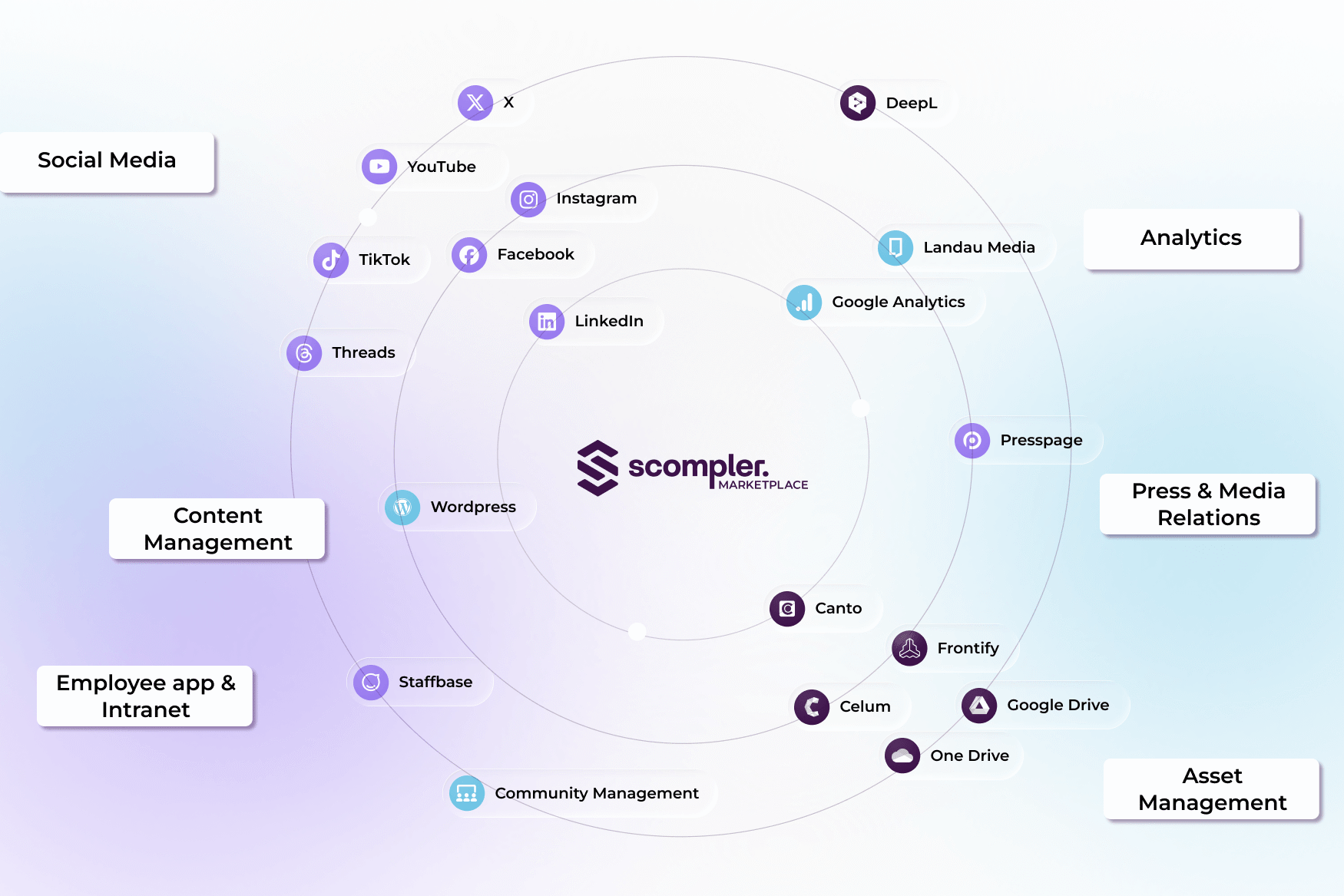
Scompler streamlines this process: All relevant social media platforms can be integrated directly, and Scompler AI helps you create content based on your defined strategy, personas, and brand voice. Approval workflows ensure transparent coordination before a post goes live or you schedule it for later. The entire process takes place in one place.
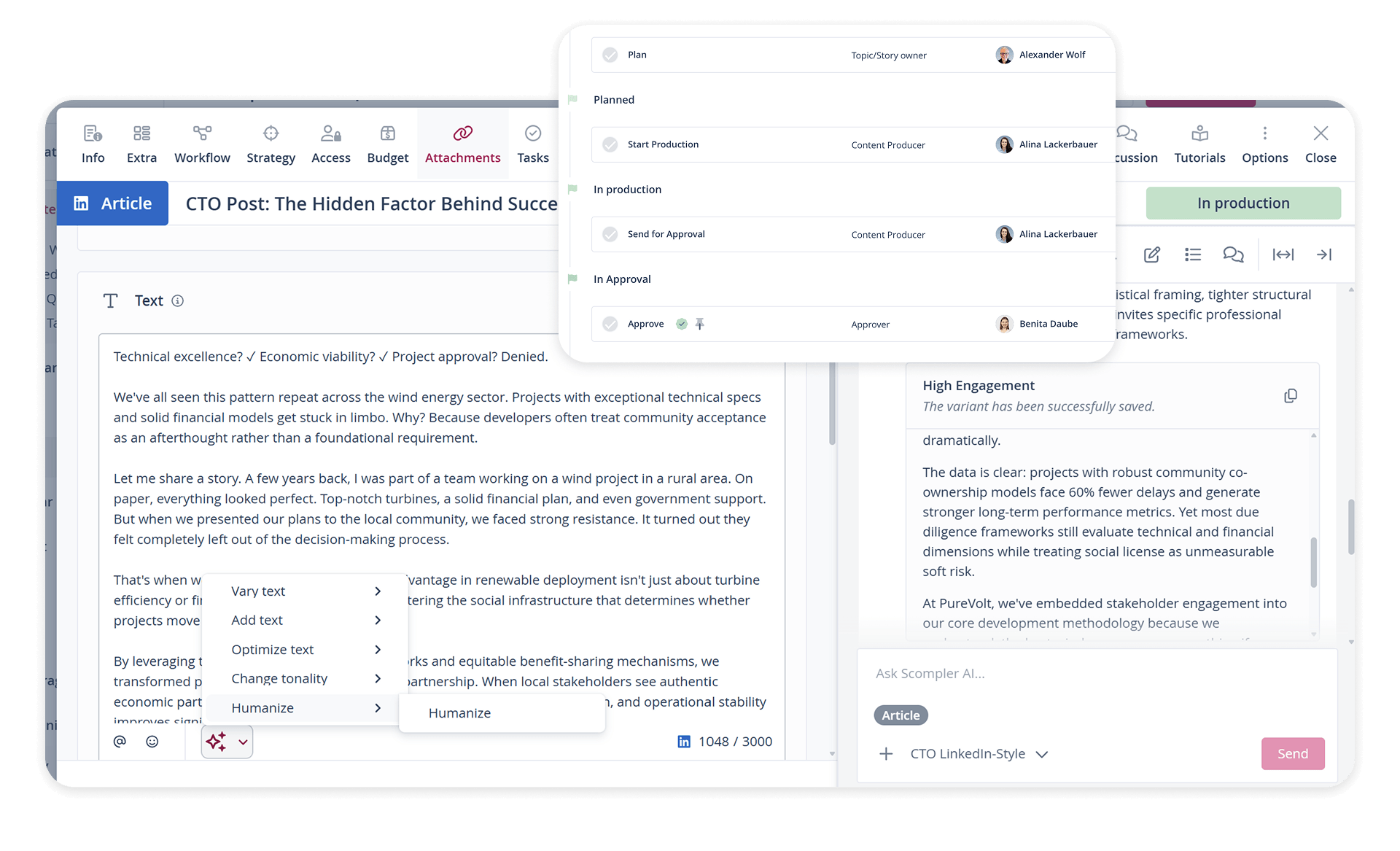
Social Media Use Case: Create, Share, and Schedule Posts
- A social media manager creates a draft for an Instagram post on topic Solar Expansion 2026" directly in Scompler, under the relevant story.
- Based on the specified topic, target persona, and Instagram tone, Scompler AI directly suggests text tailored to the platform.
- The draft is sent to the team lead via the workflow; the team lead adds a note in the comment field, approves the post, and the employee automatically schedules the post for Thursday at 10 a.m.
- All other employees can check the status of the post in real time as needed, or download the images for use in other communications initiatives.
#4: Community Management and Performance
Community management without switching tools or inconsistent messaging
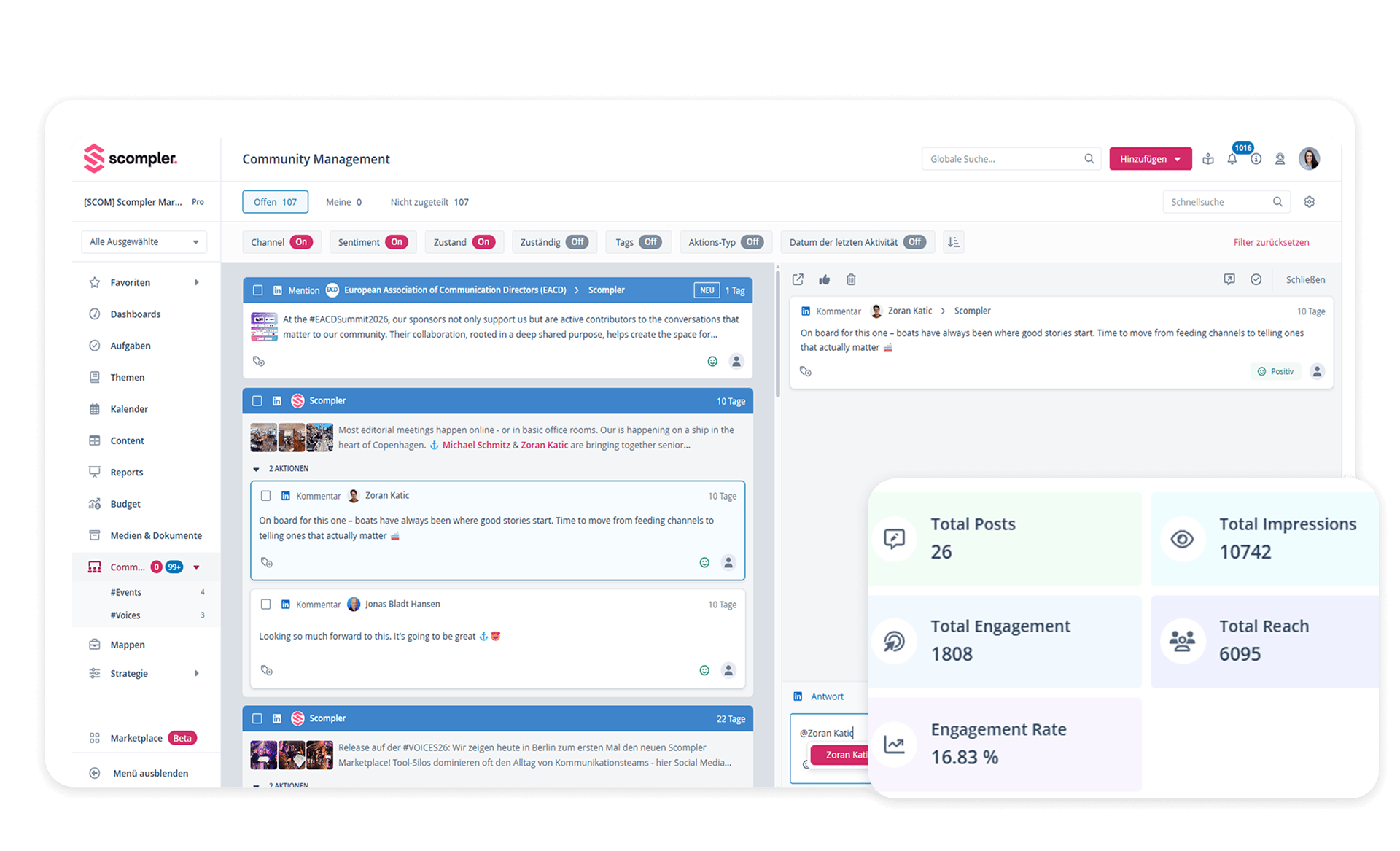
Once content goes live, the work for social media teams only continues. Comments start pouring in—some are urgent, others irrelevant. With Scompler’s integrated community management add-on, teams can stay on top of things without having to switch between tools.
Performance KPIs directly at the post, story, and topic levels
What sets Scompler apart from traditional social media tools is that performance metrics aren’t limited to the channel or post level. They are stored directly at the post, story, and topic levels and can be analyzed by topics, objective, and target audience.
Social Media Use Case: Aggregated Performance Analysis by topic
- Over the course of three months, the energy provider’s communications team published several stories on the topic of “Solar Expansion 2026” on LinkedIn, Instagram, and its careers page.
- Instead of analyzing the performance of each individual post separately, the team at Scompler looks at the aggregated results at topics: Which stories achieved the highest reach? On which channel did the topic have topic impact on the target audience?
- The performance KPIs are available directly within the system, without the need to consolidate data from various tools or manually transfer it to a reporting document. This not only saves time but also lays the groundwork for informed decisions regarding all future communication initiatives.
#5: Sentiment Analysis – What Really Resonated with the Audience?
The blind spot in social media analysis
Performance KPIs tell us what the audience did—clicked, liked, shared. But what they thought and felt in the process remains hidden. Whether a topic struck topic chord, or whether a story elicited approval or silent disapproval—until now, there has been no systematic way to gauge that.
Audience Pulse: Sentiment Aggregation from Comments to Topic Level
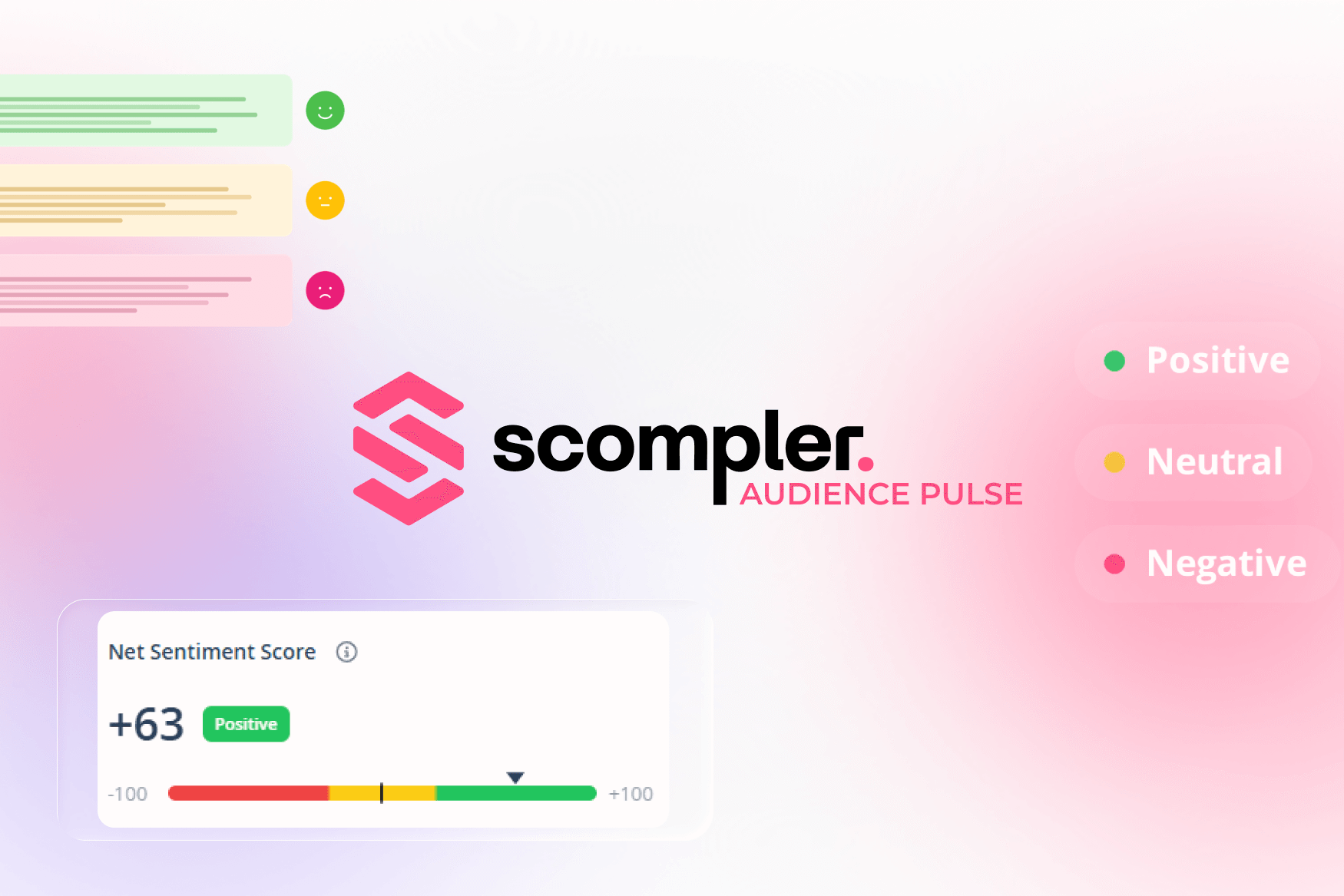
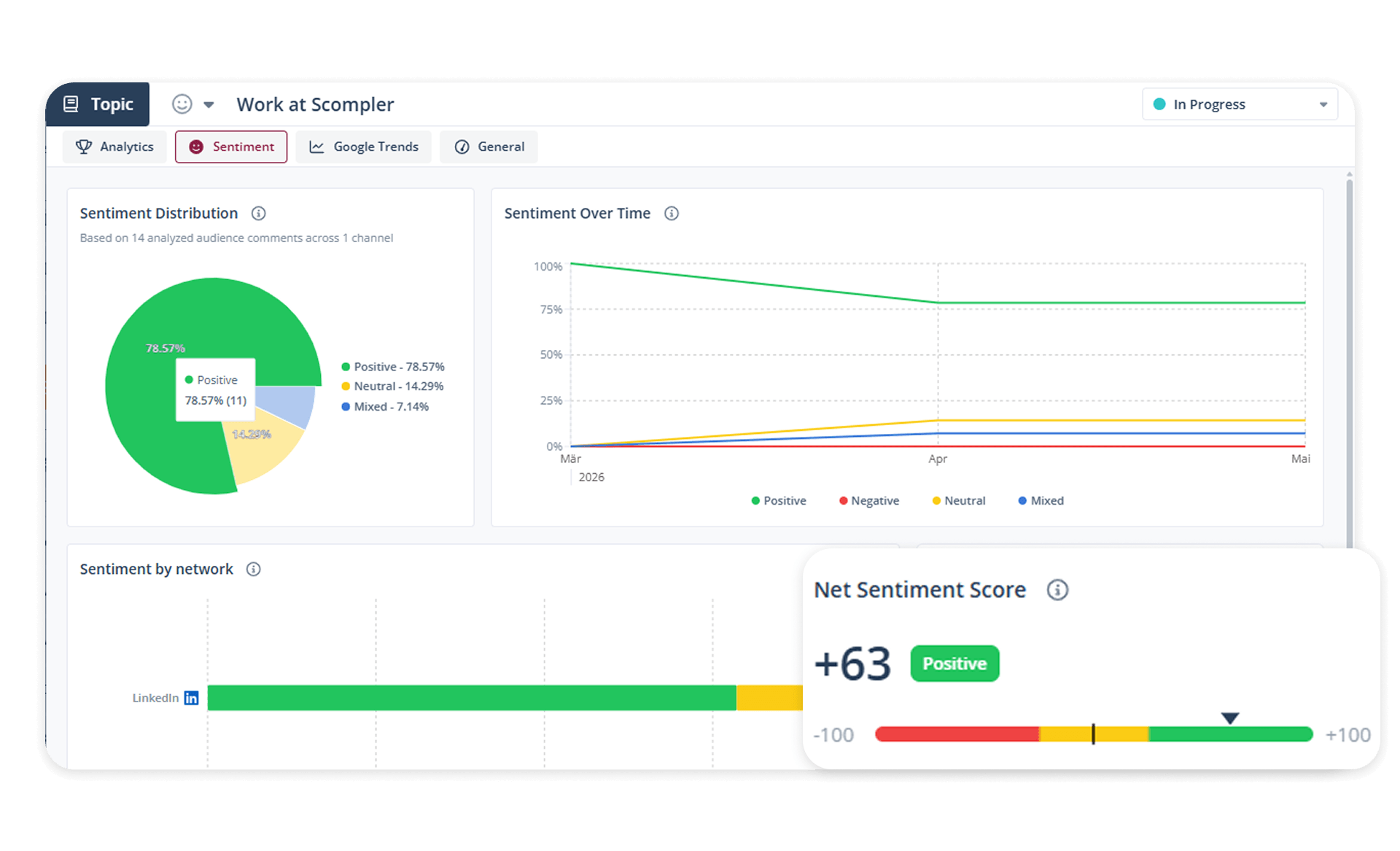
With Scompler Audience Pulse, every incoming comment is automatically classified by AI as positive, neutral, negative, or mixed. This happens directly within the community management interface and requires no manual effort. If necessary, the AI classification can be manually overridden.
Sentiment is automatically aggregated from individual comments on articles and stories up to topics. Communications professionals can check directly in Scompler to see how a particular topic was received emotionally topic a given period. This makes the qualitative dimension of communication systematically measurable and adds to performance KPIs exactly the dimension that was previously missing.
Social Media Use Case: Aggregated Performance Analysis by topic
- Over the course of three months, the energy provider’s communications team published several stories on the topic of “Solar Expansion 2026” on LinkedIn, Instagram, and its careers page.
- Instead of analyzing the performance of each individual post separately, the team at Scompler looks at the aggregated results at topics: Which stories achieved the highest reach? On which channel did the topic have topic impact on the target audience?
- The performance KPIs are available directly within the system, without the need to consolidate data from various tools or manually transfer it to a reporting document. This not only saves time but also lays the groundwork for informed decisions regarding all future communication initiatives.
Social media management is only strategic when we take a holistic approach to it
Reach is not a strategic goal, and a high-performing post does not necessarily prove that the communication was effective. Strategic social media management means embedding every post within a broader context, from topic architecture and editorial coordination to content production.
And it means not just knowing how many people have seen a post, but also how it resonated with them. That’s exactly what Scompler enables by treating social media not as an isolated channel, but as an integral part of the overall communication strategy. With its own community management tools and Scompler Audience Pulse, individual comments and their sentiment are directly linked to the topics stories that form the foundation of the strategy.