


Scompler vs. Asana
Differences in Strategic Communication Planning
Many companies already use Asana as their central system for project and task management—including communications and marketing teams. The platform is often adopted company-wide as the standard for collaboration and workflows and is used accordingly in communications as well.
But what exactly is the difference between Asana and Scompler—and when does each solution make sense?
Asana primarily supports teams with operational collaboration, task management, and project coordination. Scompler, on the other hand, was developed specifically for strategic communications planning and modern content operations. While Asana organizes processes and teams, Scompler provides the strategic context behind them: from topic planning and governance to editorial control and integrated communications across all channels.
Is a project management tool sufficient for strategic communications work?
For small and medium-sized teams, a tool like Asana can be an excellent starting point. Tasks, projects, and operational workflows can be efficiently organized and coordinated across teams.
However, as complexity increases, so do the demands placed on communication efforts. topics be coordinated, communication goals prioritized, approvals managed, and content planned across various channels. It is precisely this strategic level that traditional project management tools are only able to address to a limited extent.
Communications departments, corporate newsrooms, and marketing organizations therefore often need more than just task management: they need a centralized system for topic planning, governance, editorial planning, and integrated communications management. That is exactly what Scompler was developed for.
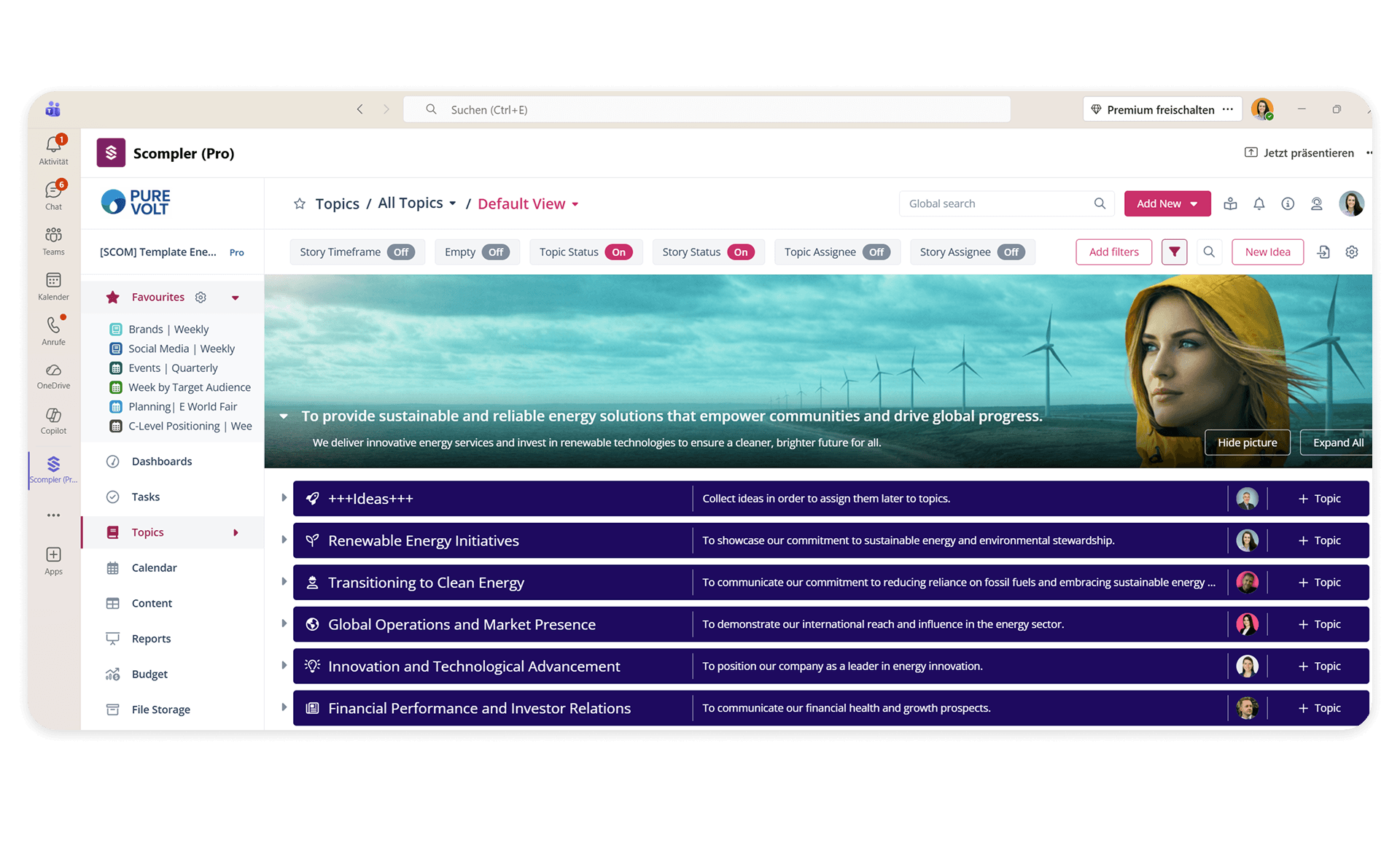
Scompler vs. Asana: The Key Difference for Content Planning and Operations
Scompler and Asana take different approaches and address different challenges.
Scompler helps communications organizations centrally manage topics, content, target audiences, approvals, and communication goals. The platform directly links strategic planning with operational processes, thereby creating a unified framework for modern communications work.
Asana, on the other hand, focuses on project management, task coordination, and team collaboration. The tool provides a solid foundation for operational processes and efficient collaboration—especially for small and medium-sized teams. However, Asana is not designed for strategic issue management or cross-channel communication planning.
Differences in content planning—and why communication needs more context
Many companies use Asana to manage projects and campaigns. However, approvals, publishing, and analytics are often handled in separate systems. As a result, there is no central overview of topics, content, and communication processes.
topics, campaigns, and responsibilities are often managed separately. This makes it difficult to prioritize tasks, maintain transparency, and ensure consistent communication across teams and channels.
In the enterprise environment in particular, simple task management is therefore often insufficient. Communications work also requires a strategic framework, clear governance structures, and a centralized topic architecture for planning, production, publishing, and analysis.
Overview of Features and Benefits
The following comparison highlights the key differences between strategic communication management using Scompler and traditional project management using Asana.
| Criterion | Scompler (Strategic Communications & Content Operations) | Asana (Collaboration & Task Management) |
|---|---|---|
| Target group | Communications departments, PR, marketing, internal communications, newsrooms, content operations | Project teams, product teams, operations, marketing teams |
| Focus | Strategic communication planning, topic management, governance, editorial planning, omnichannel content production, publishing | Project management, task coordination, teamwork |
| Strategic level | Thematic architecture, narratives, communication goals, and governance in a centralized system | Marketing and team goals are possible; otherwise, the focus is on operational tasks and projects |
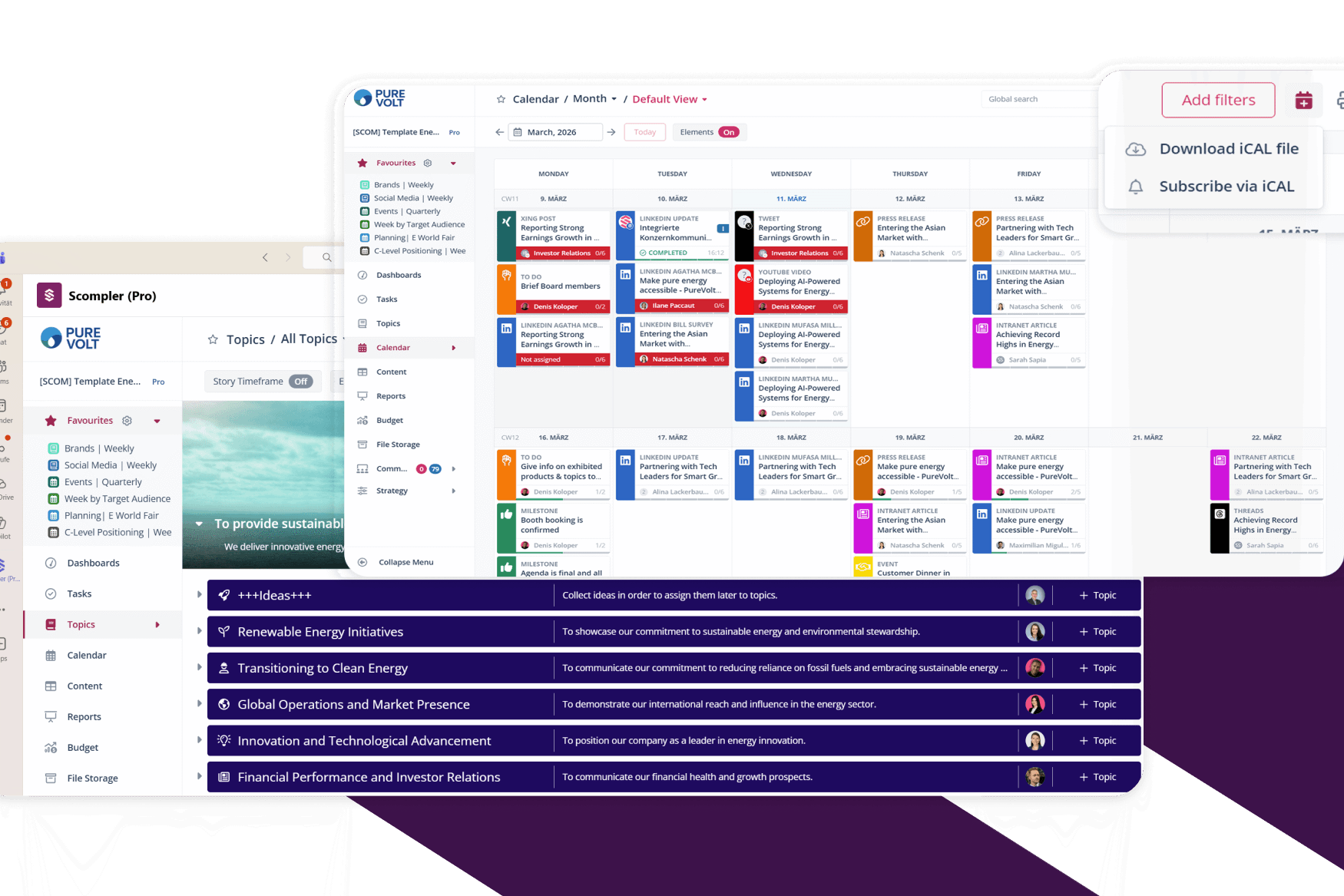
| Editorial Planning | Customized calendar and campaign views based on goals, channels, or teams – direct integration with production, approvals, and publishing | Task lists, boards, and calendars for operational planning |
| Workflows & Approvals | Custom roles and permissions, customizable workflows, transparent version history | Flexible team workflows and task processes |
| Publishing | Integration with CMS, social media, and publishing systems | No native publishing; requires additional tools |
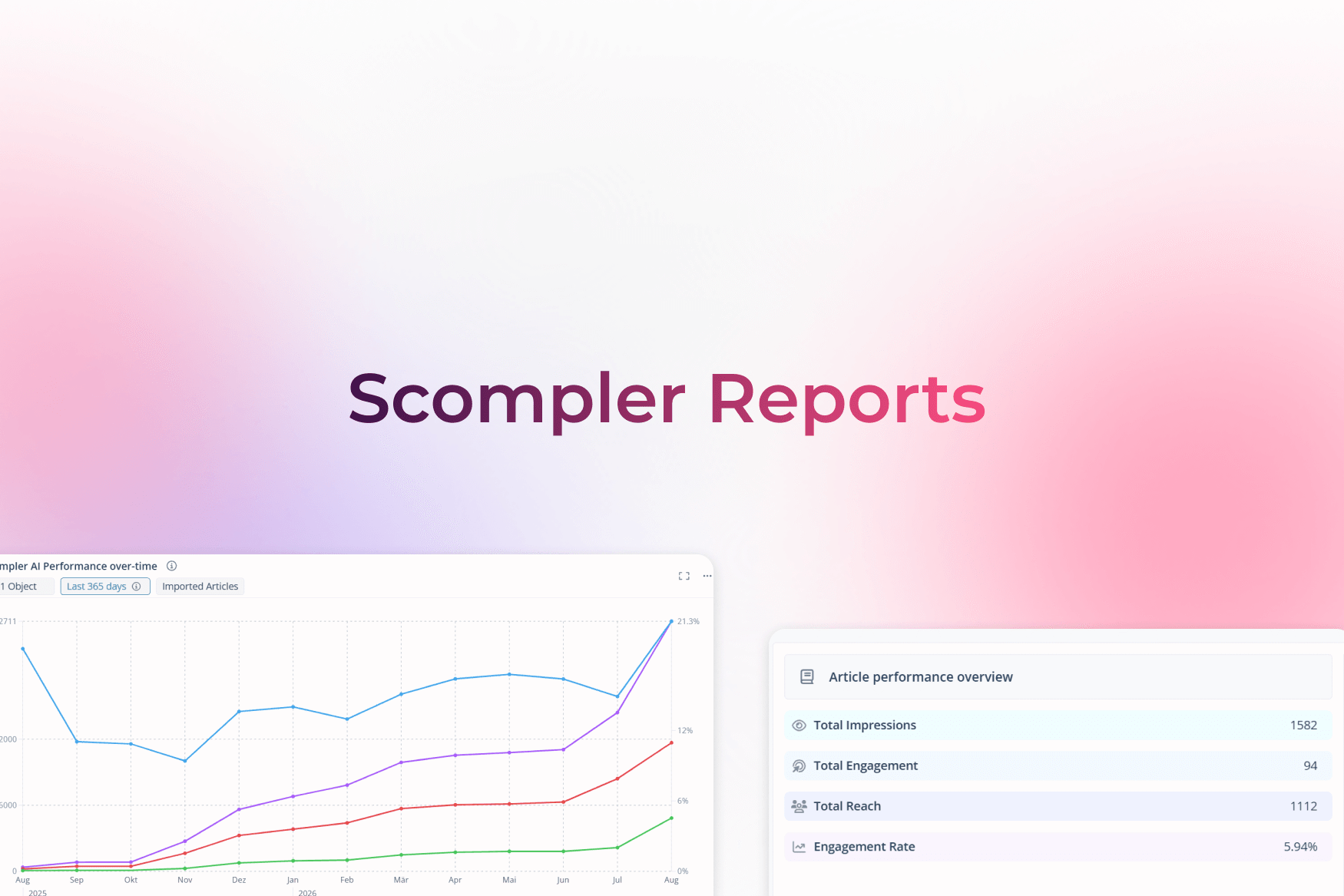
| Analysis & Reporting | Analytics dashboards for topics, content performance, social media KPIs, sentiment analysis, and integration of external data | Project and Workflow Reporting |
| AI | Integrated Scompler AI for topic planning, content production, briefings, and brand voice | AI-powered support for task prioritization, workflow automation, and operational project coordination. |
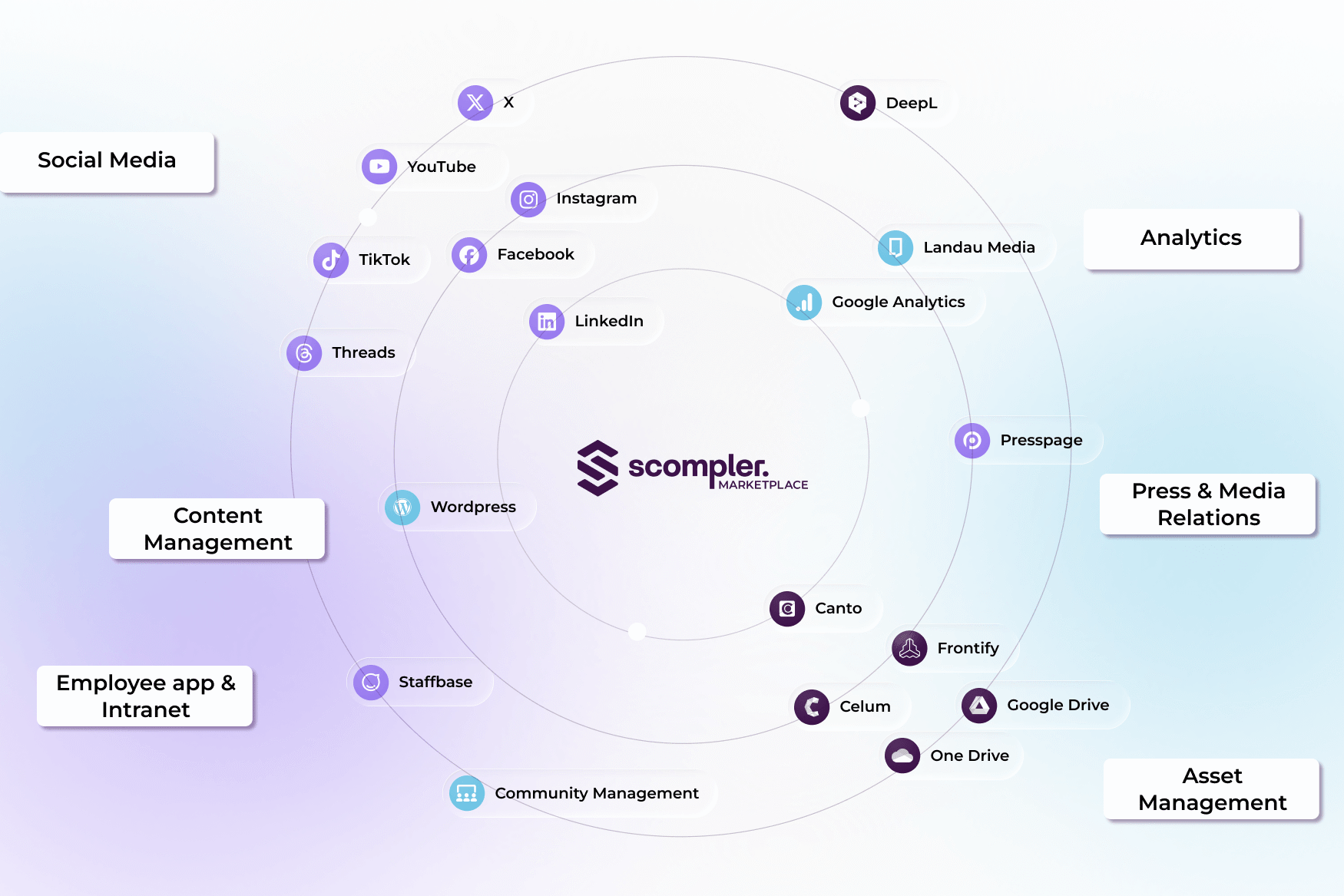
| Integrations | Microsoft Teams, Outlook, SharePoint, Google Drive, social media platforms, CMS and asset management integrations | Slack, Microsoft Teams, Google Workspace, Jira, and other collaboration and project management tools. |
| Omnichannel communication | Centralized management of all communication channels | Not specifically designed for omnichannel communication |
Why Strategic Communication Requires More Than Just Project Management
Modern communications work has become more complex. Today, content is no longer created in a linear fashion within individual teams, but is distributed across departments, stakeholders, and channels.
That is why it is often not enough to simply manage content and communication tasks efficiently. Communication professionals also need strategic context, transparent approval processes, coordinated topic structures, and a shared communication plan.
A project management tool like Asana helps teams efficiently coordinate tasks, projects, and operational workflows.
A strategic communications platform like Scompler, on the other hand, manages the entire communications process—from topics content to target audiences and communications objectives, as well as responsibilities, approvals, and the impact of communications.
The focus here is not on individual tasks, but on the strategic question: Which topics we topics , when, why, through which channels, and with what impact?
Fewer silos, more transparency
In many companies, PR, internal communications, social media, and marketing departments continue to operate using different planning approaches and separate tools. This makes it significantly more difficult to create integrated campaigns, consistent narratives, and coordinated communication plans.
Scompler creates a unified strategic platform for topic planning, editorial management, and cross-channel communication. Teams gain a centralized overview of content, priorities, approvals, and campaigns.
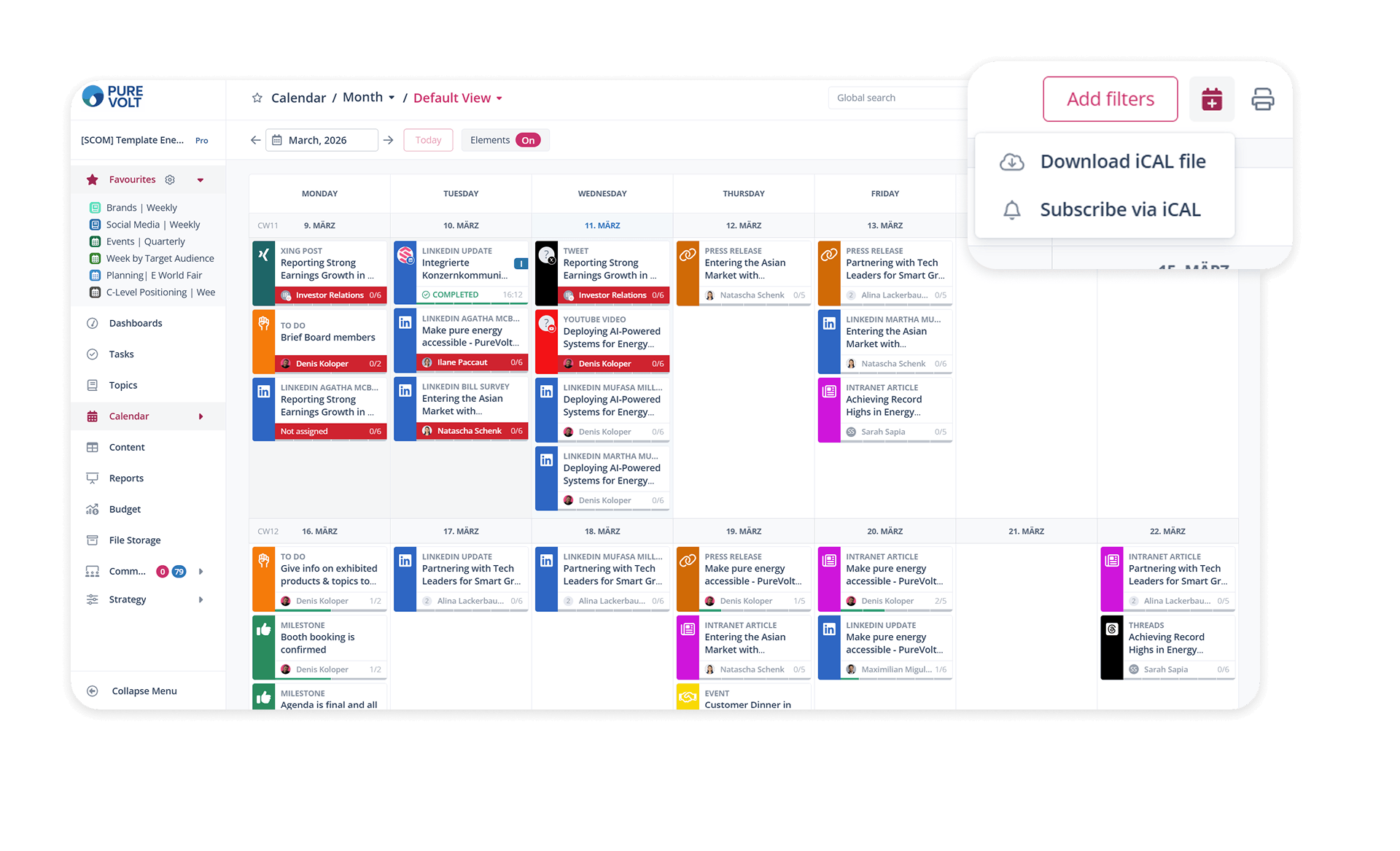
Strategic communication requires more than just task management
Asana is a powerful tool for collaboration, task management, and operational processes—especially for small and medium-sized teams with clear project structures.
Scompler, on the other hand, was developed specifically for strategic communications. The platform helps communications departments, corporate newsrooms, and marketing organizations centrally manage topics, content, approvals, and communications.
Especially in enterprise environments with many stakeholders, complex approval processes, and integrated communication, Scompler provides the strategic framework that traditional project management tools cannot offer.
Instead of fragmented planning, a unified system for modern content operations and strategic communications management is created.
FAQs: Scompler vs. Asana
Scompler specializes in strategic communications management and content operations. Asana focuses primarily on project management, task management, and team collaboration.
Yes, especially for operational task planning and collaboration. However, Asana is only partially suited for strategic communication management, topic planning, and integrated content operations. For these purposes, specialized solutions like Scompler are needed—solutions that combine strategy, topic management, cross-channel planning, and operational execution all within a single system.
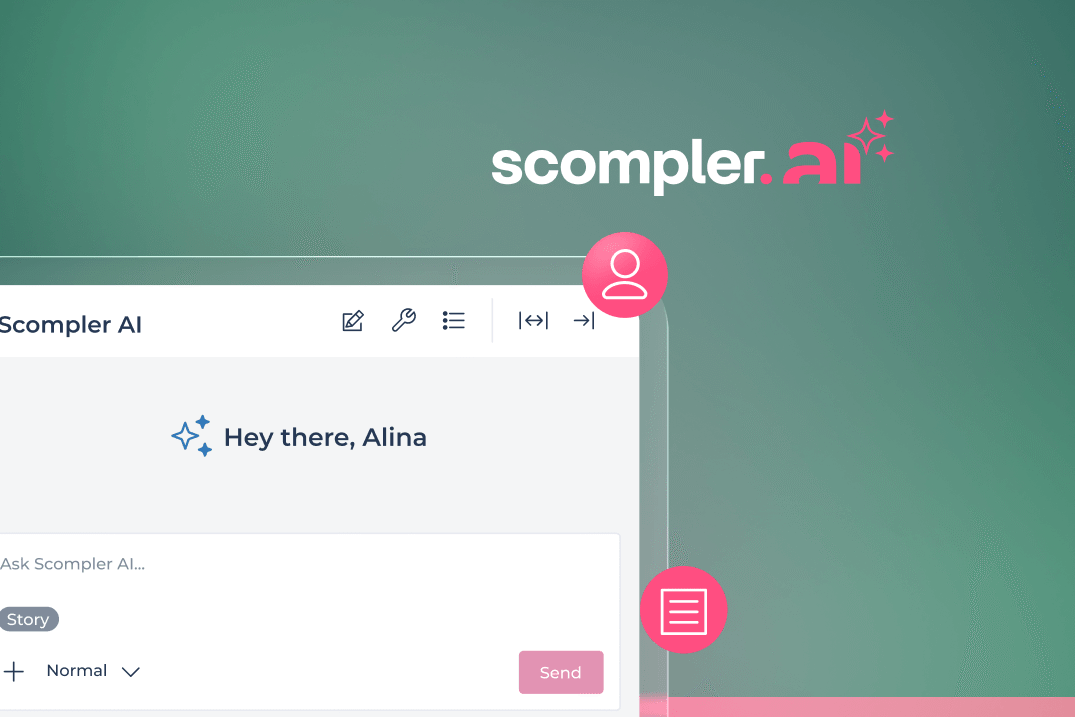
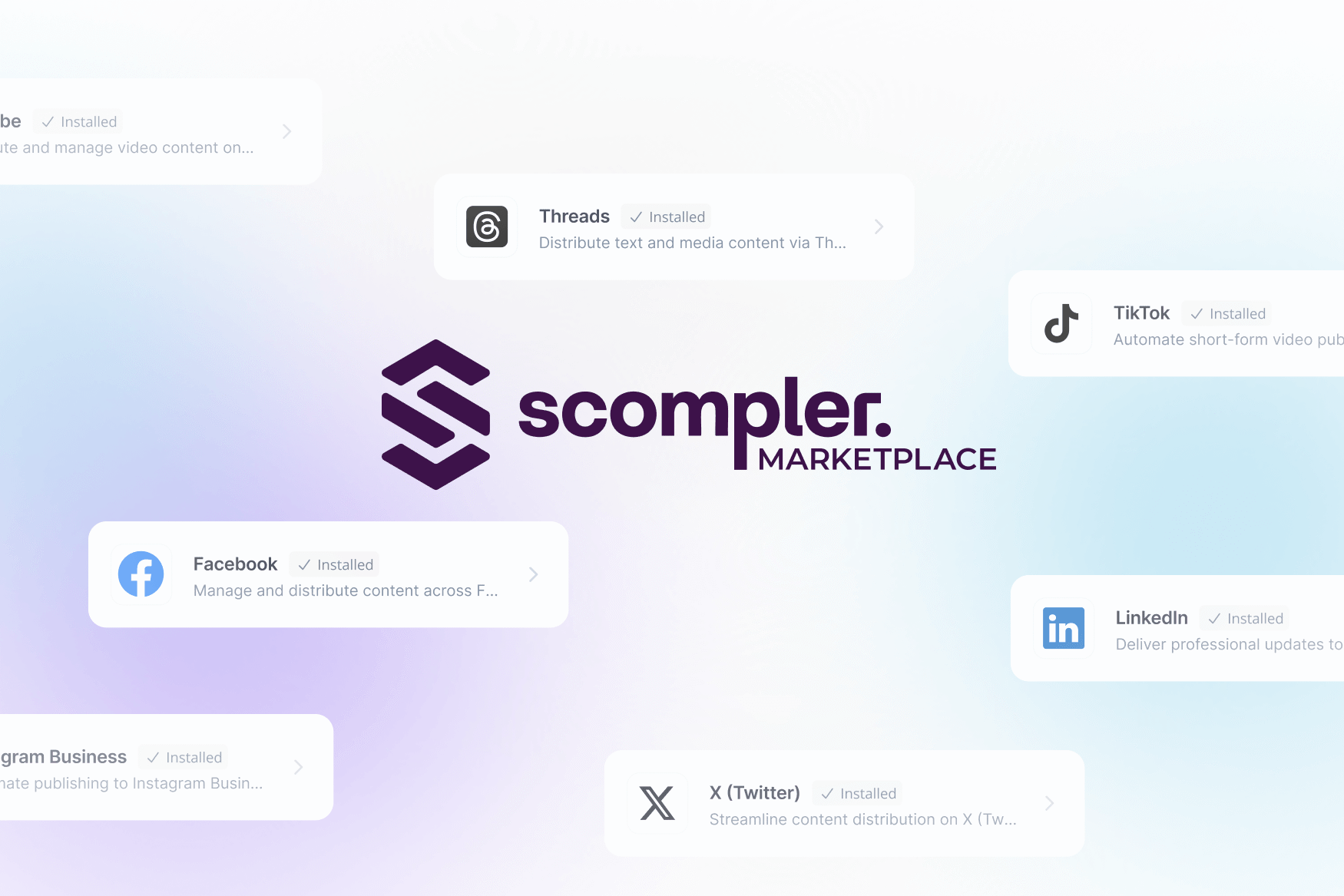
Scompler supports teams with a centralized topic architecture, strategic editorial planning, transparent approval workflows, and integrated communication management. With Scompler AI and the Scompler Marketplace, an integrated ecosystem is also created for AI-powered content operations, automation, and the flexible expansion of existing communication processes.
Yes. Scompler supports structured approval and governance processes for communications and content teams. Responsibilities, roles, and approval workflows can be mapped out transparently, ensuring that content is reviewed, approved, and documented in a traceable manner. This results in greater reliability, fewer approval loops, and a consistent communications process—especially in complex organizations with many stakeholders.
Strategic communication planning breaks down silos, creates transparency, and unites teams around shared communication goals and topic frameworks. Instead of isolated, individual initiatives, it fosters a shared perspective on topics, priorities, and channels. This facilitates coordination between communication, marketing, HR, sales, and other departments, ensuring that content can be planned in a consistent, efficient, and targeted manner. At the same time, it reduces redundancies and improves the coordination of resources.
A tool like Asana can serve as a solid foundation for operational collaboration and task management. However, strategic communications work also requires topic planning, governance, editorial oversight, and cross-channel coordination. This is precisely why specialized solutions like Scompler are needed—solutions that integrate strategy, topic architecture, and operational execution. With Scompler AI and the Scompler Marketplace, an integrated ecosystem is also created for AI-powered content operations, automation, and the flexible expansion of existing communication processes.