




What a Strategic Communications OS Does
And why companies need to rethink their communication
From Isolated Measures to Integrated Management: How Scompler Is Systematically Transforming Communication
The demands placed on corporate communications have changed fundamentally in recent years. Today, content must not only be produced, but also strategically managed, orchestrated across multiple channels, and continuously refined.
Many organizations reach their limits in this process: topics in a decentralized manner, initiatives are planned in isolation, and the connection to the overarching strategy often remains unclear.
This is exactly where the concept of a Strategic Communications Operating System comes in-and with Scompler, companies have access to a platform that makes communication structured, integrated, and scalable.
The key challenge: making complexity in communication manageable
Today, companies face the challenge of coordinating an ever-growing number of topics, channels, and target audiences. At the same time, the demands for consistency, speed, and relevance are increasing.
In practice, this means that content must support strategic goals, be topics from clearly defined topics , and be presented in a way that follows a consistent logic.
Yet it is precisely this connection that is missing in many organizations.
“Communication can no longer consist solely of individual measures; rather, it must be viewed as an integrated system.”
Björn Bröhl, CEO of Scompler

What Sets a Strategic Communications OS Apart
A strategic communications OS like Scompler provides the structural foundation for managing communications holistically. It’s not just another tool, but a new operating system for content and communications.
The focus is on three key areas:
01
topicsarchitecture
Strategic topics defined and prioritized
02
Story level
This gives rise to narratives and storylines
03
Policy level
Content is planned and distributed across all channels
These levels are linked within Scompler, making it possible to track at any time how individual measures contribute to overarching goals.
Scompler as a Strategic Communication OS
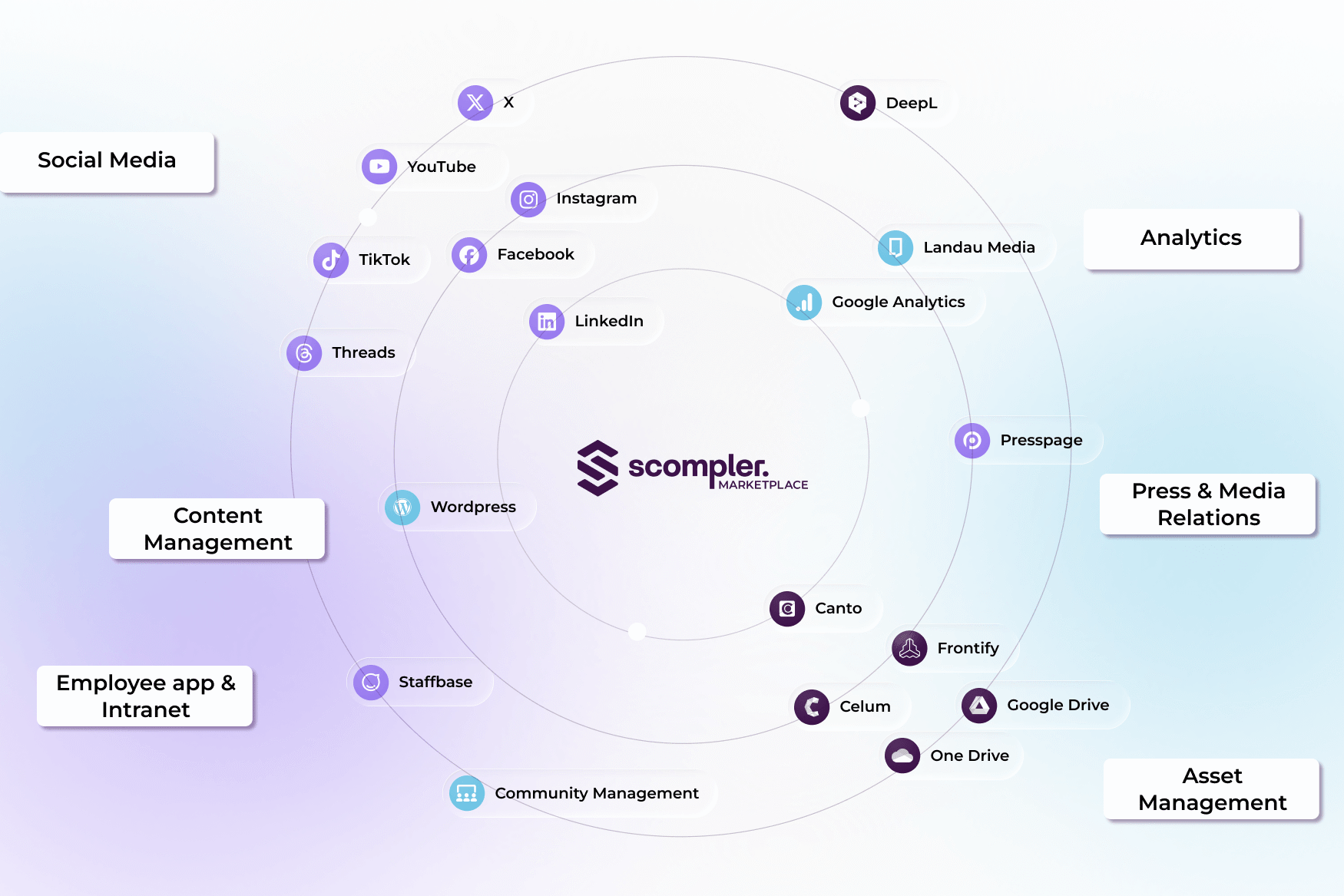
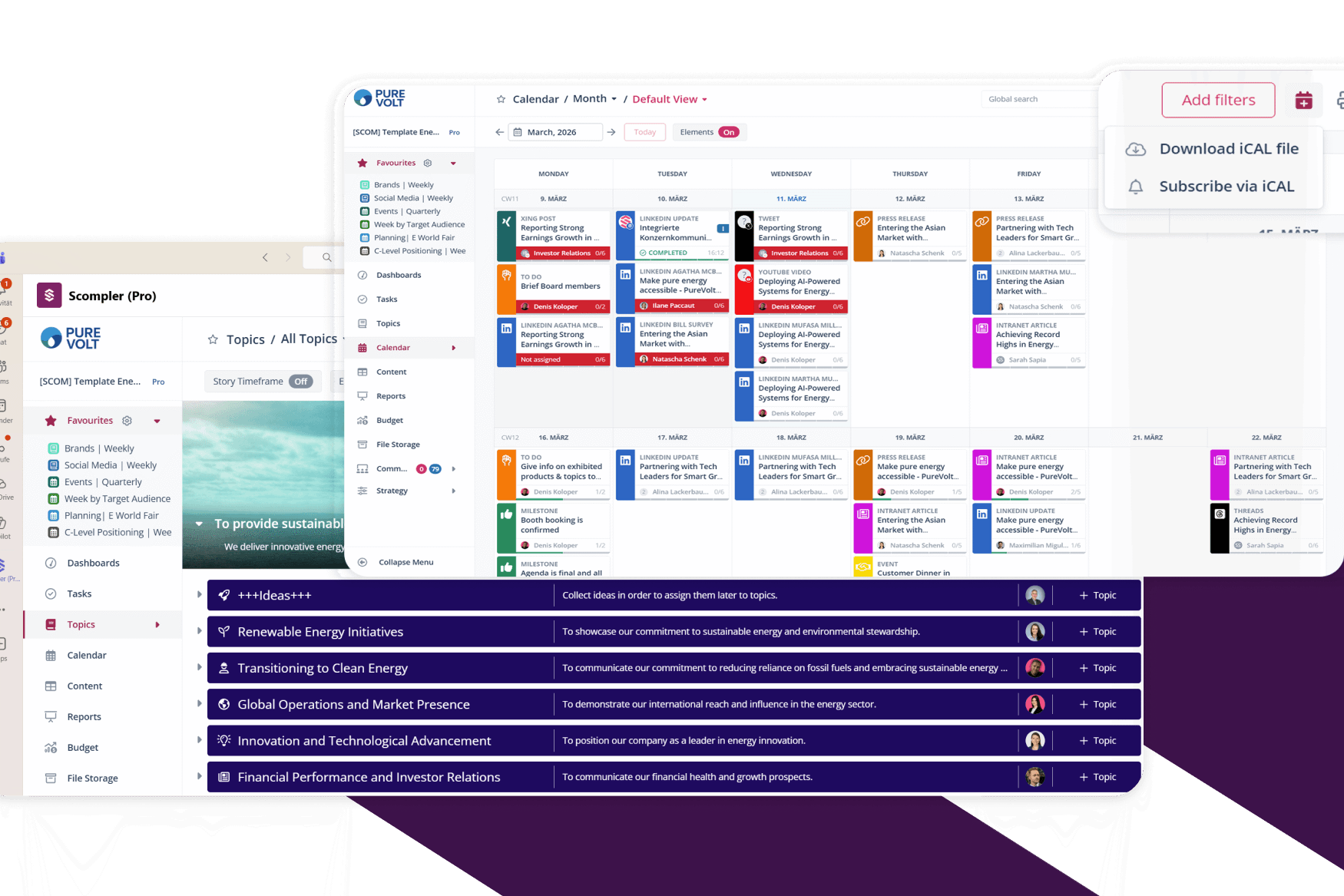
With Scompler, these structures can not only be designed but also implemented operationally. The platform serves as a central control unit for all communication activities.
Specifically, this means:
- All topics, stories, and initiatives are planned in one place
- Teams work from a shared database
- Voting becomes transparent and traceable
- Editorial processes are systematically managed
This creates a true “single source of truth” for communication. “This not only gives companies a clear overview, but above all, the ability to manage their operations,” says Bröhl.
From theory to practice: Establishing new ways of working
The introduction of a Strategic Communications OS is more than just a tool rollout. It always involves a change in the way we work.
Typical changes include:
- Moving away from channel-driven thinking toward topic-centered planning
- greater integration of teams and responsibilities
- clear processes for prioritizing topics and planning content
- regular coordination sessions, such as editorial meetings or stand-ups
Scompler supports this transformation by mapping the underlying logic and integrating it into everyday operations.

Greater impact through integrated communication
Companies that view their communications as a system and manage them using Scompler benefit in several ways:
- Content is more consistent and clearly aligned with strategic goals
- The effort required for coordination is significantly reduced
- Teams collaborate more efficiently
- Communication becomes scalable-even in complex organizations
Above all, however, a new dimension emerges: communication shifts from being an operational output to a strategic control variable.
Conclusion: Why a Strategic Communications OS Is a Key to Success
The growing complexity of communication can no longer be managed using traditional approaches. We need new structures, new processes-and a platform that brings them both together.
With Scompler as a Strategic Communications OS, this is exactly what happens: communication becomes integrable, controllable, and effective over the long term.
For businesses, this represents a crucial step toward greater clarity, greater efficiency, and greater impact.