








Strategic topic planning, consistent messaging, active collaboration, and efficient processes—four pillars that make internal communication successful.
Those who take a strategic approach to internal communication and closely integrate it with external communication strengthen brand identity, foster corporate culture—and increase the organization’s resilience.
The question is no longer whether internal communication needs to be strategically thought through - but how. The flood of information, diversity of channels and silo structures present companies with new challenges: How do we create orientation within the company? How can internal and external communication have a coherent effect? And how do we manage the transformation towards agile, data-supported communication management?
Four pillars of efficient internal communication
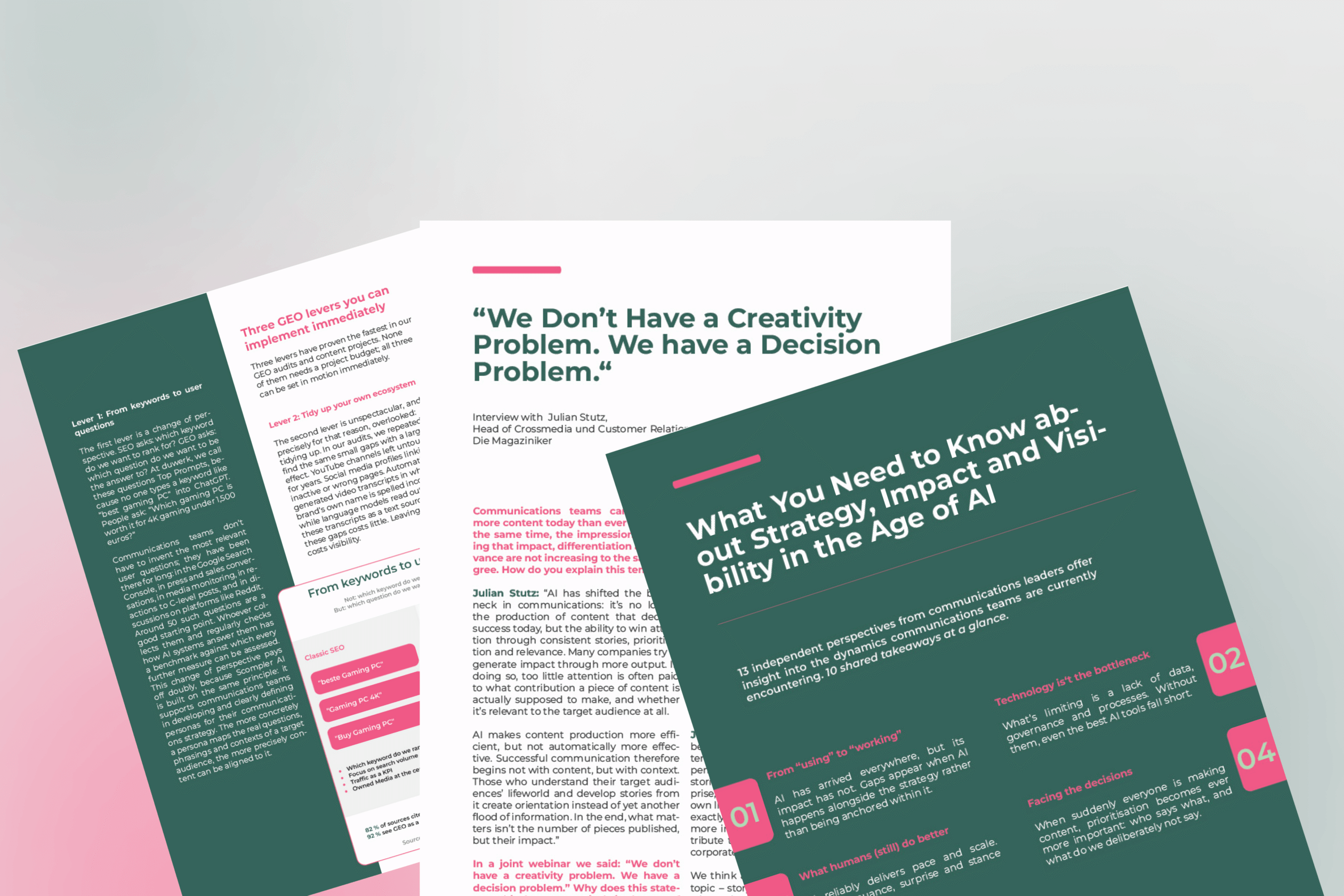
Our latest white paper provides a future-oriented framework for this: four concepts that reinforce each other and develop their full effect when combined - for consistent, proactive and integrated communication.
Strategic topic planning: The compass
High-performance internal communication needs orientation. This is precisely where strategic topic planning comes in: It defines central topic areas, aligned with the corporate strategy, and ensures that all messages contribute to common goals - across channels, teams and hierarchies.
The one-voice principle: consistent messages - more impact
Whether by email, intranet or town hall - employees need to receive consistent messages in order to build trust and gain orientation. Stringent messaging and a clear "tone of voice" avoid misunderstandings, strengthen the sense of unity and turn employees into credible brand ambassadors - both internally and externally.
Customer Story: DHL Group
The internal communications department at DHL Group wanted to use a new platform not only to create greater transparency and increase efficiency in content planning and production, but also to map out an integrated communications structure and lay the foundations for bringing other disciplines and locations on board.
Employee Communications, Media Relations & Social Media now work together with 139 employees on four continents in Scompler. The result: topics considered holistically across all touchpoints, communication projects are implemented in an integrated manner, synergies are exploited, and reach is maximized.
Collaboration: Thinking communication across silos
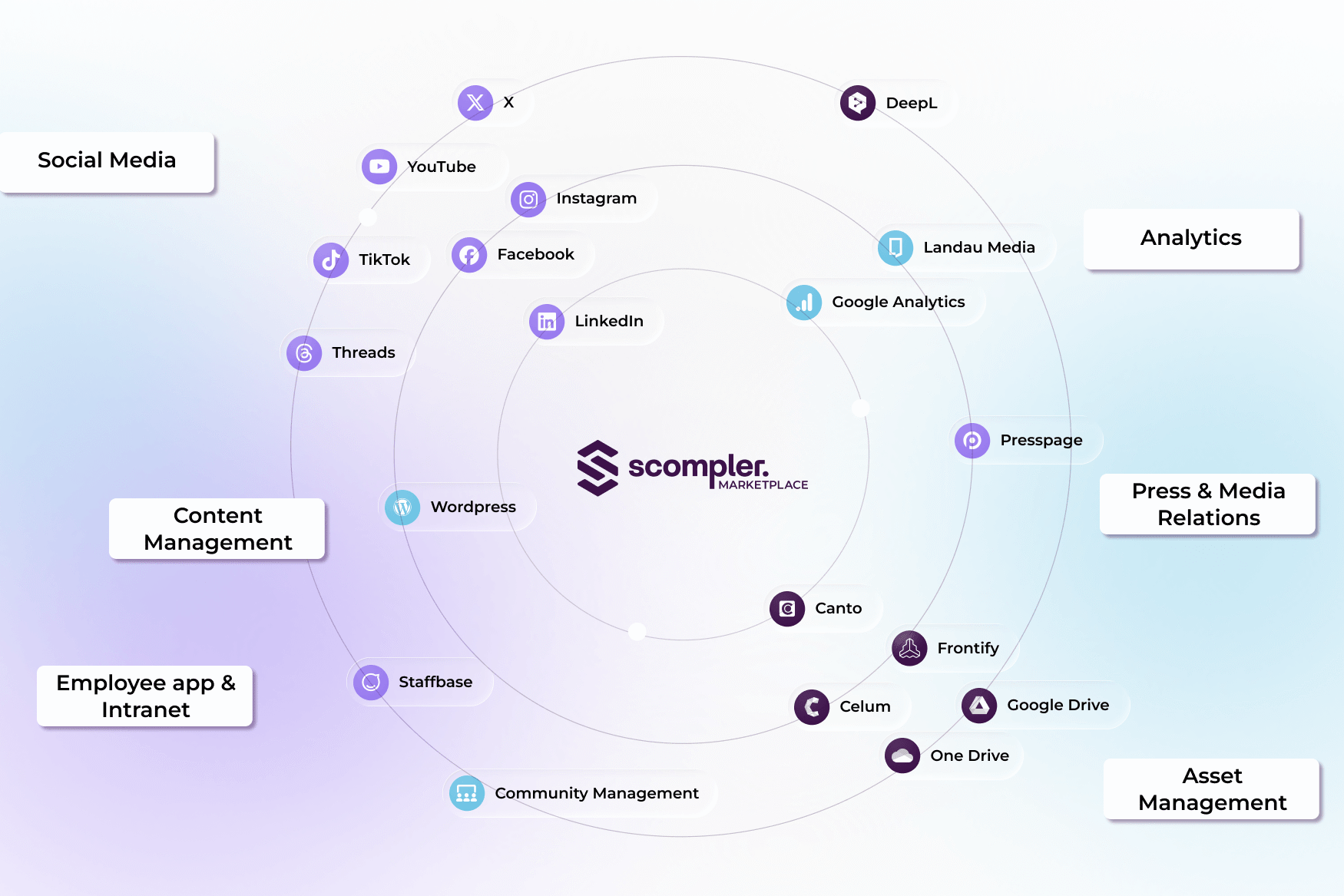
Internal communication can only be effective if silos are broken down. In many companies, social media, PR, and internal communication still work separately from one another—with their own tools, processes, and KPIs. However, the greatest effect is achieved when all communication disciplines plan together.
Content operations: efficiency through processes and platforms
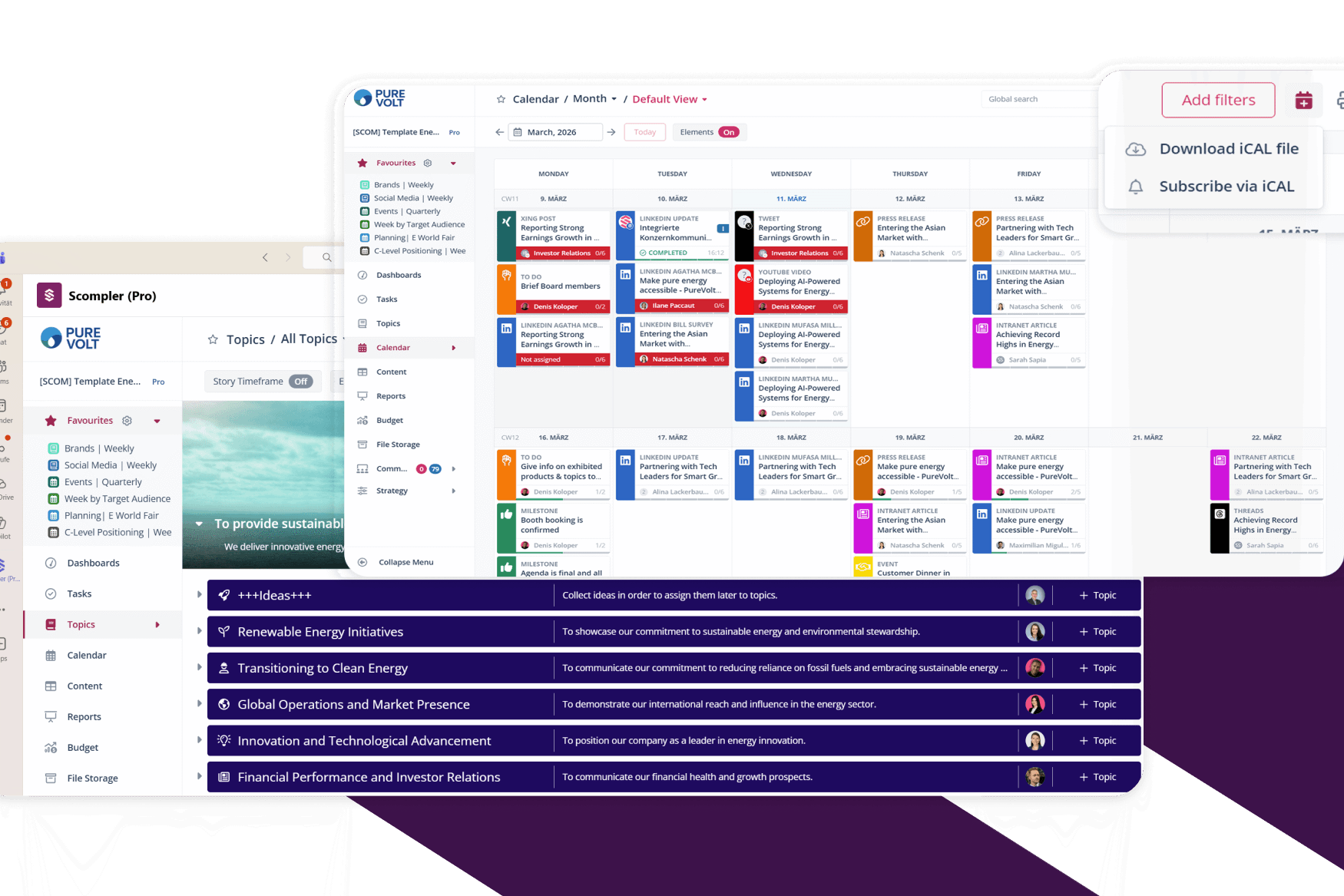
Content strategy alone is not enough—it also needs to be implemented excellently. Content operations refer to the systematic management of processes, responsibilities, and tools used to efficiently create, approve, and publish content.
Align internal communication with strategic goals - and create focus and commitment
Scompler aligns internal messages with corporate strategy—for clear, consistent, and connected communication.
Internal communication: four pillars work best together
All four pillars - topic planning, One Voice, collaboration and content operations - work best in combination. They promote a uniform understanding of communication, strengthen the connectivity of internal communication to external communication - and position communication as a strategic corporate function.
The concepts presented in the white paper show that there are no more isolated levers. Topic centricity only works if it is conceived collaboratively from the outset. Consistent messages can only be created if there is a common understanding of tone, responsibility and goals. And all of this can only be implemented efficiently if processes and platforms are established in a structured manner.
Future-proof internal communication
Learn more about the key elements of an internal communication strategy in this podcast interview.